Wednesday, 19 September 2018

They'll be coming 'round the mountain...

There is a small funicular railway from Davos called the Schatzalpbahn which climbs 300metres to the hotel, restaurant and alpine botanic gardens of Schatzalp. There is also a summer sledging run.

Well - you have to, don't you...

Three heroes about to set off: Jono, Simon and Rosy


Yes - that's just about Simon


Rosy showed most style on her second run

This is one of the few things we did that actually cost us money - every other day in Switzerland was filled with Davos-Klosters Card fun.

Tuesday, 18 September 2018

Nut Butter and Oat Truffles


Have you bought a jar of nut butter and find you don't really like it spread on bread? Here is a much nicer way of using such a product.

 Locally made hazelnut paste.

Ingredients for truffles:
1.5 cups of rolled oats
½ cup nut butter (I used Berrinoise hazelnut praline butter)
¼ cup honey (I used local chestnut honey)
1 tsp vanilla extract (I used vanilla from Réunion)
¼ cup cocoa nibs (a product I bought when they were trendy and have never previously found a use for. You could substitute very small chocolate chips.)

 Local honey.

Ingredients for Coating:
¼ cup ground almonds or hazelnuts
1 tbsp icing sugar
Pinch ground cinnamon
Pinch salt

Method:
  1. Carefully brown the ground almonds or hazelnuts in a pan. 
  2. Combine the ingredients for the coating.
  3. Put the rolled oats in a food processor and pulse a bit.
  4. Combine the nut butter, honey and vanilla.
  5. Add the rolled oats and cocoa nibs to the nut butter mix.
  6. Stir until combined and forming a paste.
  7. Make about 30 small balls from the paste.
  8. Roll the balls in the coating once and then repeat the process.
  9. Arrange in a single layer and refrigerate or freeze.
The truffles ready to be coated.

If you live around the Preuilly area you can buy the hazelnut butter and honey from Sylvain at La Croisée des Terroirs, our specialist local products grocer. 

The finished hazelnut truffles, coated in almond sugar.


Yum

**************************************************

Tuesday's Training Tales (see here)

Last week there was no swimming at all, and three days work away from home interrupted training, but we still managed 33km of walking, most of it at about 6km/hour, even when we weren't trying really hard. Some of the morning walks have been a lot cooler, which may account for the higher speed.

Monday, 17 September 2018

Vintage Fruit Boxes


The other day at the market in Preuilly I noticed that Tony the Organic Orchardist had some nice old fruit boxes by his van. They had the names of long gone businesses stencilled on them and I asked him what their history was.


He said he 'inherited' them when he bought the orchard. They date from the 1950s and 60s and he has lovingly repaired them so he can continue to use them. He likes the idea of them being in continuous use for more than half a century, and by three different owners of the orchard.

So often fruit boxes are used as kindling here and I was charmed by how sentimental Tony was about these seemingly mundane objects.

Sunday, 16 September 2018

Cotter Dam

Cotter Dam is about 20km west of Canberra, and until the 1960's was the source of Canberra's drinking water.

The original dam was built across the Cotter River in 1912, and a pumping station was completed in 1914. Water was pumped to a reservoir on Mount Stromlo, and from there was gravity fed to another reservoir (Red Hill) before being piped (gravity again...) into Canberra homes. In the late 60's other dams were built higher up the Cotter River which in normal years removed the need for the Cotter dam, but it was held in reserve for very dry years.


About 10 years ago it was decided that Canberra was still under-resourced when it came to water, so a new dam was built across the Cotter 100metres downstream of the old dam. The new dam is 87 metres high compared to the 31metres of the old dam, and holds twenty times the amount of water. The old dam (which is heritage listed) remains in place, invisible except in the dryest of years. It serves as a silt trap, stopping soil build up against the new dam wall.


"The Cotter" was one of the favorite recreation areas near Canberra when I was growing up. There was a couple of swimming places in the river below the dam, barbeque areas were plentiful, and there was the famous Cotter Tavern where we could buy ice-creams and adults could buy a drink. The Tavern went in the bushfires of 2003 and wasn't replaced, but the BBQ areas and the like are returning. (Of course it's not as good as when I were a lad...)

The dam and its catchement from Mount Stromlo

Saturday, 15 September 2018

Lutzisteigpass

When we drove to Switzerland we didn't drive the easy way - we went via Germany, Austria and Liechtenstein, entering Swizerland via the St. Luzisteig Pass.


Where to start??

The pass is named after St Luzius (the Welsh King Lles ap Coel) who, legend has it, used it in AD166 to travel to Rome to ask the Pope to make him a Christian. The local Roman govenor beheaded Lazius, making him both the local Martyr and first bishop of Chur, before he returned to Wales to establish the Christian church there. Even though the Welsh king never existed, a case can be made for two stories being conflated...

The pass has long been a problem for communities at either end, so it has been constantly fortified and re-fortified, the lastest fort replacing one destroyed by the Austrians in 1622. The gate house of 1705 still exists, although most of the fortifications date from 1831.


Until 2004 the fort was a Swiss army base, training cavalry troops. It now houses a military museum.

Friday, 14 September 2018

The Pompier's Velo


When we were in Mulhouse we visited the motor museum, and they were holding their "Vehicles in Uniform" open day. One of the more intriguing (and probably most weirdly stylish) pieces of equipment was this pompier's (fireman's) bicycle from the early years of the 20th century.

We can find very little information online, but from conversation with its owner we discovered that they were used in either in small villages that didn't have a larger brigade, or as a first response machine where larger machines couldn't go.


Susan gets the gen from the bicycle's owner

It carries all one needs for putting out a small fire, or at least keeping it at bay until reinforcements arrive. I can't remember exactly (and don't have photos that show it accurately enough) but I am fairly sure the brown canvas item on the back rack is a bucket. According to the owner the most important tool was the axe. It allowed the fireman to break down a door if necessary to rescue victims. Even if he couldn't put the fire out he could ensure nobody died.

We were particularly taken by its "siren", and also by its gas headlight.

Thursday, 13 September 2018

Cooperative de Vente des Associations Agricole de Loir et Cher


I love old industrial buildings, especially when they show some kind of style. This is the Cooperative de Vente des Associations Agricole de Loir et Cher warehouse that stands by the station in Onzain. It now appears to be abandoned and unloved, but I hope some use can be found for it so that the evocative 1930's script isn't lost.

Wednesday, 12 September 2018

Dischmatal


At least, that's what I thinks it's called!

One day while we were in Switzerland Susan and I drove up to Berggasthaus Dürrboden. Not that we were aware that's what we were doing, I was just following a road to see where it went, hoping it would lead to a post-lunch coffee. It was a very successful coffee search, given extra value by some amazing scenery. And cows with bells.


The view from the cafe-restaurant

To be brutally honest, it wasn't the best coffee I have ever had. In fact, it may have been instant. At least I had two cups.... because Susan got linguistically challenged and ordered "drei kaffe" because drei sounds like two. Why couldn't she make that mistake when ordering ice-cream?

Looking down the valley towards Davos.
A few days later this view was filled with runners

Tuesday, 11 September 2018

Just because....

We haven't posted any photos of Preuilly sur Claise lately. Then I noticed that last month I had taken this shot of the Abbey Church.


"Primitively two towers had to flank the church, each dominating an arm of the transept. Only the north tower was finished. But it collapsed in 1867 when demolishing the buildings that crowded her. She/it was rebuilt in 1873 and crowned of a polychrome roof of the most deplorable effect." from L’abbatiale Saint Pierre

***************************************************

Tuesday's Training Tales (see here)

Last week we were away working, but training didn't cease. We were in a hotel on a golf course which has a 10 metres pool, so both walking and swimming were possible. Even with reduced opportunity we managed 27km of walking and just over 2km of swimming.

Monday, 10 September 2018

Wildlife at Chenonceau

Spotted this cheeky little beggar in the moat at Chenonceau. There were people picnicking within 20 feet of him, but they didn't look, and he wasn't bothered

Sunday, 9 September 2018

Rakali

I've never seen a Rakali (previously the Australian Water Rat). I wouldn't be surprised if the person who took this photo hadn't either. In their defence, it's a nocturnal amphibious wild animal, so you probably don't get to see many.

 
***********************************************


We didn't have a blog post yesterday, our 5 days of work ending Thursday became 6 days ending Friday, and we were exhausted.

Friday, 7 September 2018

Not a lot of photos

We have been doing an awful lot of walking recently (over 40kilometres each week), but because it has been purposeful walking there haven't been any photos taken.

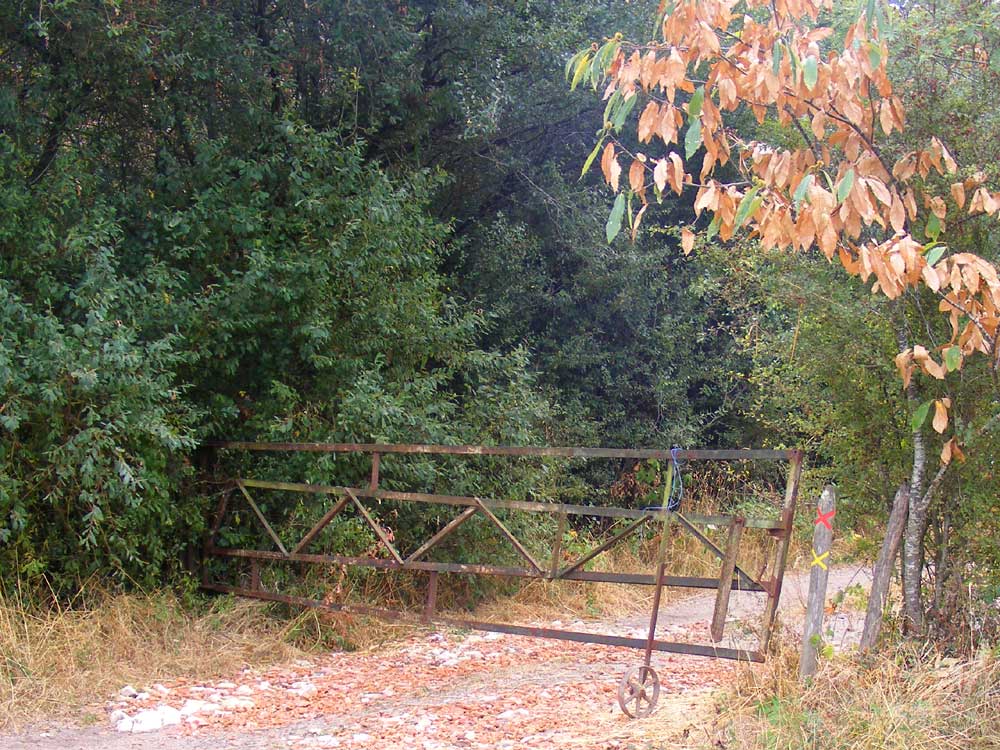
This means we have no recent photo of this gate near Chaumussay even though we have been walking in the area - the photo was taken this time two years ago. It's a great piece of shed made engineering, and worth posting a photo of!


Thursday, 6 September 2018

The Landwasser Viaduct

The UNESCO World Heritage Albula Railway has many amazing pieces of engineering, but the Landwasser Viaduct is the best known of them. The bridge is 65 metres high, and one end of it starts where the railway exits a tunnel.

When I was a young bloke my parents gave me a book about trains (train mad, me as a kid...) and the following photo was one I must have looked at millions of times. To me it was an almost mythical thing of wonder.


It never occurred to me that I would ever see such a thing - I was given the book when we still lived in London, and after moving to Australia, Switzerland was far too exotic (and too far away) to even contemplate visiting.

Catching a glimpse of the viaduct through the trees in July bought back a flood of memories of photos of amazing Swiss railways, and I had to seek the book out to see what else I had - after over 50 years - seen for the first time. There are a few (and you will get to see them over the next few weeks.

The Lanwasser viaduct from the train to Davos.


Wednesday, 5 September 2018

Véhicules en Uniforms


We were at the Mulhouse car museum in July and were lucky to discover (purely by chance) that it was their annual Véhicules en Uniforms weekend. This meant that all sort of service vehicles - from buses to fire-engines to World War II military equipment - were on display, and their owners were giving free rides around the racetrack.


We rode in a variety of vehicles, but the most adventurous ride was in an authentic WWII era Willeys Jeep. Unfortunately I didn't take a photo of Susan wearing an American helmet of the era - apparently "bloody heavy".


We also learnt about the pompiers' bicycle - but more of that later.

Tuesday, 4 September 2018

Things to do Before You Are Sixty


Yohann, the maître-nageur, patrols the Preuilly pool.

 It's official...

Early one morning a couple of weeks ago Simon received a one line email from his brother: "Do you think you would like to run one of the Davos events next year?" He answered before thinking too long that he would try a couple of weeks training before making a decision. That decision has now been made and  all of a sudden running shoes have been purchased, expert friends have been consulted for advice about equipment, training regimes, morale boosting and whether they'd like to join us.
Simon's new running shoes.

We began by walking about 5km in an hour in the morning, followed by swimming. After two weeks of this we haven't greatly increased the length of the walk but we are moving quicker. However, Swimming in Preuilly has now stopped, so we're looking for a nearby pool that's open all year round. The plan is to build up incrementally to running after Simon has achieved his first weight loss goal.

At the moment nothing is confirmed but we are thinking of doing the 22 km Alpine hike from Davos which you can run or walk as you wish, and you can use hiking poles. It looks an interesting little stroll, with 1074 metres of climbing to the top of Chorbsch Horn (2575 metres) before you descend back to Davos. You have 10 hours to finish it before they come and rescue you. There is always the worry that it may all fall through because one or other of us injures themselves in training and can't continue. Knees especially seem a risk factor, hence weight loss plans, but so far there have just been a few fleeting aches.

 Simon at the GP's earlier this year.

We've visited our GP and told him all about it. He had already spotted us out walking with purpose and indicated he was happy to see Simon walking at such a good pace. Then he raised an eyebrow at me and told me I'd better do something about my bad cholesterol levels (1.64 g/l at the last blood test, down from 1.99 in the previous one). My resting heartbeat is rather high (94) too. He and I blame my genes. My good cholesterol is excellent (currently 1.2 g/l, up from 1.02), as is my diet, blood pressure is OK (130 over 90), weight too (69 kg) but I have an unfortunate family history of heart disease of all sorts and have reached the age where it is beginning to tell.

Me swimming.

Monday, 3 September 2018

Wartime Graffiti

Ages ago Susan wrote about our visits to the caves of le Grand Pressigny and mentioned that the caves were used by local children to shelter from German guns, and there was grafitti written by our guide's grandfather, amonst others.


The grafitti was done using the smuts from a candle, and has survived unscathed since the 1940s. I'm not sure about the contects, hopefully it was satire...


Sunday, 2 September 2018

Earthquake

Three weeks ago Susan wrote about Mount Stromlo. The visitors centre is, of course, astronomy heavy, but there are various displays concerning other fields of science.

One of the excellent items in the information centre is a Seismometer.
Susan and I couldn't refuse the invitation


Guess who caused which tremor


If the earth moved for you at 15:10 AEST on the 11th December last year you now know who to blame.

Saturday, 1 September 2018

Spotted Nutcracker


Whilst in Davos we visited the Alpine Botanic Gardens (Alpinum Schatzalp). One of the highlights was not a plant though. It was a bird.


Up in one of the pine trees a large dark crow like bird was giving a pine cone what for and extracting pine nuts. We watched it for ages. A closer look revealed the bird was streaked with white and it and its family were quite noisy. They are members of the crow family and the vocalisations reflect that (they sound a bit like Eurasian Jays).

 Spotted Nutcracker.

Because of their habit of storing food it is believed they are responsible for the regeneration of Swiss Pine Pinus cembra over large areas of the Alps that had previously been cleared.

Friday, 31 August 2018

Cité de l'Automobile, Mulhouse


On our way up to Switzerland we broke our journey in Mulhouse, staying two nights so we could visit the (rightly) celebrated Cité de l'Automobile. Based on the extensive collection of the brothers Schlumph, but now the national car collection of France, it claims to be the world's largest car collection.

Bugatti type 35B biplace, 1927. Mmmmmmmm, classy...

Having been to a few car collections in my time I can see no reason to doubt it - it's enormous! Being based in the old woollen weaving mill of the Schlumph brothers they have plenty of space, with 2 hectares (about 5 acres) of factory onder one roof.

A Bugatti pickup truck, used in the Schlumph factory

The collection contains 123 Bugattis, the largest collection of the marque in the world, and the obsession that finally ruined the business. (You can read about "the Schlumph affair" here)

It's not all Bugattis: A Fiat 508 S roadster of 1936


The grey and black Citroen Traction Avant is a 7A of 1934. 
What you can almostsee behind it is a Traction Avant 11B of 1953 - Celestine's twin sister

We had a great time at the museum, which is a properly curated collection, with a couple of display spaces for special exhibitions. It also has a very fine cafeteria selling good meals at extremely reasonable prices. What's not to like?

Thursday, 30 August 2018

Riding down from Jakobshorn

This is the way to descend (and more importantly, climb) mountains! From Jakobshorn at 2590metres, to Davos Platz at 1540 metres in little over 8 minutes, the voyage uses two cable cars, changing at Jschalp (1931metres).

This is what it looks like from the train to Klosters


And now - the cable car from Jakobshorn in glorious wobblecam:


And don't forget - all of this is free!