Showing posts with label Prehistory. Show all posts

Wednesday, 9 September 2026

The Lady of Vix and Her Treasure

The star attraction of the museum at Chatillon sur Seine, in Burgundy, where we had such a great time recently, is the collection of archaeological finds from a hilltop at the nearby hamlet of Vix. Around 465 BCE a woman was buried on the site, laid out on a four wheeled open wagon and surrounded by unimaginable treasures made of metal. Her gold torc was stolen exactly a month before we got there, but the most outstanding piece, a huge bronze krater used for mixing wine and water, is totally worth the visit.


The Vix Krater.

The Vix Krater, Chatillon sur Seine, France.


The hilltop settlement at Vix is strategically positioned to overlook the valley of the upper Seine. It was a staging post for shipments of tin coming from Britain and being sent to Italy and the community here could control a wide territory. The Celtic culture in the 5th and 6th centuries BCE at Vix appears to have been matriarchal, and in possession of immense wealth from the collection of taxes related to the tin trade passing through their territory.


Detail of the Vix krater.

Detail of the Vix krater, Chatillon sur Seine, France.


A local farmer and keen amateur archaeologist noticed a slight anomaly on the lower slopes of the hillside at Vix in 1953. He told another local self taught archaeologist and the latter began excavations. Although he recorded each object found he did not always record in what position those artefacts were discovered.


Detail of the Vix krater.

Detail of the Vix krater, Chatillon sur Seine, France.


The tomb was dug into the earth, creating a chamber of 4 x 4 metres. It had been covered with a 6 metre high, 40 metre diameter tumulus, but this had more or less disappeared by the time of the dig. A skeleton of an approximately 30 year old woman was found laid out on a four wheeled parade wagon with bronze fittings. Numerous jewels, bracelets, torcs, and bronze fibulae brooches were associated with the deceased. As a consequence the finds became known as the Treasure of Vix.


Reconstructed wheel of the vehicle the Lady was laid out on, with the original bronze elements in place.

Reconstruction of a wheel of the Vix parade wagon, Chatillon sur Seine, France.


The French State Archaeology Agency (INRAP) conducted a dig in 2019 designed to contextualise the previous amateur dig of nearly 70 years ago. The head of INRAP likened the situation to being a bit like if you opened a book and kept the pictures but no longer have the text which went with them. This new dig has recovered missing fragments of the krater which completes the frieze of warriors.


The bronze elements of the parade wagon the Lady of Vix was laid out on.

Bronze elements of the parade wagon the Lady of Vix was laid out on, Chatillon sur Seine, France.


The krater is the largest metal vessel from classical antiquity in the world. It was made in Greek workshops based in the south of Italy around 535 BCE, and probably shipped to France in seven main pieces to be put together once it arrived in Burgundy. Its dimensions are exceptional -- 1.64 metres high (that's the same height as me!), weighing 208 kilograms and having a capacity of 1100 litres. The decoration features gorgons as volute handles, a lid, and a frieze of horses, chariots and hoplites (soldiers) around the neck. It is masterpiece of antique bronze working.


View of the upper Seine valley from the archaeological site on the hill at Vix.

View of the upper Seine valley from the archaeological site near Vix, France.


This was absolutely the highlight of our recent trip and it was on the first day of travel!!

Tuesday, 28 April 2026

A Walk on the Eperon Barre de Murat

The Eperon Barré de Murat is a ridge of limestone (Fr. tuffeau jaune) topped by a plateau at about 120 metres above sea level. This site, frequented by Mankind since the Neolithic was formed by the confluence of the valleys of the Brignon and the Larçon. It is a well known site for wild orchids and the habitat they require is maintained by a flying flock (Fr. troupeau itinerant) of grazing sheep.  The calcareous grasslands shelter a number of insects, such as cicadas (Fr. cigales) and the Large Blue butterfly (Fr. papillon Azuré du serpolet) which require dry sunny places.


Tassel Hyacinth Muscari comosum (Fr. Muscari  à toupet).

Tassel Hyacinth Muscari comosum, France.

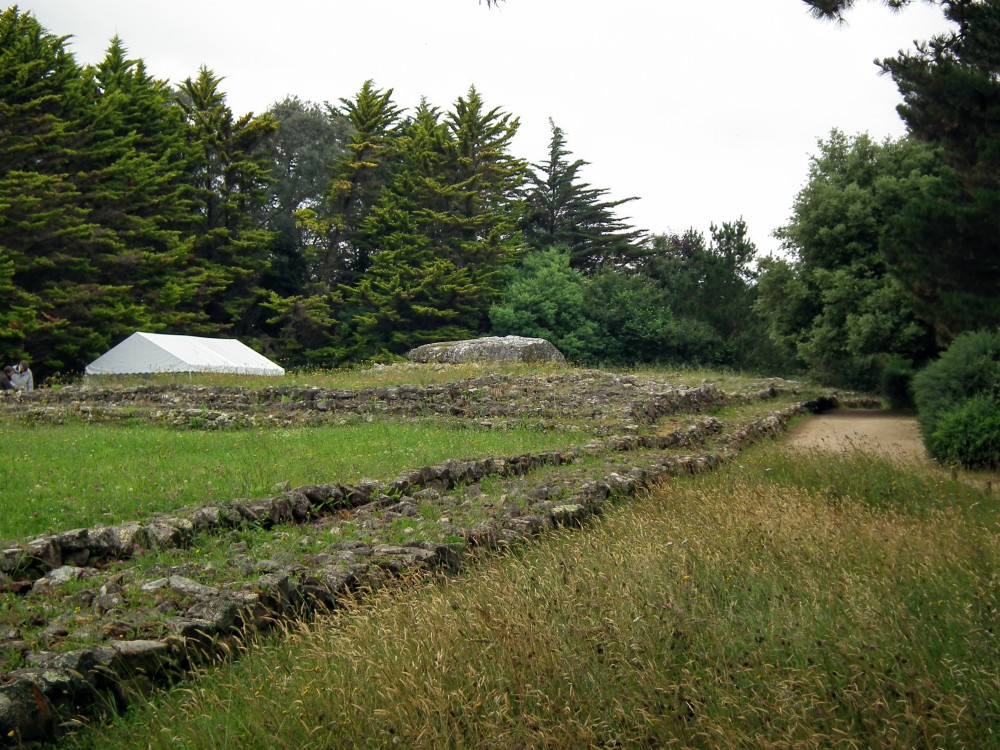
Two ancient defensive walls, called a vallum, are still visible at the narrow end of the site. They served to protect and 'bar' access to a prehistoric settlement. 


There were lots of caterpillars of the localised and increasingly rare Small Eggar moth Eriogaster lanestris (in French the caterpillars are called la Laineuse du cerisier).

Small Eggar moth caterpillar Eriogaster lanestris, France.

The site is managed by the Conservatoire d'Espaces Naturels Centre Val de Loire.


 Small Heath butterfly Coenonympha pamphilus (Fr. Procris).

Small Heath butterfly Coenonympha pamphilus, France.

Earlier this month Simon and I did the 3.5 km circuit around the site so I could check the progress of the orchid flowering season. It was a hot sunny day in the mid-twenties temperature wise, and about half the walk is not shaded. Just to warn you -- this is a hot site much of the year, so take water to drink. We took about an hour to get around and saw 5 species of orchid in flower. Unbeknownst to me, my friend François, who is an ecologist for the Conservatoire, was also there that day. He bagged an extra species of orchid, damn him...


 Downy Oak Quercus pubescens (Fr. Chêne pubescent).

Downy Oak Quercus pubescens, France.


Lady Orchid Orchis purpurea (Fr. Orchis pourpre).

Lady Orchid Orchis purpurea, France.


View looking north-east from the vallum.

Eperon barre de Murat, France.


Violet Fritillary Boloria dia (Fr. Petite violette).

Violet Fritillary Boloria dia, France.


Narrow-leaved Helleborine Cephalanthera longifolia (Fr. Céphalanthère à feuilles étroites).

Narrow-leaved Helleborine Cephalanthera longifolia, France.


The uncommon Green-underside Blue butterfly Glaucopsyche alexis (Fr. Azuré des cytises).

Green-underwinged Blue butterfly, France.


A number of Early Spider Orchids Ophrys sphegodes (Fr. Ophrys araignée) lurking about in the grass.

Early Spider Orchid Ophrys sphegodes, France.


Further Reading: https://espacesnaturels.touraine.fr/eperon-de-murat.html (page for the nature reserve, in French).

Saturday, 13 July 2024

Why Visit Morbihan (Brittany)?

 Part of the Carnac alignment of standing stones (menhirs).

Alignment of prehistoric standing stones, Carnac, Morbihan, Brittany, France. Photo by loire Valley Time Travel.

We recently spent a very successful short break in Morbihan, staying in a cabin (Fr. mobile home) in a caravan park at Carnac. Morbihan is a county (Fr. département) in the south of Brittany (Fr. Bretagne) on the Atlantic coast, around the Gulf of Morbihan. Inland it is agricultural, on the maritime side it is fishing and pleasure boat ports. It is a beautiful part of France, where the hydrangeas are blue and the stone is granite. To my mind there are three main reasons for going to Morbihan:


Wild Foxgloves Digitalis purpurea (Fr. Digitale pourpre) were abundant on roadsides and woodland edges.

Foxglove Digitalis purpurea, Morbihan, Brittany, France. Photo by loire Valley Time Travel.


1. The prehistoric stone structures.

The number of prehistoric menhirs (standing stones), cairns (dry stone covered chamber tombs) and tumuli (earth covered tombs) is astonishing. They are everywhere! and each more interesting and intriguing than the next. We stayed across the road from the famous alignments of Carnac. Which is impressive enough, as it is several rows of standing stones which go on for some kilometres. But then we visited the island of Gavrinis, and got to go inside the cairn. The young archaeologist conducting the tour was excellent. After that we saw the related tombs across the water at Locmariaquer and then a few more that I don't even remember the name of. Some are publicly owned, carefully guarded by heritage professionals and there is an entry fee. Others are on private property and access is freely granted. They date from the time four to six thousand years ago that man was just settling down to live in small fixed communities rather than being nomadic. We were awestruck to be allowed inside these remarkable links with the distant past, and to be allowed to take photos. Frankly it beggars belief that Morbihan is not UNESCO World Heritage Listed for its prehistoric landscape.


The remains of a marvellous meal of Breton mussels (Fr. moules bretonne).

Remains of a meal of mussels, Morbihan, Brittany, France. Photo by loire Valley Time Travel.

2. The distinctive Bretonne cuisine, in which dairy and seafood feature strongly.

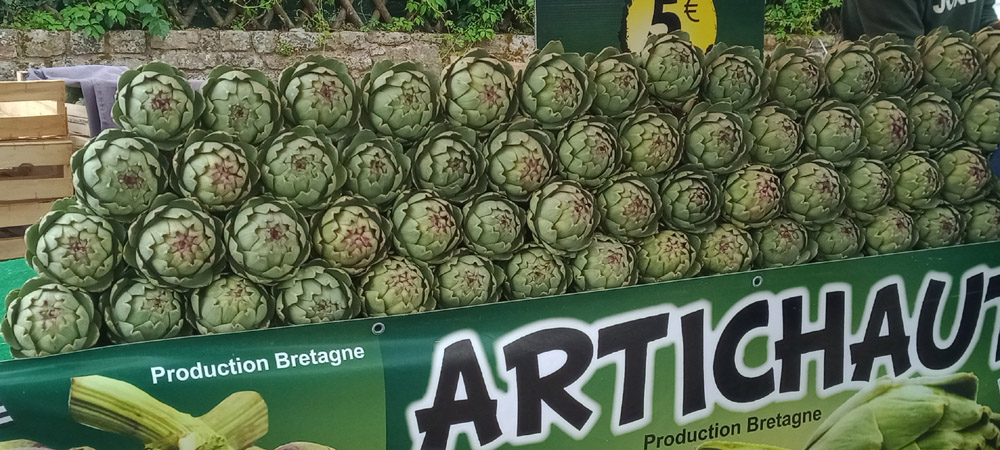
Brittany has maintained its own culture and even its language rather better than some other regions of France. The list of gourmet delicacies that come from Brittany is long: kouign amann (butter cake); far breton (prunes in a thick pancake); palets, galettes and sablés bretons (plain biscuits); seafood especially shellfish (mussels, oysters, clams) and sardines; cider; salted butter; salted butter caramel; crèpes and galettes (savoury crèpes made with buckwheat flour); quatre quart (pound cake); cocos de Paimpol (dried white beans); andouille de Guémené (chitterlings); lait ribot (buttermilk); cotriade (fish soup); farz (pasta made from buckwheat flour); artichokes; strawberries; pink onions. Some of these have made it out of Brittany and can be encountered anywhere in France now, especially in places where Bretons migrated to, like the Montparnasse quartier of Paris. But others, whilst known to foodlovers, have to be discovered in their home territory. We had the best mussels we've ever eaten, quite by chance, by lobbing up to a restaurant on a small harbour because it was lunchtime and we were passing. No consulting of restaurant reviews, just a quick perusal of the menu board outside to check they did the kind of food we liked at the price we wanted to pay. Kouign Amann is a must have if you are in Brittany, and we bought ours from a small stall in Carnac market that was selling nothing else. 


 Le Grand Menhir at Locmariaquer fell not long after it was erected and broke into four enormous chunks.

le Grand Menhir, locmariaquer, Morbihan, Brittany, France. Photo by loire Valley Time Travel.

3. Sailing and other water sports.

We didn't participate in any watersports this time, but it was clear that the Gulf of Morbihan is a paradise for anyone wanting to learn to sail or get to grips with sea canoeing, paddle boarding or kite surfing. It's a big protected inlet and there are hundreds of boats big and small moored in the many harbours. We saw yachts ranging from century old yawls that now take tourists out to islands for day trips, to enormously tall masted trimarans with the very latest in high tech sails [link]. Even if you know nothing about boats it's picturesque and alluring.


 Kouign Amann at the market in Carnac.

Kouign Amann at the market in Carnac, Morbihan, Brittany, France. Photo by Loire VaLLey Time TraveL.

Once you've visited the area you know why hundreds of French families have holidayed there since the 19th century, even though Brittany is famous for weather which includes drizzly rain nearly every day. There is so much to do, so much opportunity to just relax and take it easy, and the visibility of the Breton culture means that you know you are not at home. The locals clearly rely on tourists for a significant chunk of their annual income, but the place has not been turned into a caricature of itself. Bretons are proud to speak their language and practice their culture and would do so whether there were tourists or not. I was interested to see that the SuperU supermarket in Carnac had an extensive selection of local produce, including ceramics, baked goods, drinks and caramels. It was a one stop souvenir shop as far as I was concerned and I bought a mug, some pommeau (an apple liqueur), beer, kouign amann (again...) and salted caramel sauce. At the market there was a stall selling the iconic stripey shirts that Bretons are stereotyped as wearing. Of course it was aimed at the tourists, but the locals do genuinely wear them too, so we bought one each. They are good quality and weren't expensive.


 Artichokes at Carnac market.

Artichokes at the market in Carnac, Morbihan, Brittany, France. Photo by Loire VaLLey Time TraveL.

We had such a nice time we can't believe we never made it up there before, and we certainly have plans to return.


Caravan park. Our cabin was through the arch.

Caravan park, Carnac, Morbihan, Brittany, France. Photo by Loire VaLLey Time TraveL.


Some sort of aquatic exercise class. 

The photo makes it look as if it was very early in the morning, but in fact it was 10 am.

Swimming at Carnac, Morbihan, Brittany, France. Photo by Loire VaLLey Time TraveL.


Part of the alignment of prehistoric standing stones at Carnac.

Part of the alignment of prehistoric standing stones at Carnac, Morbihan, Brittany, France. Photo by loire Valley Time travel.


Embarking at Gavrinis Island.

Embarking at Gavrinis island, Morbihan, Brittany, France. Photo by loire Valley Time Travel.

Saturday, 6 July 2024

Locmariaquer

When we were in Brittany (what feels like years ago now) the stone alignments of Carnac were our first priority - a novelty that you get blasé about pretty quickly because there are so many of them.

Once we had been to Gavrinis we needed to go to Locmariaquer. One of the large stones in the ceiling of Cairn of Gavrinis was once part of a huge carved dolmen at Locmariaquer, and there were other attractions - it was raining, and the idea of spending time out of the rain was appealing.

The first thing you see is the Er Grah tumulus, a long mound of stone covering multiple burial chambers. And by long, I mean 140 metres long and about 15 metres wide. Many of the stones used in its construction have been used elsewhere, but it's still an amazing piece of work. There has been considerable restoration done on the tumulus since it was used as a car park in the 1970s. It's really difficult to get an idea of how big it is, so here's an aerial view.


The Table des Marchands is a cairn that has a large capstone supported by upright stones. This has a couple of carved stones inside a la Gavrinis, including some on the ceiling. Like Gavrinis, it's a dry stone construction over a long chamber.


The third amazing thing is the Grand Menhir Brisé, a large broken standing stone. The stone was originally 20.60 metres tall and weighed about 330 tons. It stood upright, but now lies in several pieces, and quite a large chunk (according to our guide at Gavrinis) found its way there. There were once nineteen menhirs in an alignment, all of them apparently worked and smoothened.

Remember: all the rock you see, plus another piece, were all part of one standing stone.


These structures are believed to have been erected during the Neolithic period, around 4500 to 3300 BCE. The purpose of the megaliths is not definitively known, but as usual they are thought to have had ceremonial or religious significance.

One thing that struck me was continuity of purpose. At the foot of the monuments is the town cemetery.


Wednesday, 26 June 2024

The Alignments of Carnac

The reason we went to Brittany last week was to see the Alignments of Carnac. There's over 3,000 standing stones (menhirs) that stretch along 3.5 kilometers in an almost straight line about 50 metres wide which are believed to date back to around 4500 BCE. They are divided into three main groups: Ménec, Kermario, and Kerlescan, each containing rows of menhirs (standing stones), dolmens (standing stones with a "table" on them), and tumuli (mounds). The menhirs could have been used for astronomical purposes or religious rituals, and the dolmens and tumuli possibly contained tombs.

The Alignment of Kermario

and looking the other way

We visited the alignments of Kermario, and Kerlescan and saw the smaller alignments of Manio and Toul-Chignan from the car, but failure to look at the map means we missed Menec completely. Still - that means we have a reason to visit again.

The smallest possible view of the Alignment of Kerlescan

The alignment of the stones would suggest they were positioned to mark solstices or other celestial events, but we can't verify that, because the morning of the solstice (20th June, this year) was overcast. We did get up to try check the theory, though.

The Dolmen of Kermario

There are also individual standing stones, apparently not part of the alignments. These tend to be proper whoppers like the Giant of Manio, which is 6.5 metres tall.


Impressive though the Alignments are, they're not the most amazing prehistoric sites in the area. We'll write about them later.


Friday, 21 June 2024

Summer Solstice

Yesterday was the longest day of the year. As we were near an arrangement of prehistoric standing stones it felt wrong not to do something to mark the occasion.

So at six o'clock yesterday morning we left our cabin and walked the 200 metres to a vantage point I had previously chosen, and waited. At 06:14 I took a photo of what should have been the sun rising over the standing stones of Carnac.


As you can see, it was cloudy in the east. The west was clear, though.