Monday, 21 October 2019

Walnut Snowballs


Baked and photographed by Susan from Loire Valley Time Travel. https://tourtheloire.com

Ever on the search for delicious things to do with walnuts (since I have several young walnut trees in the orchard) I was delighted to find a recipe for some slightly quirky walnut based biscuits on Simply Recipes. Right on cue, as I made these back in January, it began to hail enough to dust the ground in white and to our east and north they had proper snow.

Photographed by Susan from Loire Valley Time Travel. https://tourtheloire.com

Ingredients
1 cup flour
1.5 cups walnuts, finely chopped
3 tbsp sugar
1 tsp vanilla extract (I actually forgot to add this, and the biscuits didn't suffer)
125 g butter, cut into dice
A pinch of salt
About 5 generous tablespoons of icing sugar

Method
  1. Shell and chop the walnuts if you are using homegrown.
  2. Mix all the dry ingredients (flour, walnuts, sugar) together.
  3. Add the vanilla.
  4. Rub the butter in to the dry mix until it looks like coarse breadcrumbs. This will take a while because of the nuts.
  5. Chill the dough for at least 30 minutes.
  6. Heat the oven to 150C and line baking trays with silicone mats.
  7. Form the dough into large marble sized balls and place on the trays. They won't spread but leave a gap of a couple of centimetres.
  8. Bake for 35 minutes.
  9. Once out of the oven cool for 5-10 minutes then roll in icing sugar.
  10. Put on a rack to cool completely then roll them in icing sugar a second time.
  11. Makes about 18 balls. They keep well in a sealed jar, and will freeze.
Photographed by Susan from Loire Valley Time Travel. https://tourtheloire.com

I buy my flour from Farine du Berry, butter from the Laiterie de Verneuil, both available in the Intermarché supermarket in Yzeures sur Creuse. The vanilla comes from a guy I see every year at the Saffron Fair in Preuilly who has a mate in Réunion with a vanilla plantation.
Photographed by Susan from Loire Valley Time Travel. https://tourtheloire.com
Baked and photographed by Susan from Loire Valley Time Travel. https://tourtheloire.com


Yum

************************************************

For details of our private guided tours of chateaux, gardens, wineries, markets and more please visit the Loire Valley Time Travel website. We would be delighted to design a tour for you.

Sunday, 20 October 2019

The Black Stump.

This is a photo of me this side of The Black Stump. If I was the other side of The Black Stump, I would be in the Outback.

This photo was taken on a disposable camera in 1992.
I know it was 1992 because of the t-shirt, and it's the only time I played in Blackall with a band.


The origins of The Black Stump are disputed but the first appearance of it in print date from 1831. It appears as a bounday marker in a land dispute near what is now the centre of Sydney. The meaning now applied to it as the place where uncilivisation starts is more hazy, as is it's location.

Three places lay claim to having the black Stump, but this one is at Blackall, Queensland. It's the petrified stump of a tree, placed on the site of an Astronomical Station which was used to establish the precise location of the town in 1887.

There is more about the Black Stump here, and details of the Black Stump in Blackall are here.

Saturday, 19 October 2019

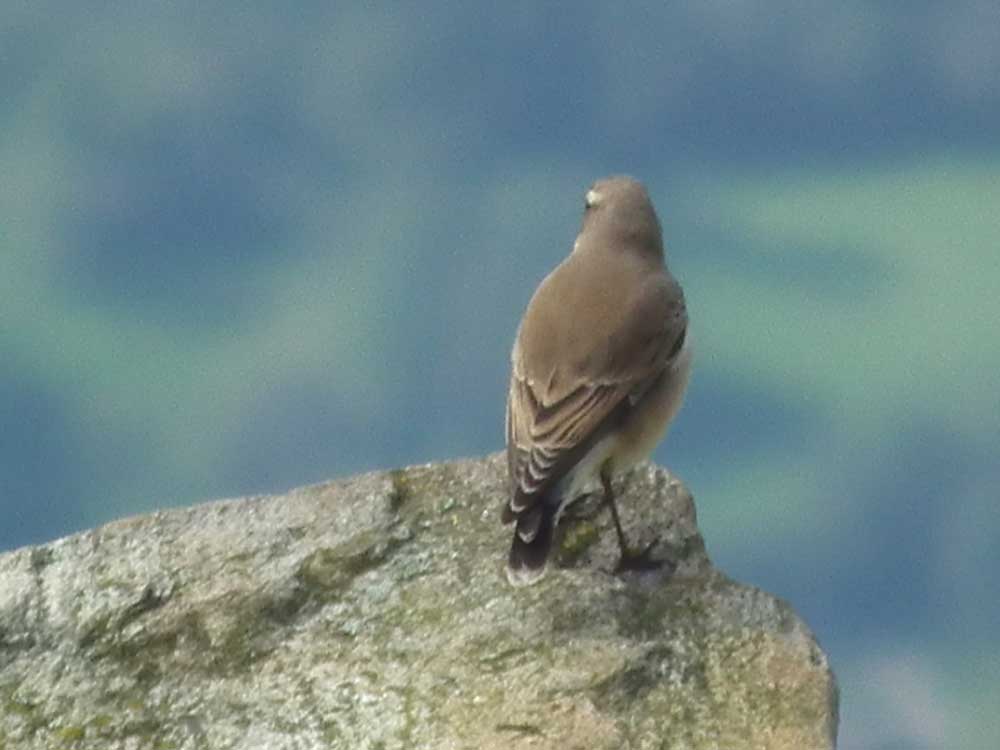
Northern Wheatear


Photographed by Susan Walter. Tour the Loire Valley with a classic car and a private guide.

While we were at the top of La Rhune, the highest Pyrénées-Atlantiques peak, we encountered a Northern Wheatear. I can remember seeing this attractive litte bird before, on Hadrian's Wall in the north of England, many years ago.

Photographed by Susan Walter. Tour the Loire Valley with a classic car and a private guide.

Northern Wheatears breed in the British Isles, and in Greenland, but spend the winter in tropical Africa. The one we saw in the Pyrenees I suspect was on its way back to central Africa from Greenland. All Northern Wheatears cross into Africa via Spain though. Their migration route is 30 000 kilometres there and back.

Photographed by Susan Walter. Tour the Loire Valley with a classic car and a private guide.

Photographed by Susan Walter. Tour the Loire Valley with a classic car and a private guide.


************************************************

For details of our private guided tours of chateaux, gardens, wineries, markets and more please visit the Loire Valley Time Travel website. We would be delighted to design a tour for you.
We are also on Instagram, so check us out to see a regularly updated selection of our very best photos. 

Friday, 18 October 2019

Le Paradis Perdu

On a recent wander from Preuilly we encountered Paradis. It appears to have been quite grand at one time, with a large stone entry gateway and a structure that with the eye of faith could have been a chapel (or more likely, a barn).


It's easy to speculate that le Paradis was monastic, because some of the nearby properties also have very monastic names: Villejesus and La Commanderie would seem to indicate one of the knightly orders held territory in the area. One has to speculate, because I can find nothing to say what the building was, when it was built, and when it because a ruin. It is marked on the Carte de l'état-major, but not named.

Across the track (once the main road from Preuilly to Bossay) the intersection is marked by a cross, which would seem to indicate it was an important crossraods. The existing cross looks 19th century, but could have replaced a much older cross - the track had been supplanted in its role as a main road at about that time.

Thursday, 17 October 2019

La Chapelle du Prieuré Saint-Mesmin

I hadn't seen this chapel until we were on the Bouchonne Ste Maure in September. Even then I didn't notice it until we later walked down the street: it's really tucked away, and at an angle which means it's really only visible of you're looking for it.

The Holy-Maurienne priory was founded in 1060 by Hugues de Sainte-Maure, who later donated the priory and land to the abbot of Saint-Mesmin abbey, in Orleans. The chapel was partially demolished in 1542 so that the town walls of Sainte Maure could be built, and became a parish church. The chapel was sold off during the revolution.


As far as I can work out the chapel is now derelict and unused - a pity, because what it left is quite attractive.

Wednesday, 16 October 2019

Do Not Enter

We were at Chambord on Monday with clients. Having arrived early we decided to have a stroll in the forest to see if we could see some wildlife. Not all of the area was open: because of the rut, some part of the forest were locked up. Red deer are very large, and not terribly accommodating towards people at this time of year.


The first wildlife we saw was the other side of a locked gate. We were kind of pleased about that, as wild boar also has a fearsome reputation. Although we tried, we couldn't get really close for a good photo. The pig was more nervous about us that we were of him (?). We understand gates.


After walking a 2 kilometre loop (on the other side of the main road to the fenced off area) we happened to leave the forest at the same point we had entered it, only to see more wildlife the other side of the same gate.

This is the first red deer stag either of us can recall seeing in the wild. We can only assume he was the real reason for the locked gate.


Tuesday, 15 October 2019

Walking Around Neuilly le Brignon


Our Thursday 3 October club walk took us to Neuilly le Brignon. Here are some photos from the afternoon, which was surprisingly warm and sunny.

Fromagerie Maurice.
Photographed by Susan Walter.  Tour the Loire Valley with a classic car and a private guide.
Fromagerie Maurice is a local success story. A family farm for generations, they diversified ten years ago when the ever decreasing price of milk meant they couldn't make ends meet. Now they transform the nine hundred thousand litres of milk from their one hundred strong herd of cows into cheeses, prize winning rice pudding and yoghurts. When they first started they tried different sorts of cheeses. The tome worked well, but their camembert turned grey and their reblochon style was bright yellow. Neither posed a health risk but they were unappetising looking to the point of being unsaleable. So they very sensibly gave up on the weird looking ones and just concentrated on the tome and a range of yoghurts. After a slow and difficult start of several years, they became members of the producers farm shop La Charrette in Chambray lès Tours and within five years sales had increased 1200% through word of mouth. Now yoghurt production is two million pots a year and cheese is four and a half tonnes. Several years ago, with support from the Communauté des Communes Lochois Sud Touraine, they expanded their production facilities and added cheese maturing storerooms. Now they employ ten people.

Crossing the Brignon via a slightly rickety bridge.
Photographed by Susan Walter.  Tour the Loire Valley with a classic car and a private guide.

Naturalised cyclamen flowering on the side of the road in front of Bellevue, a grand farmhouse.
Photographed by Susan Walter.  Tour the Loire Valley with a classic car and a private guide.

A gravid green female Praying Mantis Mantis religiosa (Fr. Mante religieuse).
Photographed by Susan Walter.  Tour the Loire Valley with a classic car and a private guide.
This female Praying Mantis is ready to lay her eggs. We saw several of these.

Galya demonstrating her novel way of transporting wild foraged mushrooms.
Photographed by Susan Walter.  Tour the Loire Valley with a classic car and a private guide.
Several people on the walk spent a good deal of time diving off to the edge of the track to gather quite small and rather dried up looking mushrooms. So far as I can tell they were finding Scotch Bonnet Marasmius oreades (Fr. Faux mousseron) and White Dapperling Leucoagaricus leucothites (Fr. Lépiote pudique). Both have toxic lookalikes which can be mistaken for them.

A heathy section of forest, with the understorey dominated by 
Heather Calluna vulgaris (Fr. Bruyère commune)
Photographed by Susan Walter. Tour the Loire Valley with a classic car and a private guide.

An impressive veggie garden in the hamlet of Le Chatelier.
Photographed by Susan Walter. Tour the Loire Valley with a classic car and a private guide.

The curtain wall of Le Chatelier.
Photographed by Susan Walter. Tour the Loire Valley with a classic car and a private guide.

Deer Ked Lipoptena cervi (Fr. Mouche de cerf).
Photographed by Susan Walter. Tour the Loire Valley with a classic car and a private guide.
These strange flat flies are not very commonly seen. At this time of year they are newly emerged and ready to jump out of the vegetation onto any passing hairy mammal. This can include people, in this case Dominique. I'd had one on me the week before. The flies are parasites of deer and other mammals in the forest. They bury themselves in the hair of their host and once settled their wings fall off. Wikipedia is interesting about their life cycle.


************************************************

For details of our private guided tours of chateaux, gardens, wineries, markets and more please visit the Loire Valley Time Travel website. We would be delighted to design a tour for you.

We are also on Instagram, so check us out to see a regularly updated selection of our very best photos. 

Monday, 14 October 2019

Camembert


The subject of what all the poplar wood grown in the Loire Valley was used for came up in conversation the other day so I thought I would reprise this blog post about Camembert, originally from January 2017 -- since the most iconic use of poplar wood in France is to make cheese boxes.

******************************************

LePetit is a well known brand of Camembert cheese, widely available and purchased regularly by many French families. However, it is not what purists would call 'the real thing'.

A LePetit camembert cheese box.
Photographed by Susan Walter. Tour the Loire Valley with a classic car and a private guide.

The LePetit family founded their cheesemaking business in 1872, as proudly proclaimed by the 19th century style packaging of the cheese today. But in 1978 the family company was bought out by the giant Lactalis and things changed. The cheese was still made in Normandy, but the process was increasingly industrialised. In 1996 an AOC was created for 'true' camembert, which specified that it must be made in Normandy, from raw milk sourced in Normandy from Normande breed cows. In 2007, after a kerfuffle with INAO, who establish the standards for the AOCs, Lactalis quietly dropped the 'de Normandie' part of the LePetit labels and now the boxes say 'fabriqué en Normandie'. This means they are adhering to a different AOC standard, that which was created for industrial camembert.

In fact, these days, according to Lactalis, the milk in a LePetit camembert does still come from cows in Normandy (although not, I suspect, necessarily from Normande cows). It is not necessarily pasturised (read the packaging carefully, because it often is) but it is micro-filtered. The industrially processed milk they use ensures a standardised product. If you buy a LePetit camembert, you know what you are getting, and to be fair, it's a quite tasty cheese.

Camembert (in the middle) as part of a cheese course.
Photographed by Susan Walter. Tour the Loire Valley with a classic car and a private guide.

In fact, it seems that camembert has been an industrial product almost from its origin, and arrived on the scene just in time for the railways to be able to ship it around the country. To facilitate this, the poplar wood box that the more prestigious brands such as LePetit still come in was invented, and camembert gained a massive nationwide share of the market in France, which it continues to hold.

Lactalis, although still a family owned French company, is the largest dairy foods producer in the world, and owns many well known brands, including the ubiquitous and heavily advertised Président brand camembert.

The other really well known and globally widely available camembert brand is Le Rustique, created in 1975 and by 1977 the number one seller. The brand is owned by the French Compagnie des Fromages et RicheMonts (CF&R). They also own the brand Coeur de Lion.


************************************************

For details of our private guided tours of chateaux, gardens, wineries, markets and more please visit the Loire Valley Time Travel website. We would be delighted to design a tour for you.

We are also on Instagram, so check us out to see a regularly updated selection of our very best photos. 

Sunday, 13 October 2019

The Mount Moffatt Slab Hut

Just outside Mt Moffat National Park there is a remnant of European settlement of the area: a slab hut and stockyard. We can't tell you much about either: When we visited in the mid 1990's there was no information board, and judging by the internet there is still no information board.


Slab huts were once common in Australia, but are fast disappearing. Tree trunks are cut to length, then split to make the slabs. This means that the thickness and width of the slabs vary, but the lengths are regular. This hut has a tin roof (corrugated iron) but often the roofing was wooden (shingles) as well.


From what I read there is now picnic seating near the hut, but back then there were no facilities at all.

Saturday, 12 October 2019

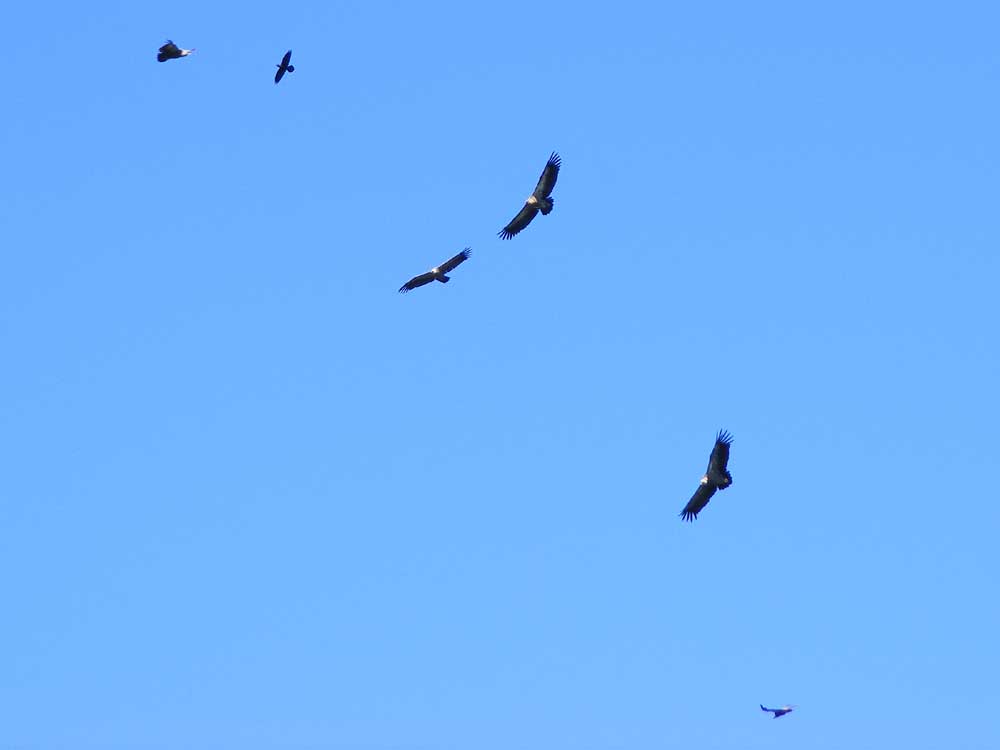
Vultures!


One of the things on my 'to see' list when we went to the Pyrénées-Atlantiques for a few days break in September was vultures. Yes, vultures. There are three species of vulture that can be seen in the mountains of France (plus a fourth that might appear as a rare vagrant). The one you are most likely to see is the Griffon Vulture (Fr. Vautour fauve) and is the one that occurs in the French-Spanish Basque border country that we were staying in.

Photographed by Susan Walter. Tour the Loire Valley with a classic car and a private guide.

I thought we would have to go up high, bleak and remote, but in fact, we drove to the place where we we had the best sightings, and took the tourist train to another site where they were present. I suspect that not all the tourists catching the Petit Train de la Rhune notice the two or three big birds circling overhead, and I also suspect that not many people get to see the numbers of vultures in one place that we did at our lunch spot on the Spanish side of la Rhune.

After failing in our first attempt to catch the famous tourist train we decided to drive over into Spain and just take roads at random. From the town of Bera we climbed up and up on increasingly narrow roads until they became ridged concrete and then finally dirt. Then the road ran out -- or at least, there was a sign saying the public was not allowed to continue up the track in a car. It was lunch time and we had a picnic, it was sunny and we parked on an open patch of grass to spread our food out.

Photographed by Susan Walter. Tour the Loire Valley with a classic car and a private guide.

We hadn't quite finished eating when out of the corner my eye I saw a big bird glide in from behind me. 'Look! Look!' I squeaked to Simon. 'A vulture!'  They are unmistakable. Within seconds though, another appeared, and then in quick succession, another and another. Over a period of a few minutes more than 20 vultures turned up. Some just circled around, but others, the earliest arrivals were clearly coming down and landing.

We rushed over to the fence of a nearby cattle enclosure. We could see the vultures coming down, but some bushes obscured exactly where they were landing and what they were doing. Later reading about them makes us think that one of the cows must have been secreted amongst the trees and shrubs, giving birth. The vultures come for the afterbirth.

Photographed by Susan Walter. Tour the Loire Valley with a classic car and a private guide.

Griffon vulture numbers in the western Pyrenees had dropped to just a couple of thousand pairs in Spain and none in France in the 1960s, due to hunting, poisoning, loss of food and habitat, and collisions with powerlines. Thanks to conservation efforts and legal protection, numbers have increased tenfold. Vultures are now easy to see in the mountains and are directly benefitting from the re-colonisation of these areas by wolves. Now the locals are more sensitive and educated, and there are hides and feeding stations in a few places, to encourage tourists to appreciate these gigantic birds.

Immature vultures have been known to travel from Spain through France and up to the Netherlands in recent years, before returning to breed in the mountains. The re-establishment of wolves means that there are increased numbers of deer carcasses and the natural food chain is more reliable. Griffon Vultures are a real conservation success story. 

************************************************

For details of our private guided tours of chateaux, gardens, wineries, markets and more please visit the Loire Valley Time Travel website. We would be delighted to design a tour for you.

We are also on Instagram, so check us out to see a regularly updated selection of our very best photos. 

Friday, 11 October 2019

Going Underground


Visiting the former underground limestone quarry at Bourré that has transformed itself into a speciality mushroom farm is always a fascinating experience. Because the mushroom cultivation is rotated around the galleries to help prevent diseases getting a foothold in the crop, one visit is never the same as the next. Here is a selection of photos from our last visit, including some from the underground village, created as record of what the beautiful white Bourré stone once looked like. Now the stone has run out and quarrying stopped, any repairs to chateaux such as Chenonceau have to be done with stone from near Poitiers, which is slightly green and not so pure white.

Much of the former limestone quarry looks like this.
Photographed by Susan Walter. Tour the Loire Valley with a classic car and a private guide.

A detail in the underground village.
Photographed by Susan Walter. Tour the Loire Valley with a classic car and a private guide.

An underground chamber, with a map of the galleries painted on the ceiling, 
and miners' picks on the wall.
Photographed by Susan Walter. Tour the Loire Valley with a classic car and a private guide.
In the middle of this chamber is a fenced off hole with some steps down to the bottom. This was a void, discovered by our guide's dog, who fell through the floor more than a metre.

Photographed by Susan Walter. Tour the Loire Valley with a classic car and a private guide.

Old miners lamps.
Photographed by Susan Walter. Tour the Loire Valley with a classic car and a private guide.

A colonnade in the underground village.
Photographed by Susan Walter. Tour the Loire Valley with a classic car and a private guide.

Yellow Oyster Mushrooms.
Photographed by Susan Walter. Tour the Loire Valley with a classic car and a private guide.
Holes are poked in the sides of the bale so the mushrooms emerge as bouquets. When a bouquet is picked another will grow out of the hole. If the top was taken off the bale entirely, as is done with the button mushrooms, all the oyster mushrooms would fruit simultaneously in one big block out the top, which is not so good for commercialising them.

************************************************

For details of our private guided tours of chateaux, gardens, wineries, markets and more please visit the Loire Valley Time Travel website. We would be delighted to design a tour for you.

We are also on Instagram, so check us out to see a regularly updated selection of our very best photos. 

Thursday, 10 October 2019

Cyclamen 2019


Every year we post a picture of the cyclamen, naturalised and flowering in gardens all over the Loire Valley in the early autumn. Quite often we don't get round to it until the cyclamen has been flowering for several weeks. Like this year.

This year's photo was taken on the footpath outside our friend and neighbour Gérard's house. 
Photographed by Susan Walter. Tour the Loire Valley with a classic car and a private guide.

And here are our previous posts featuring cyclamen.

************************************************

For details of our private guided tours of chateaux, gardens, wineries, markets and more please visit the Loire Valley Time Travel website. We would be delighted to design a tour for you.

We are also on Instagram, so check us out to see a regularly updated selection of our very best photos. 

Wednesday, 9 October 2019

The Price of Cheese


Charles cutting us some Brie de Meaux.
Photographed by Susan Walter. Tour the Loire Valley with a classic car and a private guide.

Our friend Charles runs an épicerie fine (speciality grocery store) in Esvres sur Indre, on the outskirts of Tours. The shop specialises in artisanal products and local organic vegetables. Charles used to work in the wine industry, but four years ago stepped out on his own to follow his dream. In that time he has been able to purchase the building the shop is located in and pay himself a living wage. The shop has a steady stream of customers and Charles knows them all personally. He has been able to achieve all of this without any internet presence at all. His customers are local and want to know where their food is coming from.

The cheese price list. All the cheeses are farmhouse.
Photographed by Susan Walter. Tour the Loire Valley with a classic car and a private guide.

Charles still has dreams -- maybe an electric vehicle for deliveries for example -- but he epitomises the French way of doing business. He doesn't want to create a grocery empire. He wants to earn enough to support his family, and still be able to play rugby on the weekends.

Charles Morand
Art à Table
9 Place Joseph Bourreau
37320 Esvres sur Indre

Tel: 06 61 90 42 99


************************************************

For details of our private guided tours of chateaux, gardens, wineries, markets and more please visit the Loire Valley Time Travel website. We would be delighted to design a tour for you.

We are also on Instagram, so check us out to see a regularly updated selection of our very best photos. 

Tuesday, 8 October 2019

The Bells, the Bells


Clay form from a bell foundry and bronze ingots below.
Photographed by Susan Walter. Tour the Loire Valley with a classic car and a private guide.

The Royal Abbey of Fontevraud has had a display of church bells set up on the portico of the side door of the church this year. One of the bells has been specially cast to ultimately hang in the belltower at Fontevraud. The others are on loan, some 21st century, some early 20th century.

Early 20th century bell.
Photographed by Susan Walter. Tour the Loire Valley with a classic car and a private guide.

 The bell on the left has been cast for Fontevraud and is called Aliénor. 
The one on the right is also new and for a privately owned chateau.
Photographed by Susan Walter. Tour the Loire Valley with a classic car and a private guide.


************************************************

For details of our private guided tours of chateaux, gardens, wineries, markets and more please visit the Loire Valley Time Travel website. We would be delighted to design a tour for you.

We are also on Instagram, so check us out to see a regularly updated selection of our very best photos. 

Monday, 7 October 2019

A Prized Wild Mushroom


One day in late November our orchard neighbour was selling Pieds de Moutons at the market. These are an edible fungus known as Hedgehog Mushrooms in English. These were not grown commercially, but harvested wild in conifer forests.

A box of hedgehog mushrooms.
Photographed by Susan Walter. Tour the Loire Valley with a classic car and a private guide.
I had never seen this type of mushroom before, but I recognised it immediately because I've seen pictures in fungi fieldguides. It is one of the few truly unmistakeable edible wild mushrooms, that can be identified simply by looking at the pictures in a fieldguide.

The French name translates literally as 'sheep feet', but I think pieds in this case is being used to mean 'small plant' and the English equivalent is probably something like 'vegetable sheep', and their pale undulating shape reminded someone long ago of wool fleece.

The teeth on the underside.
Photographed by Susan Walter. Tour the Loire Valley with a classic car and a private guide. 
Their scientific name is Hydnum repandum. Their most distinctive feature are the pretty pale salmon pink 'teeth' on their underside. Our orchard neighbour told me I must scrape off the 'teeth' and trim the bottoms of the stems before cooking. This was very easily achieved by turning them upsidedown and gently running a small knife over them, after which an orange stain appeared.

There were a few rather aged Girolles (aka Chanterelles) in the box too.
Photographed by Susan Walter. Tour the Loire Valley with a classic car and a private guide.
They released an enormous amount of 'juice' once in the frying pan, and I cooked 500g of mushrooms very hard for 10 minutes to reduce the quantity of liquid to about a tablespoon. We ate them immediately in an omelette and they were pleasantly mushroomy, with good firm flesh.


**************************************

For details of our private guided tours of chateaux, wineries, markets and more please visit the Loire Valley Time Travel website. We would be delighted to design a tour for you.

********************************************

This is a refreshed post, originally from December 2009.

Sunday, 6 October 2019

The Chimneys of Mount Moffatt

Mount Moffatt is in Queensland's Sandstone belt (Queensland has more than one belt, there is also the Granite Belt just south of the Darling Downs). Because the rock is sandstone and it's a geologically old part of the world, the sandstone has weathered into many strange shapes. We didn't see all of the features, there also an arch which we couldn't get to for lack of a Four Wheel Drive vehicle.

Lot's Wife


The Chimneys

Which leads us to an interesting point - many of the tracks I have driven in the past are now either restricted to four wheel drive vehicles, or recommended only for four wheel drive vehicles. (This includes the roads to Mount Moffatt). I've never owned a four wheel drive car, nor ever felt the need for one. I suppose it's because I am more or less sensible and prepare my cars before I go offroad, and I know the limitations of both myself and my cars.

Reading Australian newspapers it appears that too many people have lost respect for the bush, and what is needed to survive in remote areas. It is getting increasingly common to see reports of people becoming stranded, lost, or otherwise seriously inconvenienced (and inconveniencing the rescue services) by assuming you can just drive where you want. I'm not sure that having 4WD helps people who don't prepare.