Wednesday, 10 February 2021

The Neo-Byzantine Church in Les Ormes

The original church in Les Ormes was commissioned by Martin Pussort in 1655. His heart reposes in the void under the main altar of the current church.

Neo-Byzantine church, Les Ormes, Vienne, France. Photo by Loire Valley Time Travel.

Around 1890 the condition of the old church left a lot to be desired -- a fact that was tragically demonstrated when the warden fell to his death after going through the floor of the belfry. It was clearly time for a new church.
 

Les Ormes, Vienne, France. Photo by Loire Valley Time Travel.

The neo-Byzantine style of the new church, consecrated in 1896, caused considerable comment amongst the townsfolk. A round belfry sits on an octagonal base, emerging from a square tower which serves as the narthex (porch).

Neo-Byzantine church, Les Ormes, Vienne, France. Photo by Loire Valley Time Travel.

And if you too are bemused by the neo-Byzantine style -- think the Basilica de Sacré-Coeur in Paris, which was begun in 1875 and consecrated in 1919.


************************************************

For details of our private guided tours of chateaux, gardens, wineries, markets and more please visit the Loire Valley Time Travel website. We would be delighted to design a tour for you.

We are also on Instagram, so check us out to see a regularly updated selection of our very best photos. 

Tuesday, 9 February 2021

A Jaundiced Sky and a Sub-Biblical Flood

It has rained for days and all the rivers are up. Here the flood meadows are deep in water. Further to the south-west, Saintes has been evacuated. And to top it off, on Saturday, the sky went an eery yallery greenery colour, with dust brought in by the Sirocco from the Sahara.

Road cut by flood waters, February 2021, Perusson, Indre et Loire, France. Photo by Loire Valley Time Travel.
The Indre has cut the D592 at Perusson. The raised walkway on the left tells you that this is not an unusual event.

Apparently the orange sky is quite a common winter phenomenon in the south-east, but not so much in the Loire Valley. Typically it is accompanied by mild temperatures and then rain which brings the fine Saharan sand down to earth. Here it just causes comment, but further south, closer to the source, it can disrupt air transport.

Flooding at the confluence of the Indrois and Indre Rivers, Azay sur Indre, Indre et Loire, France. Photo by Loire Valley Time Travel.
The Indrois on the left of the road and the Indre on the right. The road forms a dyke at this point near Azay sur Indre.

This flood is a fairly typical seasonal event. It's cut a few roads and put a few riverside car parks under water. The authorities are warning people not to go down to their cellars and not to try to drive through water that is 30 cm or more deep.

Reignac sur Indre in the rain, Indre et Loire, France. Photo by Loire Valley Time Travel.
Reignac sur Indre in the rain.

Indre et Loire is one of 14 'counties' that came under a orange (now downgraded to yellow) flood warning in the last few days. The Loire was still rising on Saturday, and had cut some popular walking paths in Amboise. The main concern is the Vienne at Chinon and Candes Saint Martin, which we have watched steadily rise over the past few days.
 

Azay sur Indre in the rain, Indre et Loire, France. Photo by Loire Valley Time Travel.
Azay sur Indre in the rain.
 

However, this is nothing compared to the levels of the June 2016 flood, and even further from the mega floods of the 19th century. The authorities are at pains to point out that it isn't unusual, and there is nothing to cause particular concern.


Flooding on the Indre, Indre et Loire, France. Photo by Loire Valley Time Travel.
Flooding on the Indre. Note the barbecue in the middle of the picture.
 

Anyone with a garden on the banks of the Loire, Cher or Indre is being advised to just stay indoors.

Flooding on the Indre, Indre et Loire, France. Photo by Loire Valley Time Travel.
Flooding on the Indre. The corrugated iron hut belongs to an angler.
 

The Loire has peaked at about 4.5 metres above normal, but we are faring a lot better than those in the south-west of France.


Flood marker, Reignac, Indre et Loire, France. Photo by Loire Valley Time Travel.
Flood marker in Reignac. The levels are expressed as Nivellement Général de la France (0 level is sea level based on the tide at Marseille).


A street in Loches in the rain, Indre et Loire, France. Photo by Loire Valley Time Travel.
A street in Loches in the rain.

Indre flood meadows from Loches heights, Indre et Loire, France. Photo by Loire Valley Time Travel.
The inundated flood meadows of the Indre seen from the heights of Loches.

Indre in spate at Loches, Indre et Loire, France. Photo by Loire Valley Time Travel.
The Indre in spate at Loches.

Driving through Loches in the rain, Indre et Loire, France. Photo by Loire Valley Time Travel.
Driving through Loches in the rain.


************************************************

For details of our private guided tours of chateaux, gardens, wineries, markets and more please visit the Loire Valley Time Travel website. We would be delighted to design a tour for you.

We are also on Instagram, so check us out to see a regularly updated selection of our very best photos. 

Monday, 8 February 2021

Chaource cheese

Chaource is a soft cheese with a white bloom, made from whole cows' milk, rather salty, with about 45% fat content. About 2500 tonnes are produced annually, from the milk from about 70 farms and fewer than 10 production sites. It is a very old cheese, mentioned as early as the 14th century. Marguerite of Burgundy, Queen of Navarre and sister-in-law of King Philippe VI of France is known to have served it at her table. At the time, its production was tightly linked to monastic establishments, as they were the only people who had the resources to produce enough milk. They also favoured cheese as an alternative to meat in their diet.

Chaource cheese, France. Photo by Loire Valley Time Travel.

By the 17th and 18th centuries women on farms had taken up production to feed their families. They didn't make more because they had to fit production in with all the other tasks they had. Thus they developed a simple rhythm which extended over several days, but meant the cheese could mostly be left unattended. The cows were milked morning and evening and then the milk left until the next milking to form curds, and then left to drain. The cheese tended to be eaten fresh in the summer, but dry in the winter, mainly for reasons of practicality ie the cheese was difficult to age in the heat of summer, and this difference in consumption has tended to persist even into modern times.

Chaource cheese, France. Photo by Loire Valley Time Travel.

By the 19th century cheeses which were not being consumed on the farm were being sold in the markets by cheese merchants who travelled around the farms buying up excess cheeses and reselling them in the centres of population, both local and the big cities. Improvements to dairy herds and pastures meant production was augmented and the market grew. However, production was constrained by the size of farms and the time they had to make cheese until the mid-20th century, when small milk processing factories began taking the milk of several farms and making larger quantities of cheese under the careful eye of a specialist artisan cheesemaker.

Chaource cheese, France. Photo by Loire Valley Time Travel.

Chaource cheese comes from Aube (the area around Troyes) and Yonne (the area around Auxerre) in the north-east of France, from mainly grass fed herds on mixed farms. The milk used cannot be modified in any way ie it can't be filtered or split to produce a standard product the way modern dairy processing so often does. The cheesemakers must rely on the traditional fairly non-interventionist husbandry techniques used by the farmers to manage the cows to produce milk of just the right quality for making Chaource cheese. Once curds have formed they are ladled by hand into cylindrical moulds which are slightly higher than wide, and allowed to drain by the force of gravity ie the weight of the cheese pushing down on itself, with no pressing. The cheese is turned over in the mould at least once during this draining process. Once unmoulded the cheeses are wiped with a cloth and rubbed with dry salt. Then the cheeses are laid out to mature for a fortnight. During the whole process temperature is closely controlled -- warmer for forming curds, cooler for maturing. 

Chaource cheese, France. Photo by Loire Valley Time Travel.

While maturing they develop a thin crust and a white surface bloom of Penicillium candidum, with a characteristic undulation due to the drying effect of a different, yeast like fungus, Geotrichum sp. The cheeses come in two sizes. The large ones are between 450 g and 700 g, with a diameter of 110 - 115 mm. The small ones are 250 g to 380 g and 85 - 90 mm across. Over time the layer just below the crust will become creamier and creamier, whilst the centre of the cheese will become more granular and almost crumbly. It is quite an earthy, mushroomy, nutty cheese, and one of our favourites, which we often buy from Catherine's cheese truck in Loches market. The one in the photos is the larger size and cost us €8. Chaource is in the same 'family' as the better known Brie cheese. Since 'what grows together goes together' it can be consumed with champagne or chablis wines.

Chaource cheese, France. Photo by Loire Valley Time Travel.


************************************************

For details of our private guided tours of chateaux, gardens, wineries, markets and more please visit the Loire Valley Time Travel website. We would be delighted to design a tour for you.

We are also on Instagram, so check us out to see a regularly updated selection of our very best photos. 

Sunday, 7 February 2021

Coastal Heath


Coastal heath, Iluka, NSW, Australia. Photo by Loire Valley Time Travel.

This coastal heath is typical of what the fragments of natural habitat that have not been urbanised along much of the east coast of Australia looks like. There is a nice Saw Banksia Banksia serrata on the right and lots of Grass Trees Xanthoria sp everywhere. Over on the left in the middle distance are some little red dots, which are Christmas Bells Blandfordia nobilis [link] and beyond them some Broad-leaved Paperbarks Melaleuca quinquenerva.


************************************************

For details of our private guided tours of chateaux, gardens, wineries, markets and more please visit the Loire Valley Time Travel website. We would be delighted to design a tour for you.

We are also on Instagram, so check us out to see a regularly updated selection of our very best photos. 

Saturday, 6 February 2021

A View of Paris With Les Invalides

View of Paris from the Eiffel Tower. Photo by Loire Valley Time Travel.

This view of Paris with Les Invalides in the centre was taken from the Eiffel Tower in September 2002. You can see the gilded Eglise du Dome (which houses the tomb of Napoléon I). The Eglise du Dome is part of the Hotel des Invalides, the vast military hospital complex built by Louis XIV and now still a hospital and residence for wounded war veterans, but also housing the Musée de l'Armée (the Army Museum -- a good visit but requires physical and emotional stamina) and offices for the Armed Forces.


************************************************

For details of our private guided tours of chateaux, gardens, wineries, markets and more please visit the Loire Valley Time Travel website. We would be delighted to design a tour for you.

We are also on Instagram, so check us out to see a regularly updated selection of our very best photos. 

Friday, 5 February 2021

Villa Caroline

Taking a turn down a side street in Les Ormes, on the hunt for a different view of the chateau behind all its gates and gigantic outbuildings, we suddenly encountered this extravagantly romantic Belle Epoque villa.

Villa Caroline, Les Ormes, Vienne, France. Photo by Loire Valley Time Travel.
Villa Caroline as you encounter it by walking up rue Pierre d'Argenson.

It was commissioned by Rodolphe Salis, the creator of the legendary Parisian cabaret Le Chat noir [link], for his mistress. Rodolphe Salis was the inventor of modern cabaret ie a nightclub where acts are introduced by a master of ceremonies (Salis himself) and the audience sits at small tables where they are served drinks. I think he must have been quite a character, and was famous for his disrespectful interactions with the audience. He was the son of a distiller who went to Paris to make his fortune. While he was waiting for the fortune to materialise through his various attempts at putting together artistic entertainments in establishments serving alcoholic beverages, he and his collaborators supported themselves by making religious artefacts.

Villa Caroline, Les Ormes, Vienne, France. Photo by Loire Valley Time Travel.
Street facade of the villa.

Now Villa Caroline is owned by a pastry chef, whose family has owned it for 70 years. The name Villa Caroline is an hommage to the current owner's mother. It was originally called Villa Marie-Louise, after Rodolphe Salis' mistress. He came from Chatellerault and fell madly in love with one of his dancers, for whom he built this house in 1890. Inside, so I read, every surface is covered with images of the young woman -- even the ceiling. All the doors and windows have leaded lights, with one in the dining room depicting Rabelais, a character Salis identified with.

Monogram on the side of Villa Caroline, Les Ormes, Vienne, France. Photo by Loire Valley Time Travel.
Tile monogram on the side of the house, showing, I think, in black, an interwined L and R, and in blue, a reversed L on the left and an R on the right.

The architect was Henri Deglane, who was the head of the architecture workshop at the Beaux Arts de Paris. He later designed the nave and avenue Winston Churchill facade of the Grand Palais, and the monument to Joan of Arc in Chinon. 

Window in Villa Caroline, Les Ormes, Vienne, France. Photo by Loire Valley Time Travel.
Presumably no one opens these shutters.

In the garden, visible from the street, is a magnificent cedar tree.

Gates, Villa Caroline, Les Ormes, Vienne, France. Photo by Loire Valley Time Travel.
The rather splendid entry gates to the villa.

It is privately owned and not opened to the public.


************************************************

For details of our private guided tours of chateaux, gardens, wineries, markets and more please visit the Loire Valley Time Travel website. We would be delighted to design a tour for you.

We are also on Instagram, so check us out to see a regularly updated selection of our very best photos. 

Thursday, 4 February 2021

La Bergerie

Despite the name La Bergerie, which means 'sheepfold', this enormous building in Les Ormes was actually constructed as a gigantic stable for stud horses.


18C La Bergerie, Les Ormes, Vienne, France. Photo by Loire Valley Time Travel.
The central front of La Bergerie, photographed from in front of the chateau gates. The building stretches for many metres left and right but is not very deep.

It was built for the Marquis Marc-René-Marie d'Argenson in 1766-68 and is one of the few extant works designed by the Parisian architect Charles de Wailly. And if that wasn't enough, it is right next to an equally enormous relais de Poste, considered one of the most notable in France, more for its size than its architectural merit. The Marquis d'Argenson was the Superintendent of Post, so rearranged the postal system to his own satisfaction, including putting Les Ormes on a new major post delivery route.

The original bergerie was indeed a small barn for housing sheep, but in 1766 the Marquis d'Argenson built an enormous barn next to it. In 1820 the old bergerie was demolished and the bigger newer barn took on its name.

18C Pediment, La Bergerie, Les Ormes, Vienne, France. Photo by Loire Valley Time Travel.
18th century pediment on La Bergerie. Rabbits nestling in quite an intimate place.


The building is 80 metres long and 12 metres deep, with a single sloping roof and a manege behind (an enclosed space for exercising and training horses). A sundial on the front tells the time between 11 am and 1 pm. It allowed the Marquis to put into practice his innovative ideas on horse husbandry. He was the Director of the King's Stud, and much influenced by new methods coming out of England.

Originally the building was painted brick red, and there were terracotta stags heads attached to the rondels. The style reflects the artistic tastes and prestige of the owners.

The 15 metre pediment was sculpted by Augustin Pajou. It represents the goddess of fertility, Cybelle, whose head is crowned with towers, leaning on a lion (an emblem found on the coat of arms of the d'Argenson). She is surrounded by four cherubs in a mineral, animal and vegetal decoration. If you visit take the time to find the two little rabbits.

The sculptor was a friend of the architect. The work was carried out in his Paris studio, then the sculpture transported by boat to Les Ormes.

Later La Bergerie did in fact live up to its name as it became a barn for housing 300 merino sheep.

For our previous post on La Bergerie and the Relais de Poste click on the [link].


************************************************

For details of our private guided tours of chateaux, gardens, wineries, markets and more please visit the Loire Valley Time Travel website. We would be delighted to design a tour for you.

We are also on Instagram, so check us out to see a regularly updated selection of our very best photos. 

Wednesday, 3 February 2021

Chateau des Ormes

The Chateau des Ormes is an imposing building hidden behind great walls and outbuildings in the small town of Les Ormes, between Tours and Poitiers, in Vienne, close to its border with Indre et Loire. The chateau estate is bounded on one side by the Vienne River. Nowadays the extensive farm is divided up into smaller parcels and owned by several people. The chateau itself is privately owned, but often opened up to the public for concerts and academic conferences on subjects with a connection to the chateau and the influential Argenson family who owned it. From June to the end of September you can visit and view the courtyard and some rooms.

Central wing of Chateau des Ormes, Vienne, France. Photo by Loire Valley Time Travel.
Central wing of the chateau.


The chateau was built starting in 1642 by the Pussort brothers, who were the uncles of Louis XIV's great First Minister Jean-Baptiste Colbert. It was acquired in 1729 by Comte Marc-Pierre Voyer d'Argenson, War Minister to Louis XV and friend of Diderot and d'Alembert, who dedicated their Encyclopedia to him. He hosted many celebrity guests there, including Voltaire.

Pavillion at the entry to Chateau des Ormes, Vienne, France. Photo by Loire Valley Time Travel.
One of the pavillions at the entrance.


Les Ormes had been a seigneurial seat since 1392. In 1434 the Marans family acquired the estate and retained ownership until 1608, when it passed to one of Marie de Medici's courtiers. In 1642 creditors seized the estate from the then owner and it was sold to the Pussort brothers. One of them was described as "Very rich and very stingy, moody, difficult, proud, with an angry cat's face that announced what he was, a malignity that was natural to him; mixed in with all this much probity, great capacity, much intelligence, extremely industrious (...). A dry man, with no friends, hard and difficult to reach, a bundle of thorns, without any amusement, who wanted to be master everywhere, and who was master because he was feared, dangerous and insolent, and who was very little regretted." These men were instrumental in helping their nephew Colbert bring about the downfall of his great rival Nicolas Fouquet.

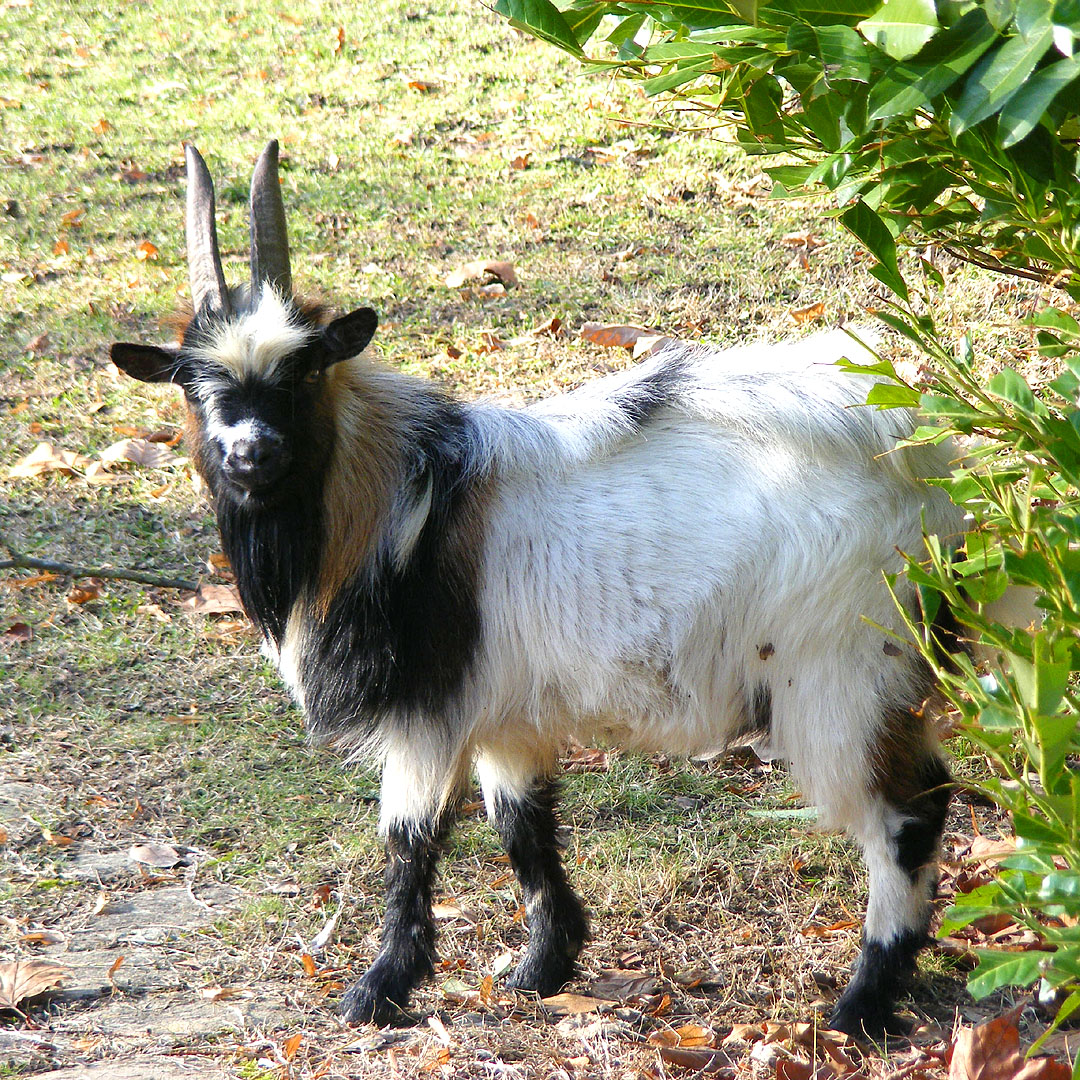
Goat, Chateau des Ormes, Vienne, France. Photo by Loire Valley Time Travel.
This goat appeared from behind a hedge to inspect us as we peered through the big wrought iron gates.


On the last brother's death the vast estate was shared amongst the nieces and nephews, with Louise-Henriette Colbert, Duchess of Beauvilliers inheriting the chateau. She and her husband promptly sold it to Charles Chamblain, First Gentleman of the Bedchamber to the King. He sold it in 1720 to Pierre Boutet de Marivatz, one of Philippe d'Orléans, Regent of France's courtiers.

Chateau des Ormes outbuildings along a street in Les Ormes, Vienne, France. Photo by Loire Valley Time Travel.
The chateau outbuildings along a street in Les Ormes.


In 1729, Marc-Pierre de Voyer de Paulmy d'Argenson, Chancellor, Head of the Council and Superintendent of Finance to the Regent, bought the Barony of Les Ormes and all its dependencies (Mousseau, La Motte de Grouin, Morte-Veille, La Chevalerie, La Garenne de Séligny, Villiers, Châtre, La Pouzardière, Salvert, Lesteigne, La Fontaine de l'Epinelle, Le Grand et Le Petit Coupé) from his colleague Boutet de Marivatz. The estate also included a lock on the Vienne River, a mill, a community oven, rights to fairs and markets, measures, stalls and market hall, as well as the right to sit in justice and fine people for all levels of misdemeanours within the Barony. 

Back entrance to the Chateau des Ormes, Vienne, France. Photo by Loire Valley Time Travel.
Back entrance.


Becoming Minister of War to Louis XV in 1742, he at first earnt the respect and friendship of the King for his wise counsel and their shared passion for the arts. But this closeness to the King earnt him the jealously of Madame Pompadour, the King's mistress. Fifteen years later there was an attack on the King and thanks to Madame Pompadour the King deemed Argenson responsible and he was decommissioned and banished to his estate at Les Ormes. The King advised him to spend his time agrandising his chateau and grounds, and that is precisely what he did for the next seven years.

Barn, Chateau des Ormes, Vienne, France. Photo by Loire Valley Time Travel.
Street side of a vast barn along the perimeter of the chateau park.

On his death in 1782 his son inherited but by this time the chateau was in a poor state and required a lot of the work. He also interested himself in new agricultural practices and was the first to cultivate clover and sainfoin in the area. When his son in turn inherited he concentrated on creating a vast equestrian facility, including a stud, gigantic stables opposite the chateau entrance and a post relay inn [link]. He was director of the King's Stud and keen on innovative equestrian husbandry ideas coming out of England at the time. In order to fund the work he eventually sold off one of the pavilions at the entrance.

18C stables, Les Ormes, Indre et Loire, France. Photo by Loire Valley Time Travel.
The central entrance to the vast stables across the road from the chateau.


The Marquis d'Argenson at the time of the Revolution is known as 'the Red Marquis' for his socialist and egalitarian ideals. He managed to survive the Revolution and the restoration of the monarchy, keeping the estate intact. In the early 19th century he created a herbarium, a botanical garden and plant nursery, built a windmill and a second ice house, and had the dining room ceiling repaired. Finally, in 1823, despite his austere lifestyle, his generosity combined with poor business sense, meant that the estate was split into 29 parcels and sold off, although the family retained the chateau and park. However, the central part of the chateau was demolished, leaving only the wings. Click on this [link] to learn more about botany at the chateau.

La Tourelle, Chateau des Ormes, Vienne, France. Photo by Loire Valley Time Travel.
La Tourelle, a small tower built around 1770 on the corner of the park where it meets the old ford on the River Vienne.


After 80 years of a gap between the two chateau wings, the Count Pierre-Gaston d'Argenson had the central block reconstructed between 1903 and 1908.

The last Argenson heir died in 1975 and the remaining estate was sold off in parcels. The chateau itself was bought by a couple of teachers, who opened it to the public and rented out the salons for functions. During one of these functions a Parisian doctor, Sydney Abbou and his wife discovered the chateau and decided to buy it in 2000. Since then they have undertaken an award winning restoration and refurnishing of the chateau.


************************************************

For details of our private guided tours of chateaux, gardens, wineries, markets and more please visit the Loire Valley Time Travel website. We would be delighted to design a tour for you.

We are also on Instagram, so check us out to see a regularly updated selection of our very best photos. 

Tuesday, 2 February 2021

Back to Argentina

I have fallen badly behind with my blogging about my trip to South America 30 years ago.

After a couple of weeks in Chile we returned to Buenos Aires. This was imposed on us under the conditions of our round the world tickets, but also because we liked the place. We had a couple of days to do shopping and see sights. Avenue 9 Julio is 5 lanes of traffic each way, 2 bus lanes each way, and on either side of the main road, 3 lanes of side road. That's a 20 lane wide road in a city where machismo isn't unknown. Such japes....

There's not much to report on our second visit to Buenos Aires - much steak was eaten, plenty of shopping was done, and my diary has many comments on the heat (unbearable) and the price of restaurants, which was very bearable.

Old Buenos Aires


Of course, there was the night where we decided after dinner to go to a bar. It would have been at least midnight before dinner was finished, but I remember the bar not being particularly full. We ordered drinks, and when the drinks were delivered a man at the bar recognised our accents and said that he had spent time in Sydney. He joined us at our table along with his girlfriend. Or maybe two girlfriends. Things were quiet, and we had an early plane to catch, so after about an hour we got up to leave. It was at that point a bill for $50 was presented to us for the company of the ladies. There was no way we were getting out without paying, but by the same token we didn't have $50 on us. There were some rather large characters standing by, so it was agreed that Hugo would return to the hotel and get the money whilst I remained.

Hugo returned with $50, by which time the $50 had become $100, which of course we didn't have. So he went out to get the money while I remained. About ten minutes later he returned - with the nightstaff from the hotel. They came in at a pace, said "get up walk out now" - which is exactly what I did. It still cost $100, but at least I had escaped. The hotel staff were very angry about it all, I was shaken and Hugo was cross.

Interestingly, when Susan and I had dinner with Hugo at the end of 2017 we were talking about this event, and Susan was surprised at how consistant our stories were. I have a suspicion that she hadn't believed me when I told her about it...


Monday, 1 February 2021

Mendiants

Mendiants, France. Photo by Loire Valley Time Travel.

Mendiants are made around Christmas and represent the alms traditionally given to beggars at this time. Each of the different dried fruits and nuts studding the chocolate disk symbolise the different Catholic monastic orders that practice begging (mendicant orders -- Augustinian, Carmelite, Franciscan and Dominican). These particular ones were photographed in my local boulangerie patisserie.

Sunday, 31 January 2021

Driving on the Left

When I am in France, this photo looks odd, but as soon as I arrive in Australia driving on the left hand side of the road is instictive. I have never looked at a photo of French roads while in Australia, but driving on the right ihn France is also instinctive.  I've never had a problem driving in the UK in a French car, either.


Whether I could drive on the right in a UK car I don't know. I've never tried.

Saturday, 30 January 2021

Eiffel Tower to La Defense

This is about as classic a view of Paris as there is to be had. It was taken in September 2002 from the Eiffel Tower, looking north-west across the Seine and directly down the Trocadero Gardens. Beyond them are the monumental curved buildings that house, on the right, the Cité de l'Architecture et du Patrimoine (the architecture and heritage museum, which I highly recommend as a visit) and on the left, the Museum de l'Homme (the museum of mankind, which I have never visited and probably should).

View from the Eiffel Tower looking north-west, Paris, France. Photo by Loire Valley Time Travel.
View from the Eiffel Tower to La Défense.
 

The Place du Trocadero, between the two museums, is an excellent viewing platform for the Eiffel Tower, day or night. If you cross the road there is what appears in my photo to be a park full of people. It is in fact Passy Cemetery, somewhere I have also never visited (I think). The painter Edouard Manet and the composer Claude Debussy are buried there. The street going off from Place Trocadero at 2 o'clock is the Champs Elysée. Correction from chm: "The street going off at 2 o'clock is avenue Kléber. You cannot see the Champs-Élysées on this photo."

Beyond all the white typically Parisian buildings is the Bois de Boulogne and the skyscrapers of La Défense. The residential area between the Bois de Boulogne and La Défense is Neuilly, the poshest most upscale neighbourhood in Paris.  The Seine does a big loop and turns back on itself so that it appears in both the foreground and as the just visible natural boundary between Neuilly and La Défense.


************************************************

For details of our private guided tours of chateaux, gardens, wineries, markets and more please visit the Loire Valley Time Travel website. We would be delighted to design a tour for you.

We are also on Instagram, so check us out to see a regularly updated selection of our very best photos. 

Friday, 29 January 2021

Chateau de Falaise

The Chateau of Falaise, near Les Ormes, sent several of its sons to Acadie in Canada, and maintains friendly ties with Acadiens in Quebec and Louisiana. The Gannes family have been connected with the chateau since 1364. The first two priests in Acadie and several army officers were scions of this house, present at the founding of Louisbourg [link] in Nova Scotia in 1713.

Chateau de Falaise, Vienne, France. Photo by Loire Valley Time Travel.
The tower at the entrance.

The chateau was also on the front line in the last battle before France surrendered in World War II, on 22-23 June 1940.

A pre-WWII Citroen Traction Avant at the site of the last battle before France's surrender, Vienne, France. Photo by Loire Valley Time Travel.
A rare pre-War Citroen Traction Avant in the chateau farm's machinery dump.


Today the chapel and adjoining buildings are a local history museum dedicated to their Acadien links, the World War II battle, occupation and Resistance, the Argenson family (influential local aristocrats associated with a number of properties in the area), Neolithic, Celtic and Roman history, agricultural tools and Poitevin and Tourangeau bonnets. The latest display is about the Acadien soldiers who came to France in 1916 to fight in World War I.

View of the Chateau of Falaise and Creuse Valley, Vienne, France. Photo by Loire Valley Time Travel.
View over the Creuse Valley with the Chateau of Falaise in the middle distance. Taken from the fortified chateau farm of Mousseaux.
 

The museum is open in the afternoons, from June to the Journées du Patrimoine (Heritage Open Days) in September.

Chateau de Falaise, Vienne, France. Photo by Loire Valley Time Travel.
The approach to the chateau.

Memorial to members of the Gannes family, Vienne, France. Photo by Loire Valley Time Travel.
Memorial plaque to two soldiers from the Gannes family who distinguished themselves in Canada.


************************************************

For details of our private guided tours of chateaux, gardens, wineries, markets and more please visit the Loire Valley Time Travel website. We would be delighted to design a tour for you.

We are also on Instagram, so check us out to see a regularly updated selection of our very best photos. 

Thursday, 28 January 2021

A New Service in Preuilly

Back in December I mentioned that l'Image would be reopening. What we didn't mention is that Sihan and Mathieu cooked a special birthday dinner as my birthday present to Susan which was extremely tasty, spicy in all the right places, and a great combination of textures. It's been a long time since we had an eastern Asian meal that hit all those buttons. If pressed we would say that our favorites were the Taiwanese Braised Pork (Lu Rou Fan) and the Sichuan Pork Dumplings, but all of it was excellent.
 

Sichuan Pork Dumplings


Taiwanese Braised Pork

Now they have opened a takeaway food service. You can order online and collect from their house in Preuilly. The prices are extremely reasonable, and our experience is that you'll be getting authentic tastes and spice levels, not watered down to suit a gentler Touraine palate.

(This isn't a paid advert or anything like that, it's a way of encouraging you to support a new local business.)

Wednesday, 27 January 2021

The Roman Castellum at Larcay

The castellum at Larcay is a Late Roman Empire military fortification on a terrace in the slope up from the Cher River at Larcay.

Roman castellum, Larcay, Indre et Loire, France. Photo by Loire Valley Time Travel.
Part of the curtain wall and a tower, along the eastern side.

Probably constructed towards the end of the 3rd century, like other similar constructions in Gaul, it seems to have been built on the site of an existing mausoleum, which was demolished at the time of constructing the fort. There are a number of unanswered questions about the site: why was it never finished; who occupied it and why was it built. It is very close to the heavily fortified Tours, which makes the need for a fortified enclosure here seem surprising. The extant remains comprise a part of the curtain wall and some towers.

In Antiquity Larcay was close to the major route between Bourges and Tours via the Cher Valley, and also several lesser routes, such as Truyes to Saint Martin le Beau, Truyes to Amboise and Tours to Loches via Saint Avertin. The Cher itself would have been navigable and seen people and goods transported back and forth.

Cellar under the Roman castellum, Larcay, Indre et Loire, France. Photo by Loire Valley Time Travel.
Cellar under the wall of the castellum.

The instability in the Roman Empire in the 3rd century led to a reduction of economic activity and distruption of administrative functions. Tours was also facing incursions by Germanic Barbarians who by 250AD controlled northern Gaul. It seems likely that the fort at Larcay was constructed in response to these issues in the hopes of controlling both river and overland traffic close to Caesarodunum (as Roman Tours was called).

The castellum is a trapezoid of 80 x 66 metres, with the longest side along the river and a gateway to the south, on the opposite side, away from the river. The site is one of the best preserved of its type in France.

Roman castellum, Larcay, Indre et Loire, France. Photo by Loire Valley Time Travel.
A section of wall and two towers.

The walls do not seem to have any below ground foundations, but have been raised on a tamped clay platform. Elements from the mausoleum previously on the site, such as fluted columns and carved stones, have been reused. In the 19th century cellars were dug under the walls for houses built up against the exterior walls. In the process stones were moved about and reused again.

The curtain wall is 4.2 metres thick to the south, but as little as 2.2 metres in other places, and standing 6 metres high. The structure follows a set pattern -- two small limestone rubble courses alternating with terracotta tiles (rather than bricks) enclosing a coarse block core of a mixture of limestone and flint as well as pieces of terracotta embedded in lime mortar. Very little of the original exterior surface render has survived. The towers are solid and constructed in the same way as the walls.

View across the Cher Valley, Indre et Loire, France. Photo by Loire Valley Time Travel.
The view across the Cher Valley from the castellum. The chateau in the distance is Moncontour at Vouvray.

The fort was abandoned at the end of the Roman era, but repurposed by Merovingian occupants, who reused some of the material from the old mausoleum for their own burials. Archaeological digs have found pottery shards and evidence of a palisade from the 15th century. In the 1970s the enclosure was divided up into gardens which have meant that the soil has been greatly disturbed, making the interpretation of archaeological digs difficult.
 

Today the castellum is part of a hamlet called La Tour, on the edge of Larcay, hidden away, no longer on the route to anywhere. All along the southern side the castellum walls have been incorporated into a row of houses.


************************************************

For details of our private guided tours of chateaux, gardens, wineries, markets and more please visit the Loire Valley Time Travel website. We would be delighted to design a tour for you.

We are also on Instagram, so check us out to see a regularly updated selection of our very best photos.