Tuesday, 22 September 2020

A Third Black Citroen


Citroen C4 Cactus. Photo by Loire Valley Time Travel.

We've bought a 'new' car. It's another black Citroën, and we think it's a classic of the future. It is a 2016 C4 Cactus to replace our daily runner, a 2004 Ford Fusion which we didn't love. We do love the Cactus, and stretched ourselves financially to buy it. We really wanted to buy an electric, but just couldn't get the numbers to stretch that far. The Cactus is in the next best category, in terms of ecological rating.

We handed the Ford in for destruction, and should be eligible for a conversion grant of a couple of thousand euros after a bit of paperwork. 

Our Cactus was originally registered as the demonstration vehicle for the Citroën outlet in north Tours. They then sold it to a private client in Tours, who no doubt got a great bargain. Then when they changed cars it came back to the Citroën concession, and we bought it. It had bad scratches down both sides, which were repaired for us before we picked it up, and new tyres were put on the front. It's done about 93.5 thousand kilometres.


************************************************

For details of our private guided tours of chateaux, gardens, wineries, markets and more please visit the Loire Valley Time Travel website. We would be delighted to design a tour for you.

We are also on Instagram, so check us out to see a regularly updated selection of our very best photos. 

Monday, 21 September 2020

Lamb Shanks in Red Wine

Simon and I love lamb shanks (called, rather charmingly, 'souris d'agneau' in French, or 'lamb mice'). I think for both of us this dish would make it into our Top Ten.

Homemade lamb shanks in red wine. Photo by Loire Valley Time Travel.

Ingredients

2 - 4 lamb shanks

3/4 tsp salt

1/2 tsp black pepper

1 tbsp olive oil

1.5 cups red wine

1 cup chicken stock

400 g can crushed tomatoes

1 tbsp tomato paste

1-2 cloves garlic, smashed and peeled

2 sprigs thyme

A bay leaf


Method

  1. Heat oven to 180C.
  2. Season lamb with salt and pepper.
  3. Heat the oil in a heavy based pan and brown the lamb shanks well.
  4. Transfer the lamb to an ovenproof casserole.
  5. Add all the other ingredients to the pan you browned the lamb in and heat until simmering. Make sure to scrape up any caramelised residue and pour over the lamb.
  6. Cover and put in the oven to braise for 2 hours.
  7. Uncover and cook for a further half an hour.
  8. Remove the lamb shanks and keep warm.
  9. Strain the sauce into a shallow pan and reduce to a syrupy consistency on top of the stove.
  10. Serve the lamb shanks perched on mixed potato and celeriac mash, with a ladle of sauce.

Serves 2 - 6, depending on the size of the lamb shanks and appetites.


Yum

************************************************

For details of our private guided tours of chateaux, gardens, wineries, markets and more please visit the Loire Valley Time Travel website. We would be delighted to design a tour for you.

We are also on Instagram, so check us out to see a regularly updated selection of our very best photos. 

Sunday, 20 September 2020

The Glengallan Bathroom


Slate bath, Glengallan Homestead, Queensland, Australia. Photographed by Loire Valley Time Travel.
 

Glengallan Homestead, near Warwick in Queensland, Australia was built in 1867, and was very grand indeed for its time. This was on land that had only been colonised for a couple of decades at the point the house was built, and amongst the luxury fixtures installed was a large slate bath and the first flushing toilet in Queensland, on the first floor.


Slate bath, Glengallan Homestead. Queensland, Australia. Photo by Loire Valley Time Travel.

Water was pumped up from the nearby creek to a holding tank under the house, then from there up to a sizeable header tank in the roof which provided the high pressure gravity feed required to flush the toilet. I assume hot water was heated in the kitchen and lugged up the stairs by servants. The header tank also provided cold water for a first floor cedar lined shower in an anteroom to the main bedroom.


A separate bath house was constructed for staff and underlings.


************************************************

For details of our private guided tours of chateaux, gardens, wineries, markets and more please visit the Loire Valley Time Travel website. We would be delighted to design a tour for you.

We are also on Instagram, so check us out to see a regularly updated selection of our very best photos. 

Saturday, 19 September 2020

Little Egret

Little Egret Egretta garzetta (Fr. Aigrette garzette) is a small white heron that feeds in shallow water or on land. They can be found in Africa, Asia, Australia and Europe, nesting in colonies in trees, often with other heron species. Now the species has recovered from the depredations of the plume trade, when millions of birds were killed every year, they are once again breeding in France.

Little Egret Egretta garzetta. Charente-Maritime. France. Photo by Loire Valley Time Travel.


The Brouage Marshes are perfect habitat for Little Egrets, who like open areas of swamp with ditches, especially where there are large grazing animals such as domestic cattle. They stalk their prey by slowly walking through the water or grass. They mostly eat fish, but anything that comes their way will be attempted -- amphibians, crustaceans, insects disturbed by the cattle, molluscs, small mammals and worms.

Little Egret Egretta garzetta. Charente-Maritime. France. Photo by Loire Valley Time Travel.
 
Western France, where these photos were taken, is one of the strongholds of this species now in Europe.

Heronry on the Ile d'Oleron, Atlantic coast, France. Photo by Loire Valley Time Travel.
Heronry on the Ile d'Oléron, where Little Egrets and Grey Herons were nesting together.


************************************************

For details of our private guided tours of chateaux, gardens, wineries, markets and more please visit the Loire Valley Time Travel website. We would be delighted to design a tour for you.

We are also on Instagram, so check us out to see a regularly updated selection of our very best photos. 

Friday, 18 September 2020

A Short Walk From Ligueil in mid-September

Cyclamens naturalised in an orchard. Indre et Loire. France. Photo by Loire Valley Time Travel.
Naturalised cyclamens in a small orchard along Allée des Cyclamens.


Charolais cattle. Indre et Loire. France. Photo by Loire Valley Time Travel.
Charolais cattle, grazing on the river flats.

Hawthorn Crataegus monogyna. Indre et Loire. France. Photo by Loire Valley Time Travel.
Hawthorn Crataegus monogyna (Fr. aubépine).

Walking group crossing a footbridge. Indre et Loire. France. Photo by Loire Valley Time Travel.
Walking across a slightly dodgy footbridge.

River Esves. Indre et Loire. France. Photo by Loire Valley Time Travel.
River Esves.


Old barn. Indre et Loire. France. Photo by Loire Valley Time Travel.
An old barn.

Old gate. Indre et Loire. France. Photo by Loire Valley Time Travel.
An old gate.

School swimming at public pool. Indre et Loire. France. Photo by Loire Valley Time Travel.
School swimming at the Ligueil public pool.

Old metal window shutters. Indre et Loire. France. Photo by Loire Valley Time Travel.
Old metal window shutters on an industrial building.

Aggregation of mostly juvenile Fire Bugs Pyrrhocoris apterus. Indre et Loire. France. Photo by Loire Valley Time Travel.
An aggregation of mostly juvenile Fire Bugs Pyrrhocoris apterus (Fr. Gendarmes).

Fire Bugs are gregarious and promiscuous, and very abundant in France. You will see them absolutely everywhere. They are called Gendarmes in French because in the old days French policemen wore red uniforms.


Chicken of the Woods Laetiporus sulfureus. Indre et Loire. France. Photo by Loire Valley Time Travel.
Chicken of the Woods Laetiporus sulphureus (Fr. Polypore soufré).

This magnificent bracket fungus is a much prized edible species, which I'm told sells for about €250 a kilo. This specimen alone would have produced a couple of kilos worth. It was growing in a very typical situation, on the upright trunk of an oak. My fungi expert friend, pharmacist Didier R, says that it is an unmistakable fungus, easily identified by its irregular, rounded and undulating edges and sulphur yellow colour. However, my expert naturalist friend Jean P pointed out that a beginner might confuse it with the Giant Polypore Meripilus giganteus (Fr. Polypore géante).


************************************************

For details of our private guided tours of chateaux, gardens, wineries, markets and more please visit the Loire Valley Time Travel website. We would be delighted to design a tour for you.

We are also on Instagram, so check us out to see a regularly updated selection of our very best photos. 

Thursday, 17 September 2020

European Bee Eaters

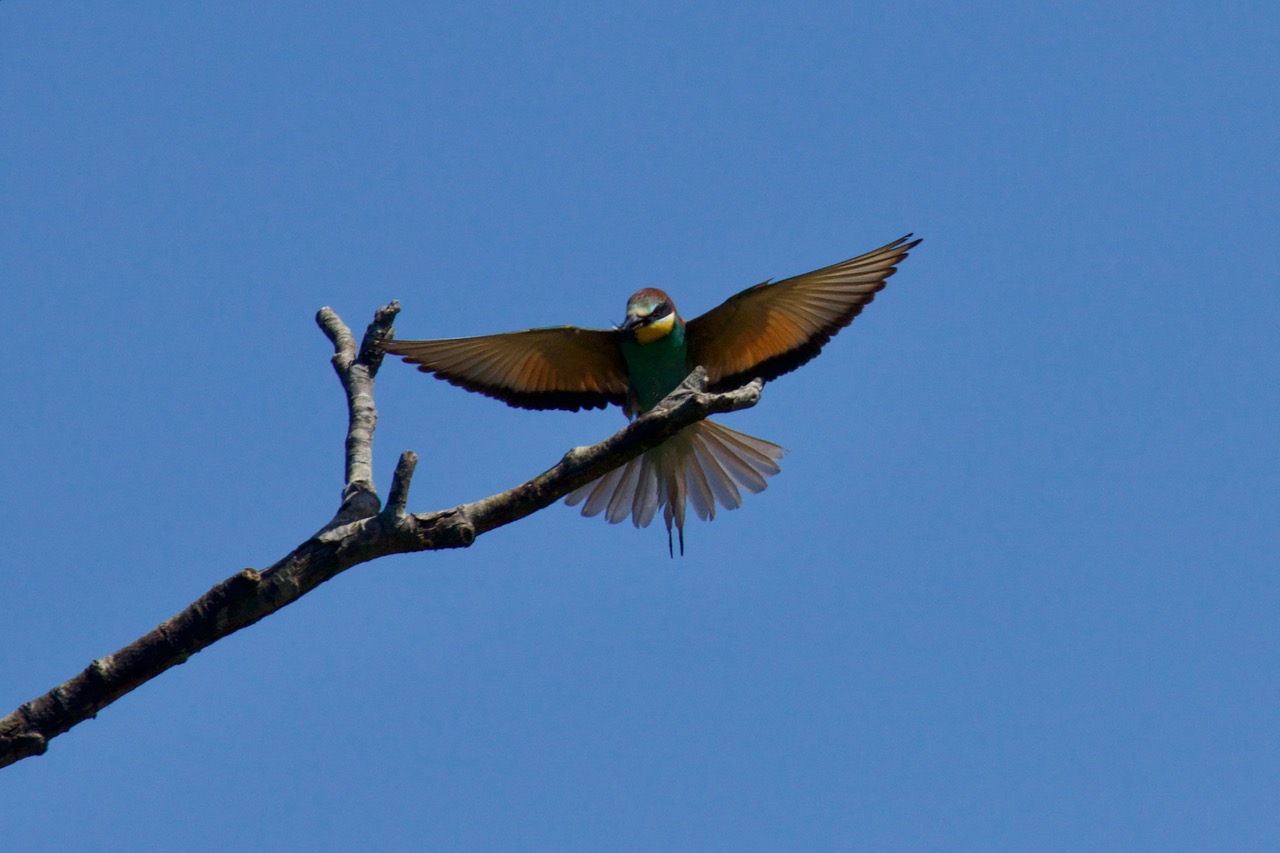
These beautiful pictures of European Bee-eaters Merops apiaster (Fr. Guepier d'Europe) were taken by our friend Ingrid near La Roche Posay in mid-July. I think these bee-eaters must be Europe's most colourful avian species!

European Bee-eater Merops apiaster. Vienne. France. Photo by Ingrid de Winter for Loire Valley Time Travel.
Photo courtesy of Ingrid de Winter.

It sounds like bee-eaters had a good breeding year and friends in the Pyrenees have reported large feeding flocks going over on their way back to tropical Africa for the winter.


European Bee-eater Merops apiaster. Vienne. France. Photo by Ingrid de Winter for Loire Valley Time Travel.
Photo courtesy of Ingrid de Winter.

A very gregarious species, you rarely see just one. You usually hear them making their prrpp prrpp call before you see them too. They nest in colonies in the sandy banks of some of the big rivers here, such as the Vienne and the Creuse. 


European Bee-eater Merops apiaster. Vienne. France. Photo by Ingrid de Winter for Loire Valley Time Travel.
Photo courtesy of Ingrid de Winter.

As their name suggests, they eat bees, and studies show that honey bees make up the bulk of their diet. But they don't really pose a threat to apiarists, as they only get about 1% of the managed honey bees. They also eat wasps, hornets and dragonflies, catching them on the wing.


European Bee-eater Merops apiaster. Vienne. France. Photo by Ingrid de Winter for Loire Valley Time Travel.
Photo courtesy of Ingrid de Winter.

To catch their prey bee-eaters perch out on a high exposed bare branch and make sorties, bringing the prey back to bash against the perch before eating it. Studies show bee-eaters do best with a mixed diet of bees and dragonflies.


European Bee-eater Merops apiaster. Vienne. France. Photo by Ingrid de Winter for Loire Valley Time Travel.
Photo courtesy of Ingrid de Winter.

European Bee-eater Merops apiaster. Vienne. France. Photo by Ingrid de Winter for Loire Valley Time Travel.
Photo courtesy of Ingrid de Winter.

European Bee-eater Merops apiaster. Vienne. France. Photo by Ingrid de Winter for Loire Valley Time Travel.
Photo courtesy of Ingrid de Winter.


************************************************

For details of our private guided tours of chateaux, gardens, wineries, markets and more please visit the Loire Valley Time Travel website. We would be delighted to design a tour for you.

We are also on Instagram, so check us out to see a regularly updated selection of our very best photos. 

Wednesday, 16 September 2020

2020 Cyclamens


Cyclamens naturalised in a garden. Indre et Loire. France. Photo by Alexis Dardare for Loire Valley Time Travel.
Photo courtesy of Alexis Dardare.
Every year we post a photo of the cyclamens somewhere in our area. This year I've cheated a bit because I didn't take these photos. Our friend Alexis did, in the garden of his family home in Preuilly, a couple of days ago. We used the cyclamens from this garden in 2015. [Cyclamens at Pouplouroux] Last time I saw him, Alexis gleefully reminded me that I got covered in chiggers from getting down on the ground to get the angle I wanted.


Cyclamens naturalised in a garden. Indre et Loire. France. Photo by Alexis Dardare for Loire Valley Time Travel.
Photo courtesy of Alexis Dardare.


************************************************

For details of our private guided tours of chateaux, gardens, wineries, markets and more please visit the Loire Valley Time Travel website. We would be delighted to design a tour for you.

We are also on Instagram, so check us out to see a regularly updated selection of our very best photos. 

Tuesday, 15 September 2020

A Walk From Le Grand Pressigny in mid-September

The medieval chateaux of Le Grand Pressigny and Etableau in the distance, Indre et Loire. France. Photo by Loire Valley Time Travel.
A two chateaux view with pear trees.

At a certain point up on the heights above the River Claise you can see both the medieval chateaux of Le Grand Pressigny and Etableau. [Le Chateau d'Etableau] Once there would also have been the chateau of Chanceaux nearby (behind me as I took this photo) but it has long ago completely disappeared but for some earthworks in the forest. [Walking Around an Invisible Chateau]

The point from which I took the photo is a landscape full of pear trees, wild in the hedgerows, along the road and in small household orchards. They were loaded with fruit, falling on the road to be squashed, but woody and hard in the mouth. If I understood the discussion about them correctly, they were used as a source of sugar to sweeten wine, in the days when your wine was stored in barrels, and frequently went off (ie turned to vinegar) before you had made the next vintage. If eaten they were always cooked, but they don't seem to have been used for poire williams type eau de vie or to make perry (Fr. poiré), the pear version of cider. The best known local pear delicacy is poires tapées, pressed dried pears, usually eaten as a condiment for game.

Salt smuggler's den, Indre et Loire. France. Photo by Loire Valley Time Travel.
A salt smugglers' hideaway.

We passed a pair of ruined buildings which I'd never seen before. They are off the side of a track which links two others along a small valley. I've walked both the other tracks before, but never this one that links the two. The buildings were once a hideout for salt smugglers I'm told, on the site of what had been a subterranean refuge in the Middle Ages. I didn't venture too far off the track. The ground dropped away very sharply near the ruined gables, and there was a grate over a hole that might have been a well or maybe a collapsed ceiling of the underground tunnels. There was a sign saying the place was dangerous. 

The Touraine was one of the areas in France where salt was heavily taxed (the notorious gabelle), so there was an active black market. [The Salt Store -- le Grenier à Sel] According to what I was told, the requirement by law for salt in bread was the main problem. I had already read about the fact that we are in an unsalted butter area because it was an unnecessary expense. Discussing it with Simon later we realised that there isn't much of a tradition here of salt curing meat either. Pork and poultry is preserved by slow cooking and storing it under a layer of fat in your cellar. The cool temperature combined with the anaerobic conditions in the storage jar keep the meat safe indefinitely. Beef and lamb is consumed more rarely, and fresh.

Nettle-leaved Bellflower Campanula trachelium, Indre et Loire. France. Photo by Loire Valley Time Travel.
Nettle-leaved Bellflower Campanula trachelium (Fr. Campanule gantelée).

Claise River at Le Grand Pressigny. Indre et Loire. France. Photo by Loire Valley Time Travel.
The Claise River at Le Grand Pressigny.

Hawthorn Crataegus monogyna. Indre et Loire. France. Photo by Loire Valley Time Travel.
Hawthorn Crataegus monogyna (Fr. aubépine).

Naturalised cyclamens, Indre et Loire. France. Photo by Loire Valley Time Travel.
Cyclamens naturalising in the forest, from the private park around the chateau de la Vienne.

Spindle Euonymus europaea, Indre et Loire. France. Photo by Loire Valley Time Travel.
Spindle Euonymus europaea (Fr. fusain).

One end of a longere. Indre et Loire. France. Photo by Loire Valley Time Travel.
One end of a longère style building, where people lived one end and animals the other, in a hamlet.

Sloes and rose hips in a hedgerow. Indre et Loire. France. Photo by Loire Valley Time Travel.
Sloes and rose hips in the hedgerow.

The twittering and rustling in this hedge and the small orchard behind it had to be heard to be believed. It turned out to be a flock of starlings, no doubt stuffing their faces with all this autumn bounty.


New bridge on Sud Touraine Greenway. Indre et Loire. France. Photo by Loire Valley Time Travel.
A new bridge along the Sud Touraine Greenway.

We were pleased to see that work on the Greenway (Fr. voie verte), which will create a walking and riding trail out of the former railway line between Descartes and Tournon, has not entirely stalled. [Funding for the Greenway]


Walkers along the Sud Touraine Greenway. Indre et Loire. France. Photo by Loire Valley Time Travel.
Walking along the Sud Touraine Greenway.


************************************************

For details of our private guided tours of chateaux, gardens, wineries, markets and more please visit the Loire Valley Time Travel website. We would be delighted to design a tour for you.

We are also on Instagram, so check us out to see a regularly updated selection of our very best photos. 

Monday, 14 September 2020

Gluten-free Choc Chip Cupcakes

Quick and easy, you can be eating these in under an hour. Not everyone likes gram flour in their GF mix though, so try substituting your favourite commercial flour blend. The batter should be very thick, so that the choc chips don't  sink, but it should not be dry and crumbly.

Homemade GF Choc Chip Cupcakes. Photo by Loire Valley Time Travel.


Ingredients
200 g rice flour
2 tbsp chickpea (gram) flour
1 tsp bicarb
2 tsp baking powder
125 g sugar
75 g butter, melted
1 egg, beaten
200 ml buttermilk (lait ribot)
75 g choc chips

Method
1. Heat the oven to 200C.
2. Line two 12-hole cupcake tins with paper cases.
3. Sift the flours, bicarb and baking powder into a large bowl then stir in the sugar.
4. Mix together the melted butter, egg and buttermilk in a separate bowl.
5. Combine the wet and dry ingredients, then stir in the choc chips.
6. Spoon the mixture into the paper cases and bake for 15 minutes.
7. Cool on a wire rack.

You can decorate with melted chocolate or leave unadorned. Makes 24.


Yum

************************************************

For details of our private guided tours of chateaux, gardens, wineries, markets and more please visit the Loire Valley Time Travel website. We would be delighted to design a tour for you.

We are also on Instagram, so check us out to see a regularly updated selection of our very best photos. 

Sunday, 13 September 2020

Iron Lace

Verandah railings, Glengallan Homestead, Queensland, Australia. Photo by Loire Valley Time Travel.


The verandah railings at Glengallan Homestead, in south-east Queensland, Australia, are very typical of 19th century Australian architectural details. This type of verandah railing is called 'iron lace' and is made of cast iron. It would most likely have been produced in Britain and shipped out to Australia, as Glengallan was built a few years before there were many Australian foundaries producing this sort of decorative work. Nowadays it is too low to meet current health and safety regulations, and since the building is open to the public, an additional higher cable has had to be installed, as discreetly as possible, since it is a listed building.


************************************************

For details of our private guided tours of chateaux, gardens, wineries, markets and more please visit the Loire Valley Time Travel website. We would be delighted to design a tour for you.

We are also on Instagram, so check us out to see a regularly updated selection of our very best photos. 

Saturday, 12 September 2020

White Storks

The Brouage and Rochefort Esturine Marshes in Charente-Maritime are a paradise for herons, egrets, swans, storks and a hundred and fifty other species of birds.
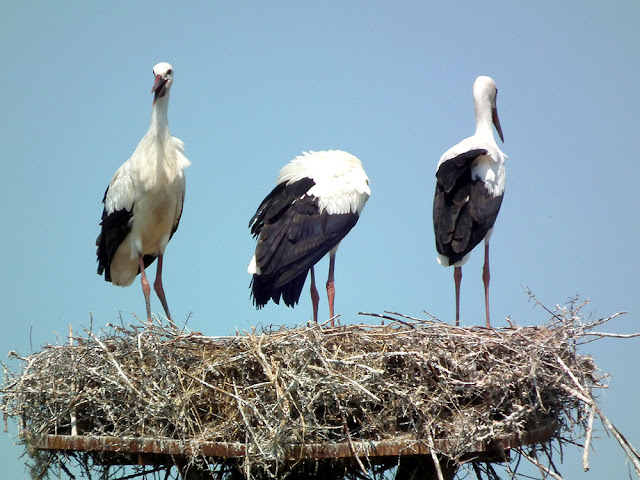
Young White Storks Ciconia ciconia on the nest, Brouage marshes, Charente-Maritime. France. Photo by Loire Valley Time Travel.
Young storks on a manmade nest platform.

The storks have been the subject of a conservation programme since 1978, with nesting platforms being erected and young birds being ringed.
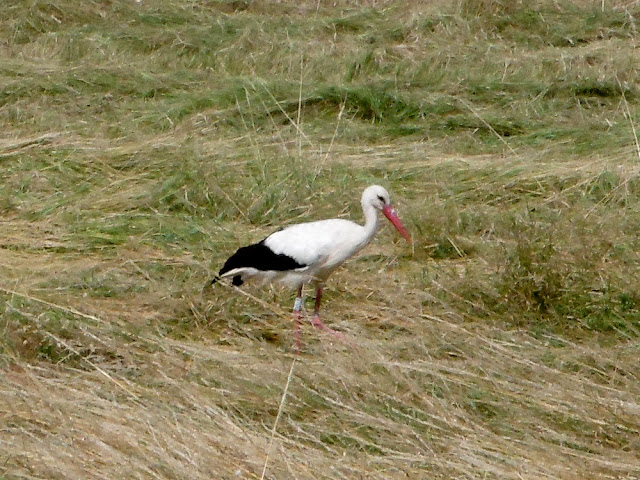
White Stork Ciconia ciconia, Brouage marshes, Charente-Maritime. France. Photo by Loire Valley Time Travel.
Ringed adult stork.

The marshes around Brouage and Rochefort offer a stopover and haven to waders, breeders and migratory birds of all sorts, with abundant invertebrates to feed them.
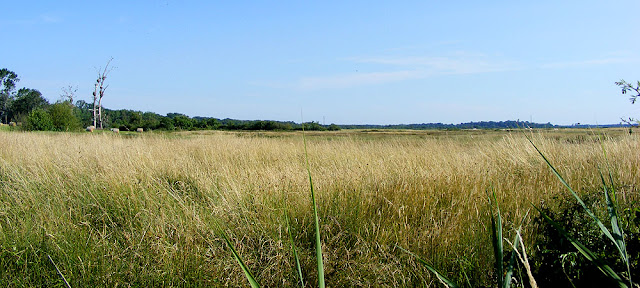
White Stork Ciconia ciconia nest tree, Brouage marshes, Charente-Maritime. France. Photo by Loire Valley Time Travel.
View of the marshes with the 'apartment block' on the left.

 Nowadays the storks in particular are a major attraction for the area.

White Stork Ciconia ciconia nest tree, Brouage marshes, Charente-Maritime. France. Photo by Loire Valley Time Travel.
A stork 'apartment tower' on the edge of the marsh, with lots of cormorants.

Today Charente-Maritime has the largest population of White Stork Ciconia ciconia (Fr. Cigogne blanche) in France, with just over 500 breeding pairs producing around 900 chicks every year in various large salt marshes and estuaries along the coast. This is from a low point in the 1970s when the species had more or less disappeared from France. Numbers of storks here are now higher than in the species other French stronghold, Haut-Rhin (Alsace).

Photographing White Stork Ciconia ciconia, Brouage marshes, Charente-Maritime. France. Photo by Loire Valley Time Travel.
Me photographing and watching storks from the ramparts of the Brouage star fort.

In the Brouage Marshes the storks are considered an umbrella species ie if they are protected, then the knock-on effect is protecting the whole ecosystem.

White Stork Ciconia ciconia, Brouage marshes, Charente-Maritime. France. Photo by Loire Valley Time Travel.
The Brouage marshes, with storks foraging.

Just twelve years ago there were only six nests on the marsh itself, but some of the storks no longer bothered to migrate. The climate on the Brouage Marshes was so agreable that they simply stayed put, sedentary at the end of summer. Now there are ten times the number of nests and they are the only predator of an invasive non-native crayfish. Today about 80 individuals are resident all year round. These birds tend to get the best nest sites, being able to lay claim to them before the migrants arrive back in February at the beginning of the breeding season.

White Stork Ciconia ciconia, Brouage marshes, Charente-Maritime. France. Photo by Loire Valley Time Travel.
The storks taking advantage of the hay mowing disturbing insects in the grass.

Food is abundant, especially the invasive alien crayfish Procambarus clarkii (Red Swamp Crayfish), and storks happily scoff all they can find, thus protecting amphibians and fish stocks by preventing their eggs from being eaten by the crayfish. Their crustacean diet has another benefit too, providing the storks with plenty of carotene for colouring their legs and beaks a good strong orangey red.

White Stork Ciconia ciconia, Brouage marshes, Charente-Maritime. France. Photo by Loire Valley Time Travel.
Adults foraging in newly cut hay on the marsh.

One of the problems of managing nesting storks in the marsh is that they have a liking for electricity pylons as nest sites. Nowadays there is a joint programme between the electricity supplier and the bird conservationists to physically move inappropriately sited nests to new purpose built platforms, sometimes attached to the pylon the birds originally chose. Apparently the birds tolerate this very well. The bird conservationists also often take the opportunity to install a kestrel nest box under the big metal mesh wheel on a tall pole erected for the storks. 

The storks will use the same platform for several years at least. Sometimes the nests will tumble off trees or even the purpose built poles in the winter. When this happens the conservationists make sure a new nest site is available nearby. A standard nest platform is made from a wooden pole inserted in a two metre deep hole and secured with wire cable stays. A metal ring with netting stretched over it is placed on top and several bundles of wood added for the storks to construct their nest from. 

Males arrive back before females and claim a nest (sometimes before the conservationists have finished working on it). The eggs are laid in March and chicks hatch in 35 days. The young birds take off for southern climes from July and August, some of them having been ringed in June. Their parents will depart for Spain or Africa in September and October.

White Stork Ciconia ciconia, Brouage marshes, Charente-Maritime. France. Photo by Loire Valley Time Travel.
An adult foraging.

 The marsh is a maze of actively managed canals, winding narrow roads and cattle grazing.
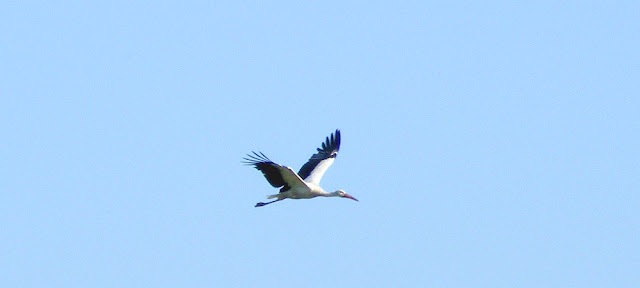
White Stork Ciconia ciconia, Brouage marshes, Charente-Maritime. France. Photo by Loire Valley Time Travel.
An adult flies, close to the nest.

Since the 1970s the storks have been ringed to help monitor them, and every year they are surveyed to count their numbers and distribution. In the last few years ringing has ceased, as the population is safe and stable. The conservationists are thus able to focus on other tasks with the time that has been freed up.

White Stork Ciconia ciconia, Brouage marshes, Charente-Maritime. France. Photo by Loire Valley Time Travel.
Adults, including a ringed one, foraging.

 The first scientific observation of migrating storks in Charente-Maritime was made in 1841. The oldest known stork from the area, according to her ring information, was a female of 26 years who died in 2018.


************************************************

For details of our private guided tours of chateaux, gardens, wineries, markets and more please visit the Loire Valley Time Travel website. We would be delighted to design a tour for you.

We are also on Instagram, so check us out to see a regularly updated selection of our very best photos.