Showing posts with label Ghost Signs. Show all posts

Monday, 26 January 2026

Aussie Style Pickled Beetroot

Today is Australia Day, a controversial national holiday, unknown outside of Australia, and even Australians can't decide what it is they are celebrating on this day or whether it should even be on this date. So I thought I'd write about something less controversial. Beetroot. Which in my opinion is Australia's national dish. Or at least, the very sweet pickled sliced version. It is an essential ingredient of any Aussie hamburger or mixed salad, both of which are served by humble cafés, restaurants and pubs up and down the land. Here is how I do it in France, so this recipe might not be authentic, but a hybrid introduced by me to many of my French friends, who, by the way, love it.


Cooked organic beetroot in the farm shop at les Jardins Vergers de la Petite Renaudière, our local market garden and orchard.

Cooked beetroot, France


Ingredients

2-6 cooked beetroots (I buy mine pre-cooked from my local organic market garden. They are boiled or pressure cooked whole and in their skins in big batches on the farm. If you need to cook your own, boil them in water for about 30 minutes, until you can slip a knife all the way through them easily.)

Pickling liquor:

200 g white sugar (note that French white sugar is more like castor sugar, but any cheap sugar will do)

450 ml vinegar (I use red wine vinegar in France, but distilled white or malt vinegar would be traditional)

125 ml water (optional, for if you need to extend the quantity a bit, or you want to cut the acidity a bit)

1 tbsp sea salt

½ tsp mustard seeds

½ tsp black peppercorns

½ tsp coriander seeds (optional)

½ tsp chilli flakes (optional)

2 sprigs of thyme (optional)

2 bay leaves (optional)

Method

  1. Peel the beetroot by cutting the tops and bottoms off and slipping the skins off.
  2. Cut the beetroot into slices, dice or wedges.
  3. Pack the beetroot into jars.
  4. Combine all the pickling liquor in a saucepan and bring to the boil.
  5. Stir the mixture on the heat until the sugar dissolves.
  6. Pour over the beetroot and seal the jars.
  7. Leave to mature for 2 weeks before eating.


Fresh organic beetroot in the farm shop at les Jardins Vergers de la Petite Renaudière, our local market garden and orchard.

Beetroot in an organic farm shop, France.


Homemade pickled beetroot.

Homemade pickLed beetroot.


Homemade pickled beetroot.

Homemade pickLed beetroot.


Beetroot with other salad items on the side of a lamb and red wine pie, in a café in Tenterfield, Australia.

Pie and saLad, AustraLia.


A typical Aussie burger, with a slice of beetroot above the tomato and below the beef patty, at a café in Talbingo, Australia.

Hamburger, AustraLia.


Laurent, who adopted the role of beetroot wrangler at a party we held.

Party, France.

Friday, 21 February 2025

Walking Around Preuilly

On Sunday Simon and I walked 5 kilometres from home, along the greenway (Fr. voie verte) in the direction of Bossay, then back along the road. It was cool but pleasant, and gloriously sunny. It took an hour and twenty minutes.


A view of Preuilly from the footbridge (Fr. passerelle) over the Claise. The building on the riverbank is the Guinguette du lavoir.

Preuilly sur Claise, France.


If the ghost sign is to be believed this was once a garden centre.

Preuilly sur Claise, France.


The Bourg Neuf, looking across the river to the Abbey. The house with the trees on the left has a rather nice studio apartment holiday rental.

Preuilly sur Claise, France.


Swampy land along the river.

Preuilly sur Claise, France.


Swampy land along the river.

Preuilly sur Claise, France.


European Alder Alnus glutinosa (Fr. Aulne glutineux).

European Alder Alnus glutinosa, France.


The classic view of Preuilly sur Claise.

Preuilly sur Claise, France.

Wednesday, 16 June 2021

Pears in the Touraine Loire Valley

Like apples and cherries, pears do extremely well in the Loire Valley. The perfect climate for them here has resulted in many very old gnarled pear trees in farmyards and along country roadsides. These old, semi-wild pear trees have fruit that is very large and woody. They are not for eating fresh, and even cooked they are not always successful, so mostly now they become food for omnivorous wildlife such as martens and badgers. 

Pears on the tree. Photo by Loire Valley Time Travel.
Doyenne de Comice and Nashi pears in my orchard.

Happily, we can all also grow more modern varieties in our orchards. I have the well known Williams, Doyenne de Comice and Beurre Hardy in my orchard, and my local organic commercial orchard grows them plus Conference and Président Héron amongst others. More surprisingly, I also inherited a Nashi (Asian pear) in my orchard, planted by the retired farmer who owned the parcel before me. In French they are called pomme-poires. And every year I am lucky enough to get a bag full of pears for free from the famous gardens at Villandry. Their carefully shaped pear trees on the corners of the potager garden are always overloaded and they have to pick some and give them away. They are a very good but hard to get variety called Louise Bonne.

Poires tapees, Indre et Loire, France. Photo by Loire Valley Time Travel.
Poires tapées (dried pressed pears), a true local delicacy.

Sometimes when I am out walking I realise the rural landscape here is full of pear trees, wild in the hedgerows, along the backroads and in small household orchards. In early autumn they are loaded with fruit, which falls on the road to be squashed, but is woody and hard in the mouth. According to local amateur historians they were used as a source of sugar to sweeten wine, in the days when your wine was stored in barrels, and frequently went off (ie turned to vinegar) before you had made the next vintage. If eaten they were always cooked, but they don't seem to have been used for poire williams type eau de vie or to make perry (Fr. poiré), the pear version of cider. The best known local pear delicacy, unique to the Touraine Loire Valley, is poires tapées, pressed dried pears, usually eaten as a condiment for game.

Poire Williams. Photo by Loire Valley Time Travel.
The Poire Williams is from the area around Strasbourg, not traditional to the Loire Valley.

 New season pears appear at the markets in August, sometimes earlier, and different varieties continue coming in for several months. While they are in season I poach them, make pear tart, pear sorbet and poire belle Hélene. Pears suit the Touraine Loire Valley palate, being delicately flavoured and fragrant, not too sweet and going perfectly with caramel.

Pear on the tree being eaten by wildlife. Photo by Loire Valley Time Travel.
A pear in the garden of the Priory of St Cosme, which was the home of the Renaissance poet Ronsard, in La Riche, a satellite of Tours. I highly recommend him to French learners.

Fruit harvest. Photo by Loire Valley Time Travel.
Fruit from my orchard, mostly pears.

Pears ripening. Photo by Loire Valley Time Travel.
Some of my pear harvest (and some apples). Pears need to be picked while still just unripe, then ripened in trays.


'Wild' pear trees in the hedgerow, Indre et Loire, France. Photo by Loire Valley Time Travel.
Two semi-wild pear trees in an old hedge along a narrow rural backroad. In the middle distance another pear tree and beyond that the castle and village of Le Grand Pressigny.


Homemade Pear Tarte Tatin. Photo by Loire Valley Time Travel.
Homemade pear tarte tatin. [Recipe link]

Pear tree in blossom, Indre et Loire, France. Photo by Loire Valley Time Travel.
The blossoming tree on the left is an old rather stunted pear tree, just randomly growing on the side of the road/edge of the field.

Pear tree in a farmyard, Indre et Loire, France. Photo by Loire Valley Time Travel.
A big old pear tree, dropping fruit everywhere, in a farmyard.

'Wild' pear, Indre et Loire, France. Photo by Loire Valley Time Travel.
A 'wild' pear in the hedgerow.

Toffee pear dessert, Indre et Loire, France. Photo by Loire Valley Time Travel.
Toffeed pear with praline ice cream, at Le Relais de la Mothe. This was my birthday dessert a couple of years ago.

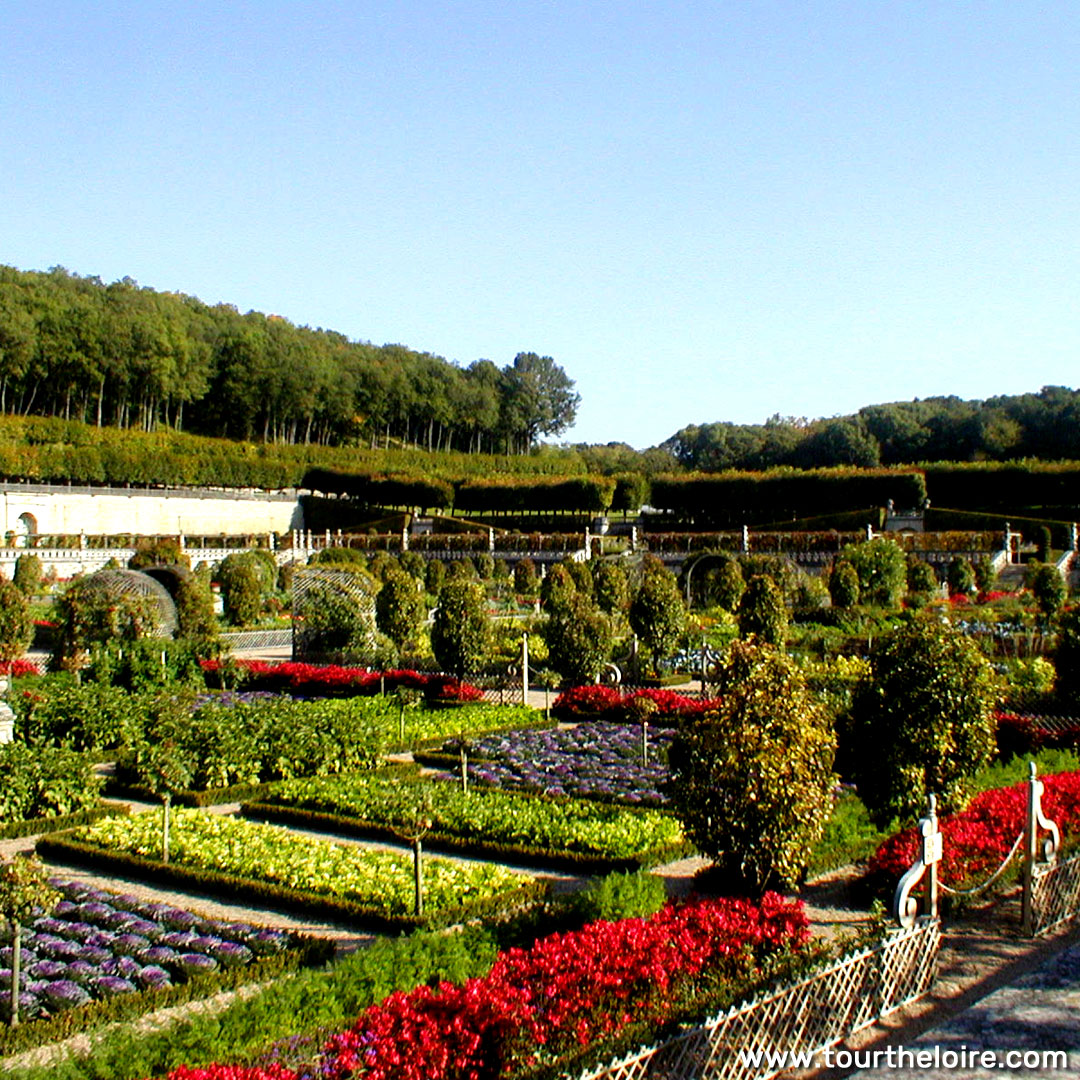
Potager garden, Villandry, Indre et Loire, France. Photo by Loire Valley Time Travel.
The potager garden at Villandry. The small egg shaped trees are carefully pruned and shaped pear variety Louise Bonne.

************************************************

For details of our private guided tours of chateaux, gardens, wineries, markets and more please visit the Loire Valley Time Travel website. We would be delighted to design a tour for you.

We are also on Instagram, so check us out to see a regularly updated selection of our very best photos. 

Tuesday, 25 September 2018

I love Rust...

...in the right place, it's amazing. Hence, I would love to be the owner of this sign.


***********************************************

Tuesday's Training Tales.

Last week we didn't cover a lot of ground. We did manage to go swimming on Monday with Huub, so that's 1000 metres of pool activity, but the rest of the week we were working. In total I managed 18km of walking. The good news is that it was all at a faster pace than previously.

I'm still not sure how we will manage at an altitude of 2700 metres when the highest point in any of our walks so far has been 130 metres, but I guess we will cross that alp when we get to it.

Tuesday, 9 January 2018

Le Mont St Michel

The clothing brand Le Mont St Michel was founded in 1913, making bleus de travail - heavy denim work clothes for proper roughty toughty working men. Even today you can see their painted adverts from the middle of last century on buildings all over France. Close to us there are signs in Preuilly, Saint Flovier and le Petit Pressigny - but because they are ubiquitous I have no doubt there is advertising we drive past each day but no longer notice.

This sign is in Le Petit Pressigny

In 1998 the business was taken over, and according to their website it is now an "urban & modern fashion label, still in line with the functional soul coming from its workwear legacy". It looks rather like leisurewere faux rugby shirts to me, but I'm not a clothing expert.

When we were in Paris we saw one of their stores.
You couldn't dig your spuds in the new stuff...

Friday, 20 May 2016

Chocolat Menier


Five generations of the Menier family built an empire from the first blocks of chocolate between the July Monarchy of Louis Philippe to the beginning of Charles de Gaulle's Fifth Republic. Now the company is owned by Nestlé and the Menier family run the Chateau of Chenonceau, but in 1893 Chocolat Menier was the leading chocolate manufacturer in the world.

Appreciated by a social elite from the 17th century and made famous by the Marquise de Sévigné chocolate was consumed as a drink and as luxury confectionary. But it was mainly manufactured in laboratories and used to disguise the bitterness of certain medications. In 1836 the manufacture of the first block (Fr. tablette) of chocolate would revolutionise consumption habits.

Jean-Antoine-Brutus Menier, founder of the family dynasty, was a real pioneer in the chocolate business. He invented the block of chocolate in the form of six semi-cylindrical bars. He also invented the famous yellow paper wrapper used by the Chocolat Menier company. His background was as a manufacturer of pharmaceutical powders but ten years earlier he had bought an old flour mill on the Marne at Noisel. For a while the production of chocolate took second place to the pharmaceutical powders because supplies of sugar and cacao were unreliable. By the time of his death in 1853 the factory was producing 4 tonnes of chocolate a year.

His 27 year old son Emile-Justin inherited the business and would take it forward to an era of mass production and consumption. In 1863 he abandonced the manufacture of pharmaceuticals and concentrated exclusively on chocolate. In 1856 he had 50 workers. By 1874 there were 2000. Aided by his mechanic who designed new machines he achieved new standards of product uniformity, hygiene and security.

The mill was rebuilt as a factory on rational lines designed by Stephen Sauvestre, the architect of the Eiffel Tower. Chocolat Menier was also a pioneering multinational, an early example of a fully integrated business controlling the entire supply chain, from the harvest of the cacao to the distribution of the blocks of chocolate to the stores. The company's cacao plantations were in Nicaragua and the cocao beans shipped to France on company owned ships. Likewise they owned a sugar refinery in the north of France.

Tuesday, 21 July 2015

Billboards Banned

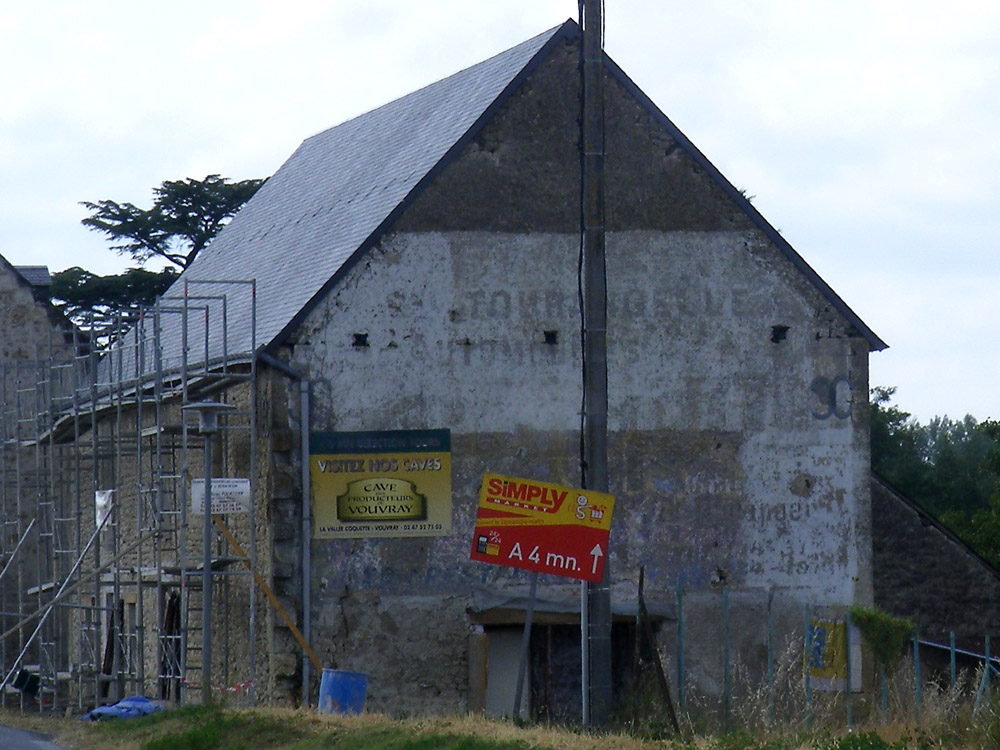
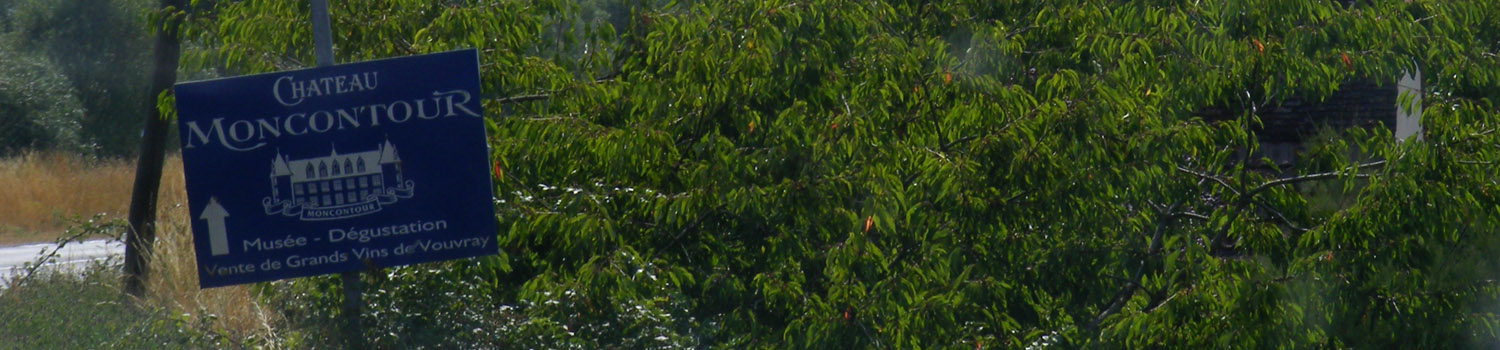
From July 13 roadside billboards are no longer allowed in rural France, whether they are on public or private property. Businesses had until that date to remove them, but they don't seem to be rushing to comply. I photographed all of these signs on the Loire levee bank between Amboise and Vouvray on 13 July. They obviously don't expect the late penalty of €203 per day per panel to be applied.

The law applies specifically to rural roads and small towns and villages. Not everyone is convinced that removing the billboards is a good thing. Some local tourism officials feel it puts out of the way communities at a disadvantage if they are not visible from the road.

The law is the result of lobbying by various organisations concerned with the appearance of transport routes and streetscapes. Whilst they are happy to have had a victory they cynically acknowledge that the only reason they won was because these small rural billboards are not big business. The real fight, they know, will be big urban digital advertising hoardings. Locally, Chambray les Tours will be the place receiving the most on going scrutiny by these groups. Luckily, the local council seems to be sympathetic, already having introduced rules limiting the size of billboards. The local associations fighting for the removal or reduction of such advertising are perfectly aware that the prefecture will only act to enforce the law if they continue the pressure to improve the look of not just the countryside but commercial areas too. Apparently Langeais at any rate has taken it seriously and has had a blitz on these rural billboards, removing 60 illegal advertisments.

The Simply sign will have to go, but the ghost sign is heritage...
From July 13 the only signs allowed on roadsides in rural areas or within the boundaries of municipalities of under 10 000 population will be for local products, cultural activities (shows, exhibitions, educational activities) or historic sites open to the public. Previously supermarkets, garages, hotels, restaurants and service stations could get permission to erect a billboard because they were providing useful information to travellers. However, the feeling now is that they have abused the system.

The Simply sign is now illegal, but not the winery sign I assume.
This is not the first time billboards have been banned in France, and the painted ghost signs on buildings date from a time when they were seen as a more acceptable form of roadside advertising. Ironically, the ghost signs now enjoy a certain amount of heritage protection, occasionally being listed as historic monuments in their own right or carefully restored.

Friday, 10 August 2012

Rillettes Ghosts

Mooching about in Tours the other day after work we came across these two ghost signs. We were intrigued by the larger one, with its English information. The signs are on the front and end of the same building.

Rillettes are slow cooked pork that is then pulled into strands and packed in little pots like a paté. Rillettes de Tours is the local version with its own particular traditional flavourings, and the addition of local Vouvray wine. There are currently 20 manufacturers in and around Tours making the officially certified product, and dozens who make it but just haven't bothered with the rigmarole of certification.

Susan

Wednesday, 11 January 2012

LUE JEANS

Or something shorts, something a, blue jeans.

I can't work out if the most visible piece survived because it was covered, or because it wasn't covered. I also can't work out if it is a "buy jeans from us" advert for a shop in town, or for a particular brand of jeans.

Simon

Sunday, 18 December 2011

Not Exactly a Ghost

This has been repainted on a wall in Loches. The business is now a cafe, but it's nice to see history being paid its dues.


Simon

Wednesday, 9 November 2011

Ghost sign 6

I particularly like this one, a trade directory of all the businesses in what is now avenue (but was then just rue) Adélaide Riche.

All of these businesses are now closed, although the Hotel Balzac is for sale and could once again be a hotel one day.

Simon

Thursday, 27 October 2011

Who was Dubois? Ghost Sign 5

This very ghostly sign is in Preuilly sur Claise, and I know nothing about it. In fact, I can't really work our what it says except for the name Dubois. The second line is a mystery. A name? A description of the trade carried on within?

I have read the article about the businesses of rue du Puits Berthet in the archeological society magazine "les Cahiers de la Poterne" but this one isn't mentioned.

It may remain a mystery

Simon

Friday, 16 September 2011

Atlantic: Ghost Sign 4

This is an advert for Atlantic washing machines. I know absolutely nothing about Atlantic washing machines, except that they were available in the 60's and they were top-loading.

This sign is in Chisseaux, on the wall of the garage in the middle of the streetview on this map. There is another ad for Atlantic washing machine in Sublaines, south of Bléré, which I haven't yet photographed.

Saturday, 16 July 2011

Dubo, Dubon, Dubonnet

Dubonnet was originally conceived (or so it says here) to try convince French Foreign Legionnaires to drink quinine. The ghosts of the advertising can be seen all over France and may in fact be the most common of wall painted adverts.

This example is in Chisseaux en Touraine.

Simon

Friday, 8 July 2011

Ghost Sign 2

This was photographed in Loches - it appears there are two adverts, one over the other.

One is for a patisserie, the other (maybe painted over the top) I cannot work out.


Today we are off to Faverolles to watch the Tour De France. They have a fete and special marché today, with buvettes and everything. I hope they are doing a diet buvette.

Simon

Friday, 24 June 2011

A New Project

Yeah - I know... it isn't as if I don't already have enough to fill the days...

This project is going to be a very casual one: I am going to start photographing adverts painted on the walls of buildings. I don't intend causing road accidents by standing on the brakes every time I see an ad, but if I have the camera in hand and an ad presents itself, I will take a shot or two.

This is the first advert I took a photo of,
in Poitiers back in May 2005.
It isn't the first advert I have posted on the blog, though. That was probably this one

Simon

Thursday, 26 April 2007

Typically French


You still see adverts painted onto walls in France. It is one of those things that make it France, in my mind at least. I don't think there are any new ones, but plenty remain visible.

This one is on a wall in Loches.

Simon