Thursday, 26 October 2017

The Great Butter Crisis


I've been hearing for a week or so that the shelves in the supermarkets that normally hold dozens of different brands of butter are empty. We ran out of butter on Tuesday so I called in to Intermarché to see if the stories were true. They were. There was not a single block of butter on the shelves. I bought some vegetable oil spread. The young woman on the checkout had no idea when they would get their next delivery of butter.

"Dear clients, as a result of a production problem, we are not able to offer you our full range of butter.
We apologize for the inconvenience. The Management."

Le Figaro Madame had a handy guide to things you can cook without butter the same day. For baking they suggest using various fruits and vegetables as substitutes (avocado, zucchini, beetroot, apple purée) or you could use any number of vegetable oils, or nut butters, or cottage cheese (see below for why cheese is available but butter isn't...). For savoury dishes you are directed to oils, margarine and duck fat. For your morning tartine you should think about oil based spreads, fruit butters or maple syrup.

The Figaro article, and others, explained that the crisis of supply has come about due to a combination of factors. First, after the milk quota system was scrapped France was flooded with both domestically produced and imported milk. As a consequence the price per litre, which was already below break even for many farmers, plummeted. Dairy farmers reined in their production, and I've heard that about half of dairy farmers have given up (usually converting to cereal farming or selling their land to their neighbours, who cereal farm). So now we have a shortage of milk, and it is manifesting itself primarily as a shortage of butter. 

The price of butter has been steadily increasing since the abolishment of the quota, and it is now twice as expensive as it was twelve months ago. Also to blame for the gaps in the shelves is the rigidity of the big supermarkets purchasing and supply chains. 

Supposedly the crisis has been excacerbated by a spike in demand for French bakery products overseas, especially in Asia and the Middle East.  Also, recent studies which have found that butter is not the risk to one's health that many Western consumers had long believed, have seen people gleefully returning to butter (for the record, we've always used butter).

Bakers are talking about increasing the price of croissants by about 5¢. Goodness only knows how expensive galettes des rois will be come January! One baked goods small factory manager from central France talked about only being able to source a tonne of butter a week, when her business needs three tonnes. She has cut workers hours by 70%. The shortage is being described as the worst since World War II.

For those dairy farmers still in business, many are worried that they won't see a share of the price increases, but there are opportunities if you can establish a positive relationship with your local milk processor. One of the tactics being tried by dairy farmers is to launch their own 'local milk' brand, emphasising the nutritional qualities due to the care taken with the cows own diet. The milk is sold at a higher price, but consumers understand that the food miles are short and the farmers have negotiated a fair price for themselves from the milk factory. Near us the milk comes from a radius of no more than 25 km from the Laiterie de Verneuil, and is sold in the same geographical region. The dairy farmer is paid 40¢ per litre -- nearly 10¢ a litre more than the average price paid to producers.

However, modern cows produce milk that is lower in fat than in the old days, so there just isn't enough to go round. French producers have historically focused on cheese because it gives a better return when milk prices are low, as they have been for the last decade or so. On top of this we are in the season when milk production is lowest. You need 22 litres of milk to produce a kilo of butter.

No one knows when the situation will return to normal. Of course people have been panic buying and hoarding. The French are the biggest consumers of butter in the world, eating 8 kg per person per year. Margarine just doesn't cut it for French pastries. So this butter crisis is deeper than just lack of supply, but impacts on a campaign by artisan bakers to combat industrially produced croissants and brioches made by workers who simply empty a packet of pre-mixed ingredients into the mixer and add water without knowing anything about how these pastries are made.


I discovered on Wednesday that there is butter to be had, if you know where to go. I bought a block of Verneuil demi-sel for €2.60 from the cheese truck at Loches market. The woman who runs it says she has no problem with supply from Verneuil and another small scale artisan producer. When I called in to my favourite bakery in Loches to buy a baguette they were displaying kouign amann on the counter. No butter crisis here then, clearly. I quizzed the owner, who also said that she had no problem, her butter came from Verneuil. It seems that the Laiterie de Verneuil is making sure their small local artisan customers are kept supplied. There is very much a culture of rewarding loyal custom and encouraging short supply chains in rural France. It's good to hear that the third biggest butter producer in France respects this civilised way of doing business.

It turns out that this is a global problem. Check out this article about the Australian situation in the Conversation. The info graphics are good, and I see that Australian's consume half as much butter as the French per head.

Wednesday, 25 October 2017

Dining Alone in Manthelan


The other day I got a phone call on my mobile. I was driving home from work and had got to Le Louroux. The caller was Simon, who told me he needed me to return to Saint Branchs. He had dropped off our clients at their hotel and was coming home in Claudette, but had developed a terrible migraine. He couldn't drive any further.

Burger van in Manthelan.

I got back to Saint Branchs to find him in the carpark by the church. He wanted water, but all the shops were closed. I spotted a man in a fireman's uniform in his front yard talking on his mobile phone, so I approached him. When I explained the situation the man, Bertrand, was kindness itself. He filled up my water bottle, moistened a towel to use as a compress and offered to look after Claudette in his back yard until we could return for her. What a relief!

Bertrand, engineer, volunteer fireman, 2CV owner and all round good guy.

After he had managed to manoeuvere Claudette through Bertrand's gates I got Simon into our modern car and drove off. We only got as far as the bus stop between Saint Branchs and Le Louroux. The movement of the car was too much for Simon and we had to stop. 

After a considerable time Simon felt capable of continuing, but once again, we didn't get far. This time we reached Manthelan and I parked outside the salle des fêtes. Simon tried to get comfortable in the car and I decided to take a walk. 

It was starting to get dark, but the temperature was 22°C. I happily wandered about the village for a while, somewhere I've never really explored before. When I returned to the main street because it was dark there was a burger van set up on the pavement. I thought I might as well order a burger. The choice was extensive but finally I opted for a chicken burger with two sorts of cheese, an egg, onion marmalade, lettuce and tomato in a standard burger bun and served with chips for €8.50. The burger chef said it would be 20 minutes so I wandered about a bit more. I checked out the public toilets (next to the town hall, clean and with toilet paper). When I went back to collect my dinner there were two other customers. One of them was collecting six or eight burgers, and I assume was the reason my order took 20 minutes. I bore off my prize and sat on a bench in front of the town hall, in the dark, to eat it. It was good. I didn't want to take it back to the car in case the smell was more than Simon could bear (he'd already thrown up in the bushes several times).

Finally I returned to the car and Simon, who was semi-reclined in the back seat, said we could continue. This time we made it to Ligueil, where we made a short stop for puking at the lavoir, before eventually getting all the way home. Simon went straight to bed. 

The next afternoon, despite Simon still feeling a bit fragile, we went back and retrieved Claudette. I'm sure Bertrand would kindly have kept her for several days, but we had other commitments in the upcoming days and felt we should collect Claudette immediately.

Tuesday, 24 October 2017

The Chapel has its hat on

I mentioned a while ago that work was continuing on the chapel, and that we had a good view, but what I failed to mention that the good view is from our guest bedroom window.  Which is OK really, because I now have an opportunity to mention that the view is from our guest bedroom, and the scaffolding and covering is now complete.


We passed on Sunday, and there were some issues with the covering having been blown around. We had a yellow warning for wind due to storm Brian at the time, so I hope no damage was done to the chapel.


Monday, 23 October 2017

Monday is Queens Day: 5 Blanche de Castile


Blanche de Castile (daughter of Alfonso VIII of Castile & Eleanor of England) was never intended to be a queen of France - her sister was meant to marry the future Louis VIII, son of Phillip Auguste. However, when Eleanor of Aquitaine (their grandmother ) met the two princesses she deemed Blanche the more likely one, and the deal was done.

They were married in 1200 (when Blanche was 12 and Louis 13) but the marriage wasn't consumated until 5 years later. Of her twelve children six died in infancy, the first to survive to adulthood being her fifth child, the future king (and Saint) Louis IX. She must have felt some relief when Louis VIII died in 1226.

That presented some issues, as the future saint was only 12 years old, and his father had baron problems that hadn't been resolved. Blanche appears to have been a canny operator, because she immediately had Louis IX crowned as King of France and served as his regent for about 8 years.


Even after Louis IX was married (in 1234, to Marguerite de Provence) Blanche appears to have exercised inordinate control, even more so when he went off on crusade in 1248 and she was once again appointed Regent in his stead. She fell ill and died in 1252, four years before Louis returned to France.

The Jardin du Luxembourg has statues of 20 French Queens and Illustrious women. The subjects were chosen by Louis-Philippe I in 1843. This statue was created by Auguste Dumont in 1848. To see this statue of Blanche you have to go here.

Eventually all 20 statues will be featured here.

Sunday, 22 October 2017

Land Leeches


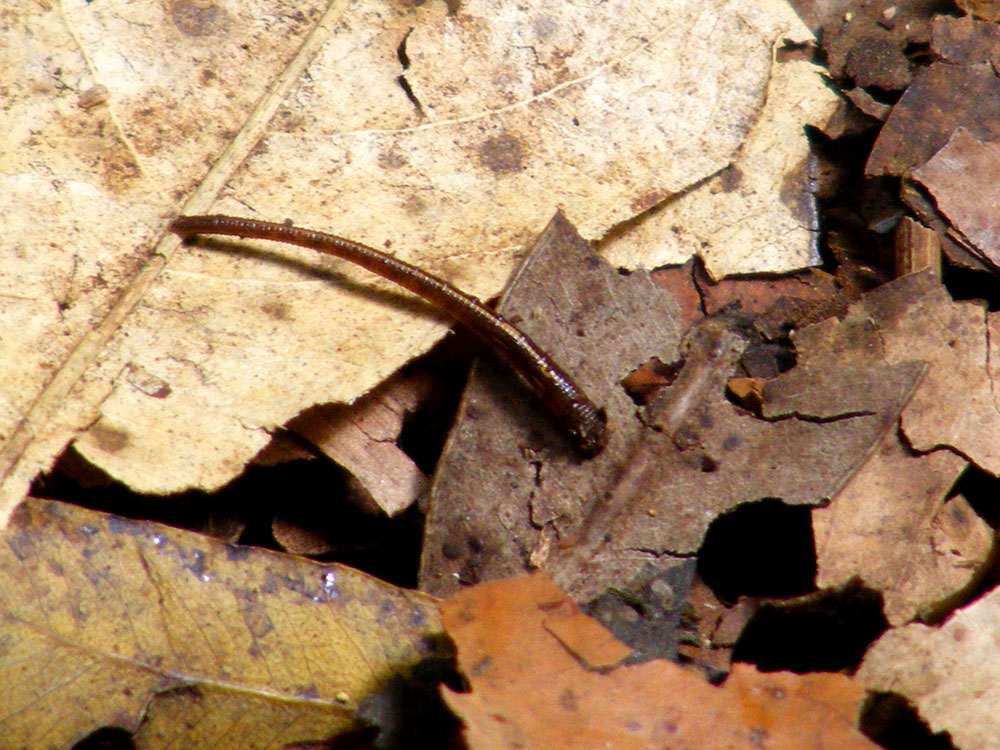
Unlike anywhere else (apart from south-east Asia) Australia has land leeches. They are the bane of rainforest walkers lives. My sister's abiding memory of walking in Ravensbourne National Park is of coming home with blood soaked socks.


The leeches lurk about on the forest floor, questing about for anything mammalian that passes. Leeches are quite closely related to earthworms. They have suckers front and back, and latch on to their prey to feed on their blood. The group isn't widely studied and they are not easy to identify to species level. Whilst they will latch on to your legs at any opportunity they are not known to transmit diseases and realistically are just a minor inconvenience.

Saturday, 21 October 2017

A Fungi Foray in the Forest of Preuilly


Late September saw the recommencement of fungi outings by the Association de botanique et de mycologie de Sainte Maure de Touraine in the local forests. It had been dry, so no one held out much hope for many species on the day. In the end we identified 53 different species, which is about half what we would get on a good fungi foray in any of the old forests around here.

The Etang de Ribaloche, with very low water levels.

Wood Cauliflower Fungus Sparassis crispa (Fr. Clavaire crépu).

This edible fungus can grow to several kilos in weight. It is associated with pine trees.

Ivy growing up an oak.

A Dor Beetle Geotrupes stercorosus syn Anoplotrupes stercorosus (Fr. Géotrupe des bois).

Around here, this is by far the most common species of Dor Beetle, so beware of using Michael Chinnery's Insects of Britain and Western Europe to identify any Dor Beetle you discover. If it is in the woods and there is no cow dung in sight, it will not be G. stercorarius, the species featured by Chinnery. The species in my photo is a woodland species and relatively small but otherwise looks much like other Dor Beetles. They are irridescent blue black and like all other Dors, are dung processors. These ones are not overly choosy, burying the dung of many different mammals as well as leaf mould and fungi. To be sure of the identity you need to look at the rear tibia and check how many keels it has (sharp ridges across the outer facet). There should be two.

Common Rustgill Mushroom Gymnopilus penetrans (Fr. Flammule pénétrante).

A very common fungus of pine forests, they can appear in large numbers together. Despite its piecrust appearance it is probably toxic.

Shaggy Parasol Chlorophyllum rhacodes syn Macrolepiota rhachodes (Fr. Lépiote déguenillée).

Most parasol mushrooms are toxic so if you are a fan of the edible species Common Parasol Macrolepiota procera you need to make sure you know how to recognise its snakeskin patterned stem so you can tell it apart from the Shaggies and others. Shaggy Parasols blush slightly red if they are cut or bruised. It's quite a common woodland species.

Another parasol species, Lepiota ventriosospora syn L. metulaeospora.

Scarletina Bolete Neoboletus luridiformis syn
Boletus erythropus (Fr. Bolet à pied rouge).

This is an edible mushroom, despite the lurid colours. However, it is rarely eaten, as it is often confused with the much better known and toxic Satans Bolete Rubroboletus satanas. The Scarletina stem goes from bright yellow to deep indigo when wounded. The Satan is creamy and just goes a bit blue when wounded. This is a mushroom I have wanted to see for several years, so I was pleased we found one.

Wood Mushroom Agaricus silvicola (Fr. Agaric des bois).

This pretty slightly pearly pink mushroom has an obvious stem ring and a faint smell of aniseed. It is edible, but you need to be able to distinguish it from the pale deadly Amanita species such as the Death Cap A. phalloides and the Destroying Angel A. virosa, which also grow in the woods. (I had a couple of Destroying Angels in the orchard a few days later.)

 Blue Roundhead Mushroom Stropharia caerula (Fr. Strophaire bleu).

An unusual little blue mushroom, localised in distribution and found in calcareous beech woods.

Christian and his newly adopted dog.

Christian is a recently retired vet. The young dog was found wandering on the road. Fruitless attempts were made to find her owner, but finally Christian decided to keep her. She has no manners at all at the moment, but I'm sure will grow into a loved companion.

Identifying the fungi found on the day.

Russula poubellus.

That's a French mycology joke. The English name would presumably be Rubbish Brittlegill.

Apples and edible mushrooms gathered in the forest.

While we were identifying the fungal haul a family emerged from the forest. There were three generations of them, from kids to grandparents, and they'd been foraging. They had Weeping Boletes, Red-capped Scaber Stalks, False Chanterelles, and Shaggy Inkcap mushrooms, and apples. Information and advice was exchanged. They were clearly enthusiastic and knowledgeable foragers, and knew what they had. Nevertheless, they were reminded to peel the Weeping Boletes because the milky discharge that gives them their name can cause stomach upsets. They were also reminded to use the Shaggy Inkcaps that evening because if they left them until the morning they would have auto-digested and just be a pool of ink.

They wished us 'bonne omelette' and we parted on good terms.

***********************************************

We went outside this morning at 7.00am to do some meteor spotting. Because it was overcast we saw nowt, but it was very breezy and 16.5°C. The average maximum October temperature in Preuilly last year was 17°C, and her were are, 90 minutes before sunrise, and the temperature is close to that already. That'd be Brian's fault (I don't know if he has a French name yet).

Friday, 20 October 2017

Is it too soon to mention Christmas?


Christmas is just over nine weeks away, so we have decided to give everyone a helping hand.

Instead of expecting gifts this year (we'd be disappoint anyway, right?) we would appreciate it if when shopping you took a look at the Loire Valley Time Travel gift shop. My map of the Loire Valley river system is there, available on a range of cups and clothing, as is the Loire Valley Time Travel logo.


I was prompted to put the map on a t-shirt when we were on the walk from Chambon and someone commented on Susan's London Underground map t-shirt, saying that it wasn't much use in the middle of the French countryside.

We also have a range of Loire Valley Time Travel mugs. These are extra large coffee mugs (although I suppose they will hold a similar amount of builder's tea).


The shop is here: https://www.zazzle.com/tourtheloire/

Now - that's the adverts over, we'll resume normal service tomorrow!

Thursday, 19 October 2017

Walking from Cussay

On Tuesday we wrote about a walk we did a couple of weeks ago, today we are catching up with a walk we did last week.

Last Thursday was a typical October day - started with very light drizzle, and ended up quite warm and very sunny, which made the afternoon perfect for a walk. We met up in le Grand Pressigny and drove to La Bosniére, a hamlet just outside Cussay (There's a link to the map at the bottom of the page if you don't know where these places are).

The main excitement on this walk was a number of roe deer we disturbed.


If you want to do this walk, the map is here.

********************************************

And talking of weather... It has been unseasonally warm here of late. On Monday the temperature reached 27c, almost 10 degrees warmer than average for mid October. It has cooled down slightly since, but daytime highs are over 20c for the next few days, then we're cooling down for a few days of showers. Next week we're up in the 20s again.

Wednesday, 18 October 2017

Cardinal Richelieu

One of our favorite television shows of the past ten years was the first season of the BBC production of Musketeers. It is a modernisation of the story of Louis XIII's musketeers, using Alexander Dumas' characters but with a modern twist. All the usual suspects are there: a mysterious lady, Cardinal Richelieu, Louis XIII, Anne of Austria, and four butch blokes and their boss.

Besides the Musketeers themselves the most important characters are Cardinal Richelieu, played in a most chilling pantomime way by Peter Capaldi, and the costumes. The following video shows what I mean.


If you haven't seen the show, and have a couple of hours to spend knee deep in intrigue, violence and slightly kinky (admit it) costumes, seek it out.

Tuesday, 17 October 2017

Walking From Chambon


A recent walking club outing was a circuit from Chambon, going up the hill, through the forest, overlooking the Creuse valley then back around, past picturesque cottages, hidden vineyards and mature oak trees. Here are some pictures from the afternoon in late September.

A very old house in Chambon at the start of the walk.

Bolete type fungi right on the edge of the road.
You wouldn't want to eat these mushrooms, not because the species is toxic -- it probably isn't. But the mushrooms will be covered with substances coming out of the exhausts of passing vehicles, and they will have absorbed similar substances from the ground as they've grown.

Fabrice stripping off in the heat.
It was unseasonably warm the day of the walk (in the mid-20s) and we were all a bit overdressed. Fabrice thought he'd take advantage of zip-off trouser legs, but then found he couldn't get them over his boots.

An early autumn view over the Creuse Valley.

Walking through a parcel of forest.

A farm track.

The chateau of Rouvray.

Turning to go back up into the woods.

On the edge of the forest, looking over a small valley.

A fine specimen of a mature oak tree.

A well by the side of the track.
The above to photos were taken from where several forest trails meet. We chose to go right, past the oak tree, but we could have gone straight ahead past the well.

By the end of the walk the sun was low in the sky and the shadows were long.

A picturesque cottage.
We passed through several hamlets with picturesque cottages. This is just one of them.

The chateau of Chambon (more of a medieval fortified farm).

If you want to do this walk yourself, here's the map

Monday, 16 October 2017

Monday is Queens Day: 4 Anne of Austria


Anne of Austria was born in Spain in 1601 and was the eldest daughter of King Philip III of Spain. Her titles included Infanta of Spain and of Portugal and Archduchess of Austria.

When she was 11 she was bethrothed to Louis XIII of France, as part of the 1559 treaty that ended the war between the two nations. She and Louis were married in 1615, on the same day that her brother (later Philip IV of Spain) married Louis' sister (Elisabeth of France). It wasn't a particularly happy marriage as Anne was constantly in conflict with the woman who saw herself as the real queen of France, Louis' mother Marie de Medici.


A later palace coup meant that Marie de Medici lost her power, to be replaced in turn by Charles d'Albert, Duke of Luynes (with whom Anne had a good relationship) and then Cardinal Richelieu. Once again Anne found herself in conflict with her husband's chief advisor, a position not helped by France declaring war on Spain in 1635.

Although she had a series of stillbirths, in 1638 Anne gave birth to an heir (later to become Louis XIV) and then in 1640 a spare (Philippe de France, Duke of Anjou). In 1643 Louis XIII died, and Anne contrived to have herself created regent for her son (against the late king's wishes). She remained regent until Louis XIV came of age, and then was the power behind the throne until 1661 - at which stage she went and did the nun thing. She died in 1666 and  is a central figure in Alexandre Dumas' "The Three Musketeers".

The Jardin du Luxembourg has statues of 20 French Queens and Illustrious women. The subjects were chosen by  Louis-Philippe I  in 1843. This statue was created by Joseph-Marius Ramus in 1847. To see Anne of Austria you have to go here.

Eventually all 20 statues will be featured here.

Sunday, 15 October 2017

Gus Beutel Lookout


This is the view over the Lockyer Valley from Gus Beutel Lookout in Ravensbourne National Park, south-east Queensland. The lookout is named after a local early 20th century landowner. One of his two wives and two of his twenty-one children are buried nearby.

Saturday, 14 October 2017

Bus Shelter


When we were in Paris in September we stayed in the 14th arrondissement. Round the corner from our hotel, near Denfert-Rochereau station and Montparnasse cemetery was parked a large decoratively painted bus. We photographed it because it looked bound to be interesting. And so it was.

It is owned by Les Enfants du Canal ('the children of the canal'). They are a charity working with homeless people. The bus offers coffee, a place to rest or somewhere they can seek support.


The focus on homeless people tends to be when winter starts to set in and the public are reminded by charities such as this to think of those sleeping on the streets. But les Enfants du Canal have realised that summer throws up its own challenges for the homeless. First of all, in France it is illegal to evict tenants in the winter so the newly homeless appear in droves in the summer. Also, more homeless people die in the summer than they do in winter (124 in winter compared to 143 in summer in 2014 for example).

As a result les Enfants du Canal have created this day centre in a double decker bus, known as le Bus Abri (literally, 'the bus shelter'). Their idea was to have something on the street, very informal. The bus has been parked in the 14th arrondissement in boulevard Arago since the summer of 2015, just around the corner from the prison of la Santé. It's always in the same place and homeless people can come and have a coffee, rest, talk and meet the on board social worker. Also on the bus are travailleurs pairs ('peer workers'), people who have been homeless in the past and who now work to help others in their former situation.

Friday, 13 October 2017

Work Continues on the Chapel

On Tuesday I realised that we have a really good view of the work happening on the roof of the Chapelle de Tous les Saints. So I took a photo - not to spy, but because we sometimes forget stuff.

At the time they were putting a bache (tarpaulin) over the roof. The chapel now has a natty plastic silver hat over its roof, which means that work can continue even when it rains.


Today is Friday the 13th. I don't know if roofers are superstitious, but think of the potential!


***************************************

Note from Susan: When I passed the chapel half an hour after this photo was taken one of the scaffolders was singing a silly ditty in a falsetto voice. The lyrics rhymed 'la vache !' ('holy cow!') with 'cette bache'.

Thursday, 12 October 2017

I Want to be Alone

On Monday I (well - we) wrote about Anne de Bretagne, a woman much coveted for her lands and title, which although hers by right of inheritance were in control of her husbands (the Kings of France) while they were married.

I imagine this meant she was always surround by people asking favours, suggesting "cunning plans" and just plain good old spying on her every move. For anyone in court privacy was (and probably still is) at a premium, which is why this room in the Logis Royal of Loches would have been most welcome.


It's an Oratoire, not a chapel but a private prayer room, where Anne could have been alone with her thoughts, or maybe a good book of someone else's thoughts. No-one would ever think to disturb a lady at prayer, so she was safe whilst in there.

The room itself is tiled with representations of ermine, Anne's heraldic device. The tiles are the original and have lost their colour, but you can get an idea of how the room would have looked by the panel to the mannekin's left.

Wednesday, 11 October 2017

Market Shopping With Stephane


Stéphane talking to the oyster producers who come up from the Atlantic coast.

As part of the cooking class taught by Stéphane Bureau from the Hotel Clos d'Amboise that I recently participated in we went shopping in the market at Amboise. Stéphane made sure his sous-chef Cédric came along, because as a busy chef, Stéphane deals directly with producers who deliver to the hotel. He doesn't have time to shop at the market. Cédric, on the other hand, often shops there on his own account and knows which stalls have the best produce.

 An overview of the market.

The Amboise Sunday market is very well known and popular with both tourists and locals. Like most local markets the fresh produce stalls are a mixture of small producers and retailers. The chefs' advice was to look for small stalls which only have a few things for sale. These are likely to be good value and good quality, brought to the market by producers passionate about what they do. The retailers have their place though, and shouldn't be scorned. If their quality is good, they offer the possibility of a much wider choice of ingredients.

 Stéphane checking out the goats cheese.

We bought strawberries, parsley, oysters, Sainte Maure de Touraine goats cheese, organic bread, tomatoes from a small producer, cave grown mushrooms and sweet peppers. Both chefs and I knew the mushroom producer -- me from Loches market and Stéphane because he comes from Selles sur Cher originally, which is where the mushroom producer is based.


I'd never been to Amboise market before. I'd always been put off by the stories of how far away you have to park because the market takes up all of the largest carpark in town, on the Mail. It was good to be able to visit and not have to worry about parking, as I was staying in town. It was a shame it rained the whole time we were at the market. That definitely meant the experience was not as pleasant it could have been. I had expected it to be noticeably bigger and better than Loches, but came away thinking it was about the same.