Tuesday, 17 March 2015

Chateau de Bridoré

The Chateau of Bridoré is a 14th century fort, around which a village has grown up. The chateau dates from the reign of Charles V and has been rebuilt several times. The most recent significant remodelling was at the orders of Imbert de Bastarnay in the late 15th century. Counselor to Louis XI, Imbert bought the chateau in 1475. He created the underground defences known as caponiers that in time would inspire Vauban. He refaced the keep and brought it up to 30 m high, adding a new roof and lookout towers.

The square keep with its round staircase tower.
In 1641 the Marquis de Viantais purchased the property and turned it into a nunnery. At the Revolution it was seized as state property and sold. The family who purchased then still own it.

One of several old side entrances.
It was listed as a national monument in 1911 and its then owners, the painters Simone Lefèvre-Mouveau and Pierre Mouveau restored the buildings. Their grandchildren are the current owners and responsible for its conservation and restoration today.

The interior of the keep is covered in grafitti, some of it dating back to the 16th century.
The caponiers (the one in best condition visible in the top photo) are the oldest extant examples in France, the only medieval examples still in existance and were very early of their type when built. They are semi-underground blockhouses positioned to project at an angle from corners in the defensive wall. Access is via underground tunnels, so defenders are protected at all times. They sit in a deep steep ditch and are specifically designed so that defenders can pick off a line of attacking soldiers one by one.

The impressive curving carpentry which holds up the roof of the keep.
They were developed as a response to the increasing availability of firearms. Attacking soldiers come over the earthwork bank and find themselves in a steep sided narrow ditch. With the attackers forced into a line along the defensive wall, the defending soldiers in the caponier can shoot them one at a time through the slits in the caponier.

The back of the keep, showing latrine chutes (square holes in the wall facing us).
The other remarkable feature of Bridoré is its hypocaust heating and steam bath system (below).
Chateau de Bridoré is open to the public in July and August, for guided tours in the afternoons only. For details see here. I was lucky enough to visit privately a few weeks ago with a group invited to survey hibernating bats in the chateau buildings.

Monday, 16 March 2015

Working Girls

As of tomorrow Célestine and Claudette are back at work for the 2015 season, ferrying tourists to chateaux, wineries, fromageries, markets, gardens and all sorts of lesser known sites of historic interest in the Touraine Loire Valley.

Of course, this means Simon is working too - as can be seen by the shine on Claudette. He claims that until we bought Célestine he had never hand washed a car: growing up in the "bush capital", car washing was something one did at a drive through car-wash, and even then only after visiting the coast. During the season he has to wash and polish at least one car a week.

******************************************** 
A la cuisine hier: Simon made wholemeal scones for afternoon tea. They were terrific!

Sunday, 15 March 2015

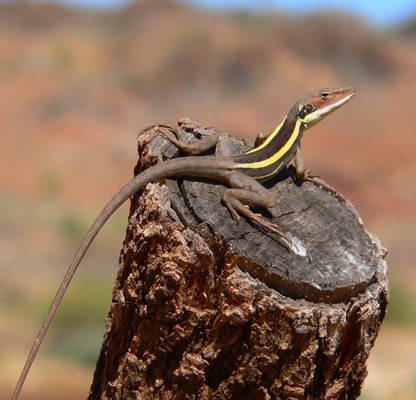
Dragon Lizards

 These two dragon lizards were photographed near Alice Springs in the dry interior of Australia. There are many species of Agamidae in Australia and they are widely distributed. The one below is a Long-nosed Dragon Amphibolurus longirostris I think.
******************************************
A la cuisine hier: An Italian themed day, with Minestrone and classic Lasagne, made from the Silver Spoon recipe. I made the lasagne sheets of pasta from scratch using a locally produced flour and was very happy with it.

Saturday, 14 March 2015

Marianne

Marianne is the name of the representation of a young woman chosen in 1792 to stand for Liberty and the Republic. It wasn't until much later though, after the fall of the Second Empire (Napoleon III 1852 - 1870) that she became a commonplace object, installed in public reception spaces, registry offices and council meeting rooms.

A recent exhibition in Loches of sculpture from the Touraine displayed two examples, from the furthest extremes of our province.

The first is from Preuilly sur Claise, as far south in the Touraine as you can get. She's plaster, by an unknown artist and now held in the Poterne Museum. You would think she was from the hands of an 18th century neo-classical artist, with her generous drapery in the ancient style covering her bosom and leaving us with just a hint of perfectly formed breasts. Her hairstyle is as dignified as a Roman matron's, her profile impeccably Grecian, references to those supposed golden ages of probity and political virtue.

Marianne, plaster, artist unknown, c1848 and Third Republic.
She dates from around 1848 and is part of movement to establish an authorised, conservative image for the Second Republic which would symbolise the Republic and its democratic and social values. Frankly, she looks dull and complacently bourgeois (pearls!). Respectable town halls around the country widely adopted her, often positioning her so she was facing away from the church.

The second is from Le Boulay, way up in the north of the Touraine. This one is terracotta, also by an unknown artist, and from 1870, the beginning of the Third Republic. Now she wears the Phrygian cap, defiant after the fall of the Second Empire, and referencing her revolutionary roots. She is very carefully crafted. The artist has created a very young woman, idealised in the Greek classical mould (think Victory of Samothrace...). The base has the word Liberty inscribed on it. For all her 'red bonnet', she looks far to young and sweet faced to be a believable defender of liberty.

Marianne, terracotta, unknown artist, 1870.
These two busts are representative of the abundant and popular public statuary of the time, embodying the sentimental and idealised nature of the French people's involvement with the Republic. They are easy to dismiss as trite, but we should occasionally look past the fashions of the time and remember their meaning and history. Hundreds of versions of Marianne exist. She may be authorised, but she isn't standardised and she comes in all sorts of materials, cast or sculpted, printed or painted.
********************************************
A la cuisine hier: Having foolishly bought a pale green cannonball which turned out to be horrible in stir-fry, I used up the rest of it in Garbure, which was an excellent solution.

Friday, 13 March 2015

Le Bouledogue francais

Meet Kaiser. He's a French Bulldog, or Frenchie for short (Fr. Bouledogue français, or bouli for short) and belongs to our friend Stéphanie from Blois. He's well mannered and friendly, although his loving owner does admit frankly that he is un estomac sur les pattes and her friends are politely requested not to even think about feeding him at picnics. Naturally, he still manages to do quite nicely for himself.

 Kaiser the French Bulldog.
French Bulldogs are technically a type of mastiff. They come in brindle (which usually looks like black) or fawn or some mixture of the two or white. They are a medium sized dog of about 30 cm at the shoulder and weighing about 10-12 kg. Their French name translates literally as 'ball mastiff', but really it is a Frenchification of the English 'bulldog'.

The breed was developed in France at the end of the 19th century, from English bulldogs that were too small to meet the Kennel Club standards in the UK, or had other breed faults, such as ears that didn't fold over. They were crossed with terriers to produce ratters in Paris and became very popular with certain trades, such as butchers. Quite quickly they also became popular pets for women from prostitutes to princesses both in France and America.

Checking out the camera (in case it's food...)
French Bulldogs are funny, playful, loyal, active and friendly, good with children and rarely bark. They have a history of being popular with celebrities. Toulouse-Lautrec, Edward VII, Yves Saint Laurent, Josephine Baker, Martha Stewart, David and Victoria Beckham and Lady Gaga have all owned or own French Bulldogs. A French Bulldog called Gamin de Pycombe went down with the Titanic, perishing with the American owner who had paid £150 for him (the equivalent of €15 700 or AU$22 000 today). The famous restaurant elBulli was named after the breed. A French Bulldog character called Rebecca Bonbon comes from the same design studio as created Hello Kitty!

Sadly, like all flat faced dogs they are prone to respiratory problems and snore like a grampus. They also have other issues that owners must be aware of, such as an inability to properly regulate their body heat, so they are susceptible to heat stroke. Owners are also advised by the French breed association to keep their dogs away from water, as they 'swim like a stone'.

Thursday, 12 March 2015

Villa Rose, Saint Aignan

Happily, the delights of the Villa Rose are easily seen from the street in Saint Aignan. The privately owned house is situated at 18 avenue Gambetta.

Villa Rose, Saint Aignan.
Designed and constructed as his family home in 1922 by the Saint Aignan architect Duchereau the house was consciously given an Italian look. The building was one of the earliest constructed from a reinforced concrete frame infilled with brick. He opted for a roof terrace and accentuated the Roman/Italian impression with the facade decoration. Three Florentine artists came to make the decorative scheme. They worked in the fresco technique known as sgraffito and there is probably nothing else like it in France. Their designs reflect the good life in the Touraine -- in a 12m² panel on the side of the house a woman who may be an hommage to the Impressionists reclines, surrounded by local products such as vines, fruits and nuts as well as musical instruments. Two putti play at her feet.

This panel on the side of the Villa has been entirely recreated.
Unfortunately, 90 years after their creation, the facades were in a very bad state. For more than 30 years the roof terrace leaked and because the leaks weren't repaired immediately, irreversible damage began to appear and develop. Rain seeped in between the layers of render causing it to bulge and delaminate, disfiguring the motifs and encouraging small creatures to shelter in the crevices and cause even more damage with their digging and scrabbling.

Sgraffito is a type of fresco and the decoration on the Villa Rose is noteworthy both because of the quality of the images, but also because of the unusual technique used to create them. The technique has more or less been forgotten in France, rarely seen after the Renaissance. It had a modern revival in Riga and Brussels, but in France hardly anyone was interested. 

Above the front door.
Fresco is a painting technique which consists of applying pigments mixed with water on hydrated (slaked) lime renders and damp sand. The goal is to only work on an area that can be painted the same day the render is applied so that a crystaline skin does not form. The work progresses at about 1m² a day. The sgraffito itself consists of scraping away part of the damp render in one colour to reveal the design and the colour below. Both scraped and unscraped sections can be painted while damp. At Villa Rose there are three layers of different coloured lime render (beige, red and white), covered by a tinted limewash, which have been scraped back to create images that are modelled in very low relief then painted in the fresco technique to accentuate shading. Once dry the render is as hard as cement.

Several years ago the house was aquired by new owners and they decided to restore the facades to their former glory.  They funded part of the restoration themselves, but also sought and received grants from various heritage organisations. Once funding was in place they engaged Corinne Tual, a specialist fresco painter, to do the work. The first section, in the courtyard, started in late 2011 and took just under a year to complete. It was a total restoration job, with virtually none of the original that was salvageable. The second stage, on the street front facade, took two years to complete and was finished last year. More of the original sgraffito in this section could be conserved, either in situ or if too fragile, removed and transferred inside the building to protect it long term.

 A detail, showing the slightly 3D nature of the technique.
Over the last few years Corinne Tual has achieved a remarkable outcome at the Villa Rose. After studying at the Ecole Brassard in Tours and the Beaux Arts in Paris Corinne trained in decorative painting at the Ecole des Arts et Métiers at Ivry sur Seine. Fascinated by frescoes, she did a work experience placement on the Renaissance wall paintings in the convent of Entrevaux in the Alps before going to Italy to train further at the Palazzo Spinelli (Institute for the Arts and Restoration). At the same time that she was honing her artisanal skills she has dedicated the last 10 years to the study of the Pompeiian frescoes, collaborating with the Department of Antiquities. Reading and re-reading the ancient texts has allowed her to rediscover the techniques of the Roman world. She is one of only 3 or 4 people in France who can work in the fresco technique, which is much more complicated that wall painting (most fresco painters today are Italian).

Before undertaking the restoration Corinne Tual needed to do 6 months of preparatory work. First she carefully photographed the remaining decoration metre by metre. This would allow her to work out and draw the overall design. Then she needed to thoroughly clean the whole facade. Samples of the render were analysed under the microscope to establish their composition so it could be recreated. The design was drawn out, and a model made. This work was accomplished by a team that included the wall paintings conservator Sabine de Freitas from Chenonceaux, who produced a condition report and stabilised the sections which could be saved, and conservation mason Alejandro Cadena from Genillé, who reproduced the renders and did the marbling on the concrete frame.  You can see the project progressing on their Facebook page.

 Detail of the front of the house.
The old cheese dairy at Orbigny that Corinne lives in is also her studio. All the trials for the frescoes and sgraffiti were done in this combination house and laboratory. The interior walls of her house now feature some elements of the designs from the Villa Rose, done originally as practice pieces.

Sabine de Freitas announced on her blog at the end of last year that the team had won an international heritage prize for the project. There were 200 nominations for the prize, which judged the knowlege, ingenuity, experience and skill of the nominees in the technicalities of restoring and improving works of architecture. She says it was professional recognition of their ethics, expertise and their approach of sharing and engaging in outreach. All three are dedicated to sharing their experiences, the use of non-toxic products and sensitive restoration practices.
***********************************
Globe at Night: An international citizen science project to record levels of light pollution. Once a month people get out into their backyard, or any other site they fancy and record how well they can see certain constellations. For more information and to send your data into the project, see this website.

Wednesday, 11 March 2015

Ricwal: Paulette Richon and Jacques Walter

Paulette Richon (1897 - 1987) was an artist who lived in Preuilly for the latter part of her life. She trained at the Arts Decoratifs de Paris, where she was a brilliant student. Immediately after her graduation in 1921 she left for the Ecole des Beaux-Arts in Tours, where she had taken a job as a teacher of decorative and applied arts. She stayed there until her retirement in 1961. A woman of strong character, interested in everything, inventive, she worked in sculpture, tapestry, stained glass, woodcuts and painting. She had a genuine talent as a painter, as demonstrated by her self-portrait, done in the early 1930s. As a sculptor she was vigorous, working in the open air, sometimes with a tarpaulin shelter to protect against the elements, all the while merrily chain smoking.

Self-portrait, Paulette Richon, oil on canvas, c1930.
She had a very active career as an artist, but she also acted more as a facilitator or curator of significant exhibitions and art spaces at the Tours City Hall. She showed numerous decorative objects, which are now mostly lost or forgotten. 

Preparatory maquette for the statue of the Sacred Heart of Chinon, 
Paulette Richon, plaster, 1941.
One of her most significant works is a 7.4 m high statue of Christ that watches over Chinon. The story goes that the local priest knew the statue of Christ the Redeemer in Rio de Janeiro. He announced from the pulpit in April 1940 a solemn vow to erect a monumental statue of the Sacred Heart on the hillside of Chinon. His intention was no doubt to have a work in imitation of the one in Rio.

Stations of the cross, made by Paulette Richon for the church at Ferrière Larçon, 1932.
 (Photographed in an exhibition in Loches.)
On 21 June 1940 Chinon was occupied by German troops. Undaunted, the priest got in touch with Paulette Richon, 43 years old and already with a solid reputation for her sculpture. He also contacted a local architect and Charles Jaillais, boss of a dynamic and highly regarded Chinon masonry firm, was appointed to set the statue in place. It was audacious given the extreme poverty caused by the war. A bit before Christmas 1940 the work on the base was well advanced, but was interrupted because of the severity of the winter.

On 16 June 1941 the statue was blessed, in the teeth of the German authorities who had only sanctioned a procession of 50 people, but could not prevent a loyal crowd from massing in the streets, singing and heading up the slope, clamouring enthusiastically and singing 'opinionated' songs.

The outstretched arms of the statue reach 4.1 m. The concrete to make the work had to be mixed by hand due to the difficult location and the fine details in cement were trowelled on then shaped by the artist. The statue and its quadripedal stand weigh 14 tonnes.

Copper monkey on the downpipe of Paulette Richon's former home in 
Preuilly sur Claise.
It's not a slavish copy of the Rio Christ (also the work of a French artist). Richon's Christ is more stripped down, more geometric, with a generous cloak that is conceived like the sail of a ship and not draped around the body like at Rio. The face is almost brutalist, to catch the light and appear more expressive from a distance, in the spirit of some sculptures in cathedrals, placed up high and where the head is proportionally too large, to take into account the perspective of looking up at them.

The work, like at Rio, is Art Deco in style, using stylised shapes, simple surface treatments, a calculated geometry and an absence of realistic details, no doubt judged by the artist to be superfluous. The work eschews trying to seduce the viewer and instead asserts itself almost brutally -- perhaps to reflect the hard reality of wartime.

Amongst several commissions for monuments that Paulette Richon received in the immediate post-war period, the Monument to the Resistance in Loches, perfectly positioned in the Place du Palais de Justice de Loches around 1947 presents the same characteristics of sobriety and strength that the artist has rendered with drama and intensity, without sentimentality or ostentation.

One of the stations of the cross made for Ferrière Larçon church. 
(Photographed in an exhibition in Loches.)
Amongst her most important commissions were the Stations of the Cross, made in low relief reinforced cement and painted as fresco in 1932 for the church at Ferrière Larçon. Another is the monument to the martyrs of Maillé (on the A10 at the turnoff to Maillé). She is also the creator of the war memorial in Yzeures sur Creuse and the monument to the Resistance in Descartes.

 War memorial in Yzeures sur Creuse.
Born in Nancy, Jacques Walter (1931 - 2013) came to live in Preuilly sur Claise in 1955.  The nephew of Paulette Richon, she encouraged his artistic ambitions. He married a local girl and settled down with his family just outside of town.

Memorial to Mado Robin in Yzeures sur Creuse.
In 1961, when Paulette retired from the Beaux-Arts, they formed a sculpture workshop called Ricwal at Preuilly. This partnership resulted in the production of some highly original works in slate and embossed and tinned copper, as well as the more standard media of wood and stone. They concentrated on sacred art and their work is to be found in churches and religious communities all over the Touraine as well as Poitiers, Toulouse and Nancy. Their best known secular work is the memorial to the opera singer Mado Robin in Yzeures sur Creuse.

Tuesday, 10 March 2015

Chateau de Cingé

When the first buildings of the Chateau de Cingé were erected they sat in an inaccessible marshy heathy plain near Bossay. The first chateau was built during the 100 Years War, with two massive high towers used to keep watch over the valley of the Creuse and keep an eye on the English. Vast earthworks were undertaken to create ditches and banks to drain some of the land and flood other parts. Originally the chateau stood completely surrounded by an enormous man-made lake. The castle could only be entered via a drawbridge between the two towers. At one end of the enclosure was the main residence, with a central square keep and platform. The occupants communicated with neighbouring chateaux by a system of signals.

The Renaissance block.
Today most of this original building has disappeared, as has the lake. The part of the keep that still exists appears to be from the 12th or 13th century and the main building adjoining it had two floors. A few years ago you could still see traces of the walls and huge fireplaces suspended in space and threatening to fall. Above these fireplaces were the arms of the lords of Cingé. Here, like all feudal military constructions, the thickness of the walls is mindblowing. Down in the dungeons, prisoners were kept in the dark and left inscriptions that can still be seen.

The current main entrance to the house.
Next to the ruins of the old house sits a large but otherwise unremarkable house built in the Renaissance. Above the front door you can see a double crest representing the arms of the Crevant family. By the beginning of the 16th century a chapel dedicated to Saint Thomas had been added to the enclosure.

The 17th century chapel.
By 1624 the chapel building was in ruins and René Crevant replaced it with the building we see today. In principle Cingé was just simple lodgings, used by the lord to sleep and eat when travelling. Being fortified meant that it was very much part of the feudal system but in the 19th century the Baron de Preuilly gave up his feudal rights over the property. 

In one of the cellars.
Jospert de Cingé is the first recorded lord here. He was at Cingé in 1170.

On 14 July 1629 Claude Bonnaventure de Crevant was born at Cingé. He was to become the King of Yvetot by his marriage to the heiress to the throne, Marie Appelevoisin.

The Kingdom of Yvetot was established in 536 after the assassination of Gautier, Lord of Yvetot, and was given to his son. The kingdom was independent until 1789. The residents of the kingdom were exempt from any tax, duties and military service. They were only required to maintain the main communication routes through the kingdom.

Gabriel de Cingé (father or grandfather of Claude?), Knight of Malta, died in 1651 and his wife Gabrielle Prevost in 1652 and were buried in the Chapel of Saint Fiacre at Bossay.

The last lord was the 25th, Comte Charles de Livenne, who seems to have been a hard core aristo who owned multiple grand properties in the Touraine, Poitou-Charentes and Deux Sevres areas. So far as I can work out he and his extended family abandoned everything and left France (I suspect for North America) in the early days of the Revolution.

In 1793 the chateau and its outbuildings were sold as the property of emigrés who had fled the Revolution. The lake was drained and the land acquired by many small farmers who converted the land to agriculture.

The 12th or 13th century ruins.
 In 1874 the property was bought by Trappist monks who set up a branch of the penal colony that they directed at Fontgombault. In 1877 there were 120 colonists there. The establishment was modelled on the penal colony for children at Mettray which was opened in 1839 by Frederick Augustus Demetz.  These prison camps were closed down in 1939 after a series of articles by journalist Alexis Dana who exposed the living conditions of the inmates.

The chateau is now privately owned and not open to the public.  I visited recently as part of a group invited to survey hibernating bats on the property.
This post has been edited after the owner contacted me with more information and a couple of corrections.

Monday, 9 March 2015

Snakeshead Fritillary Fritillaria meleagris

Snakeshead Fritillary Fritillaria meleagris is now very rare in the wild. Its stronghold is a small section of the Loire Valley, where the largest concentration of plants can be seen in the area known as the Véron, west of Chinon, in the triangle formed by the confluence of the Vienne and the Loire. They meet at a place called Candes Saint Martin, and the bridge there is a good starting point if you want to see the flowers.

A small group in a ditch in the Aigronne Valley.
In a good year there may be hundreds of thousands of flowers in some meadows. They need the damp grassland provided by traditional water meadow or bocage pasture, both increasingly rare habitats. Their flowering period is all too brief -- you only have from about mid March to mid April to see them in bloom.

Close up of an individual flower.
Two years ago we were lucky enough to see them at three separate locations -- la Giraudière, near Beaumont-en-Véron, in the bocage close to the Vienne; the island in the river Indre at Pont de Ruan; and along a roadside ditch by some water meadows on the Aigronne river between le Petit Pressigny and le Grand Pressigny. The wet winter of 2012-13 presumably benefitted them. Likewise, in 2014 they were prolific and appeared to have enjoyed all the rain over the winter.

Snakeshead Fritillary habitat -- a ditch between the road and the water meadow in the Aigronne Valley. The local authority now practices fauchage tardive (late slashing) along the ditches and roadsides, which means the seeds get a chance to mature and germinate.
They are surprisingly difficult to spot until you get your eye in. They are about the same height as the grass around them, and although the flowers are quite large, their mottled snakeskin pattern and browny purple coloration means they can blend in remarkably well. They apparently self seed easily and so seem to benefit from temporary bare patches and disturbed areas. Maintenance of the bocage hedges and ditches doesn't seem to be too much of a threat to them if it is done sensitively, although I am more dubious about wholescale poplar plantations and modern ditching machinery. I suspect the ones on the island at Pont de Ruan suffer a bit from compaction too, with people inevitably walking on the plants.

The interior of the flower.

On the island in the Indre at Pont de Ruan, with the water in the background.

Sunday, 8 March 2015

A Rock Floor

I liked this natural arrangement of rocks and gum leaves on the floor of Standley Chasm in the Northern Territory of Australia.
********************************************
Yesterday's sunset in Preuilly was rather spectacular. We are having a spell of nice weather -- frosty mornings and sunny days.
******************************
A la cuisine hier: Turkey schnitzels with potato wedges. Turkey escalopes are perfect for crumbing and frying.

Walnut cake, a nice use of local products and gluten free too.

Saturday, 7 March 2015

Stained Glass at the Cluny

 Among the many treasures at the Cluny Museum in Paris are several rooms where stained glass is displayed. The walls are black and the glass backlit. Much of it is at eye level, a quite different experience to seeing stained glass in a cathedral, where it can be many metres above you.

I chose the detail below because it shows that the glass is three dimensional, with luminous colour behind and painted detail in front. The red and green glass is a sort of laminate known as flashed glass, where a glass coloured with a metal oxide is fused with a clear glass. The technique is used because if the whole thickness of glass is coloured it is very dark and reads almost like black rather than the jewel like colours we see here. The yellows are produced by painting the back of the glass with silver nitrate and refiring. That's why the yellows are more blotchy than colours such as blue and purple, where the various metal based pigments are integrated throughout the sheet of glass. Paler or darker colours are manipulated by adding more or less pigment to the molten glass.*

I also love this piece because it is so cartoony. On the inside surface of the glass details such as faces, folds and fleeces have been painted in using powdered metals mixed with urine or vinegar. It is very clear from the individual expressions on the shepherds' faces that stained glass is one of the precursors to modern cartoons, and tells a story in exactly the same way.

Annunciation to the shepherds, a detail from a window from the church in Varennes Jarcy (window possibly originally from the Abbey de Gercy), second quarter of the 13th century.

This little window below is part of the stained glass removed from the Sainte Chapelle in the early 19th century and sold when the building was repurposed as an archival depository.

Worshipping an idol, from Sainte Chapelle, c1244.

Job is looking suitably bewildered below at the Devil brazenly rustling his flock. The painted detail is more sophisticated in much of this medallion. Comparing the Devil's face to Job's makes me suspect that Job might be the 13th century bit. I especially like the dapples on the horse in this one.

Job loses his flock, mostly 15th century, with some 13th century bits.

If the label had said these charming birds were 19th century I would have believed it. Just goes to show how far the pre-Raph admiration of the medieval went.

Partridges, probably French, c1500.
*The production of coloured and stained glass is highly complex and the outline above is very basic. Colours can be produced using different methods and different pigments, some of which are not well understood even today.
**********************************************
A la cuisine hier: A few days ago I put a big piece of boned rolled pork loin in brine. Simon made a marinade for it and roasted it yesterday. It was deeelicious, tender and not too salty! I served homemade orange sorbet for dessert.
**********************************
Au jardin hier: A month or so ago I had to move all the pots in the front courtyard so the masons could work on the chimney of the house next door. Now, with the arrival of some nice weather we are working on cleaning up the cobbles before rearranging the pots. It's back breaking.

Friday, 6 March 2015

Lunch at Noyers

The first local car club outing we attend each year is the bourse at Noyers sur Cher.

This year we attended with yer actual money and intent to buy: nothing seriously mechanical, but a bit of bling for Claudette. Célestine has a St Christopher medal on her dashboard as is traditional, but until now we haven't had one for Claudette. Not that I believe a bit of bling will keep me safe (it might even work the other way - what if someone step in front of me whilst I am admiring it?) but it is a nice period feature.

I think that will work quite nicely (and cover up the hole where the switch for the fog lights used to be).

As usual, lunch was a meat heavy, everyone pitch in affair, accompanied by wine. This year, the meat was mainly terrine, fromage de tête, and rillettes. It is amazing how much fromage de tête some people can get on the finest sliver of bread...

Thursday, 5 March 2015

Edmond Grasset

Edmond Grasset was born at his maternal grandmother's home in Boussay in 1852, but his parents lived in Preuilly sur Claise and that is where he grew up. His father was a plasterer and sculptor and young Edmond very quickly showed promise as a sculptor.

In 1870 the eccentric and staunchly Catholic Elie Besnard du Chateau commissioned an altar front from Edmond for his restoration of the Chapelle Notre Dame des Anges in Ligeuil. Besnard had been secretly baptised in this chapel at the height of the Revolution when worship was banned, and now in his 80s, he wished to leave a legacy to the town by having the chapel reconsecrated and refurbished. Several years later Edmond Grasset produced a plaster bust of his first patron.

Self-portrait (probably) bust.
Edmond Grasset in painted terracotta, before 1880.
The Grasset family wasn't wealthy but the local doctor took an interest in Edmond and assisted him to study at the Ecole de Beaux Arts in Tours. Dr Richard was one of a succession of people impressed enough by Edmond's talent to support him. He did extremely well at the Arts School, regularly winning prizes, medals and grants.

In 1876 the Director of the Ecole de Beaux Arts nominated Grasset for the Prix de Rome. This prize was offered by the Institut de France, and the winner was offered the opportunity for an all expenses paid residency in the Villa Medici, which the Academie de France owns. The prize was offered annually to a sculptor, a painter and an architect from 1663 to 1968. The villa is the former Medici ambassador to Rome's residence.

Caton d'Utique, au moment de se donner la mort
('Cato the Younger, at the moment of killing himself')
The statue that won Grasset the Prix de Rome
plaster, after Roman and Rude, 1878.
Grasset's winning sculpture depicts Cato the Younger, a Stoic and incorruptible Roman Republican, at the moment of killing himself rather than submit to Caesar. The sculpture is clearly influenced by one in the Louvre from a generation earlier, and would originally have shown Cato with his sword in one hand and a copy of Plato's Phaedo open at the page detailing the death of Socrates. A popular subject in Republican France.

Tragically, Grasset died suddenly in Rome of an internal haemorrhage (he may have been suffering from tuberculosis) in 1880, aged 28. He wished his heart to be buried in Rome and there is a memorial to him there. His body is buried here in the cemetery in Preuilly and the sculptures he was working on in Rome were sent home to France. The town of Preuilly granted him a concession perpetuelle in the cemetery and a monumental tomb was constructed. The bronze portrait medallion is signed Bollée (perhaps a member of the family who owned the famous foundries).

Edmond Grasset's grave in Preuilly cemetery.
The prize winning sculpture, and several others by Grasset are currently on show at the Logis Royal in Loches. The exhibition, which showcases Touraine sculpture from Celtic times to the 20th century finishes on 15 March. We went recently with Niall and Antoinette and highly recommend it. To read their post about the Gallo-Roman and Medieval statues in the exhibition click here.

Bust of the engraver Edmond Rabouille (probably).
Plaster, 1880. From the Poterne Museum, Preuilly sur Claise.
The Poterne museum in Preuilly already has several works by Edmond Grasset on show and his work can also be seen in the Abbey here. The plaster statue of Cato has been moldering away in the archives of the Musée de Beaux Arts in Paris, so the Société Archaeologique de Preuilly (SAP), who manage the Poterne, have negotiated to take custody of the work and display it in our local museum.


***************************************************

A reminder: if any of our readers are a " registered elector who is a British citizen living overseas" - that is a British citizen who is registered to vote in British elections at their French address, can you please get in touch? I still have paperwork that needs an attestation.