Showing posts sorted by relevance for query cowslip. Sort by date Show all posts

Tuesday, 9 March 2021

Primulas Mean Spring

Primrose Primula vulgaris, Indre et Loire, France. Photo by Loire Valley Time Travel.
Primroses on the roadside.

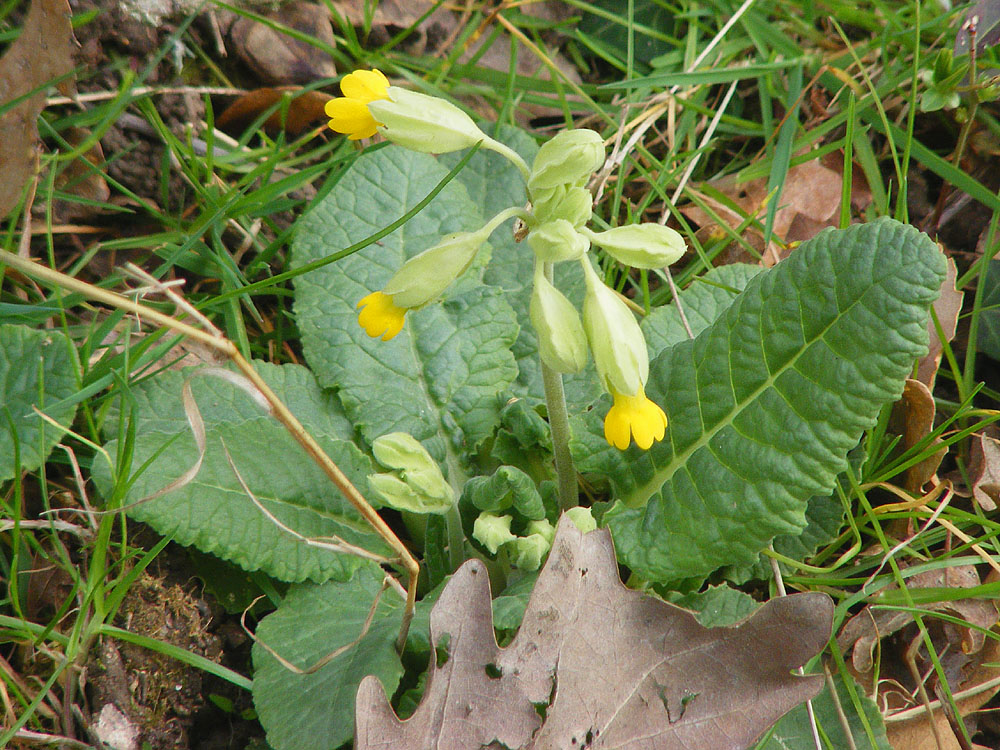
Every year we post a photo of the wild Cowslips Primula veris (Fr. Coucou) that grow on the north facing roadside banks and other cool damp places.

Primrose Primula vulgaris, Indre et Loire, France. Photo by Loire Valley Time Travel.
Primrose.

This year the wild Primroses P. vulgaris (Fr. Primevère acaule) are flowering simultaneously with the Cowslips, which doesn't always happen.They don't grow in the same places, so clearly have different habitat preferences.

Cowslip Primula veris, Indre et Loire, France. Photo by Loire Valley Time Travel.
Cowslip.

These were all photographed on 4 March between Preuilly sur Claise and Le Petit Pressigny.


Cowslip Primula veris, Indre et Loire, France. Photo by Loire Valley Time Travel.
Cowslip.


************************************************

For details of our private guided tours of chateaux, gardens, wineries, markets and more please visit the Loire Valley Time Travel website. We would be delighted to design a tour for you.

We are also on Instagram, so check us out to see a regularly updated selection of our very best photos. 

Monday, 19 March 2018

The Twelfth Annual Cowslip Photo

Every year about this time we post a picture of a cowslip. It used to be the first cowslip of the year, where we would excitedly stop the car and back track to take a photo (they are roadside specialists), but more recently they have been the first photos we have been able to take in safety. Age/wisdom I guess...


One reason we post a cowslip photo every year is because it means spring is here or hereabouts. This year it's definitely hereabouts, as we are expecting frosts and fog and maybe even a sprinkle of snow.

There is, however, another reason. In 1981 I travelled to the UK with my Mum, and she had me driving all over East Anglia looking for cowslips, her favorite childhood wildflower. We saw one in the six weeks we were there, and the farmers all said it looked like they were on their way out. You can imagine my surprise when we arrived in France to see cowslips in profusion. Mum is no longer able to travel, but this pic is for her.

Thursday, 3 March 2022

2022: The 16th Annual First Cowslip Photo

We do it every year, and it's remarkable how reliable the spotting of the first blooming cowslip is. Last year's first cowslip photo was posted the 4th March, in 2019 it was the 8th March. Only three times have we published in February: 2015, 2016, and 2020.


(Yes, you probably have seen them earlier this year, but this is our first cowslip)


Thursday, 23 March 2023

The Annual Cowslip Photo


Cowslip Primula veris, Indre et Loire, France. Photo by Loire Valley Time Travel.

These photos were actually taken on 6 March, near Le Petit Pressigny, but I just didn't round to posting them until now. I was with the walking group Phoenix en Claise, which meant that as soon as I showed an interest in this plant Fabrice was busy trying to convince everyone it was a jonquil. I'm used to him so I just agreed, but Collette doesn't come out with us often so she was concerned that we didn't know what the plant was and pointed out it was a Cowslip (Fr. coucou). I don't know which pleased Fabrice more -- me joining in on the joke that it was a jonquil, or Collette getting sucked in to disagreeing with him.

Cowslip Primula veris, Indre et Loire, France. Photo by Loire Valley Time Travel.

Friday, 8 March 2019

First Cowslip 2019


Photographed by Susan from Loire Valley Time Travel. https://tourtheloire.com

As is traditional for the blog, here is a photograph of the first Cowslip Primula veris (Fr. coucou) that we have seen this year. Photographed yesterday at l'Abbaye (a farm on the site of a former abbey), near Le Grand Pressigny.

Click to see our other Cowslip posts.

************************************************

For details of our private guided tours of chateaux, gardens, wineries, markets and more please visit the Loire Valley Time Travel website. We would be delighted to design a tour for you.

Wednesday, 28 January 2026

The 20th First Cowslip

This is our annual "First Cowslip of the Year" photo. Usually they are posted in Match, but occasionally we see one in early February. This is the first time we have seen a cowslip the wild in January.

This particularly unimpressive specimen is in the middle of Huub and Ingrid's driveway. It's no wonder it isn't sticking its head out 


Friday, 21 February 2020

First Cowslip Photo 2020


This year the wild Primroses are much in advance of the Cowslips on the roadsides. They are closely related but this is the first time I can remember the Primroses beating the Cowslips to flower. There are now a few cowslips out, and on Wednesday we stopped at a layby on the way home from swimming to photograph a little patch by the roadside ditch.

Cowslip Primula veris. February.  Indre et Loire, France. Photographed by Susan Walter. Tour the Loire Valley with a classic car and a private guide.

We've posted a cowslip photo every year since 2007. This year the photo is the earliest we've ever posted, but the flowers have appeared in late February around this date in at least two previous years (2015 and 2016).

************************************************

For details of our private guided tours of chateaux, gardens, wineries, markets and more please visit the Loire Valley Time Travel website. We would be delighted to design a tour for you.

We are also on Instagram, so check us out to see a regularly updated selection of our very best photos. 

Wednesday, 25 February 2015

Ninth Annual Coucou

Nine years....

2015

2014             2013             2012             2011             2010             2009             2008             2007

This is easily the earliest of the cowslip photos we have taken for our annual post, two weeks earlier than the previous earliest cowslip photo, and over a month earlier than in 2009. I am not sure if the fact that we have been doing this for nine years is more amazing than how early this year the photo is or not.
*****************************************
A Historical Update: We've had an email from someone who was browsing the blog and realised that we mentioned his grandfather. The post that got his attention was the one about us buying two pieces of old correspondence relating to Désiré Poupineau selling potatoes. Seed and grain merchant Poupineau was the owner of our house and barn in the mid-20th century, and he was offering to sell potatoes to Louis Menin, the grandfather of the reader who wrote to us. For all the additional information he provided please revisit the original post.

Tuesday, 1 March 2016

Cowslips Already


The cowslips are well and truly out in the Touraine du Sud. These were photographed last Friday in Niall and Antoinette's lawn. They've been out for several weeks, as have grape hyacinths, and our hyacinths are out too. The orangey red cowslip in the photo below is quite a common mutation. I've seen it in the wild in several places locally.

Last year's cowslip photo was taken a few days prior to this year's, but it's obvious the flowers this year have been out for longer before we got to them. This is the tenth year we have posted a photo of cowslips in flower.

Tuesday, 21 March 2017

The Eleventh Annual Cowslip

It is a tradition of ours to post a photo of a coucou (cowslip) every year as soon as possible after they flower.

Last week I commented to Susan that the coucou were late (6 weeks or so later than last year), and then almost immediately we saw our first. They are not as numerous as they have been in past years, either - many councils have mown the roadside verges already.

Here are some that have just about survived the carnage.


*****************************************

Brexit March: We will be in London for the march against Brexit on the weekend. We are planning to meet friends and family at Victoria station, then the group calling themselves RIFT (Remain in France Together) in front of Buckingham Palace, before moving on to the start of the march at the Hilton Hotel. I'm hoping to catch up with my friend and former colleague Emile there too (he has the 'reverse' issue to us, being an EU national living and working in Britain). If you are planning to be there too, get in touch and maybe we can co-ordinate something.
Susan

Saturday, 1 March 2025

The 19th Annual Cowslip

We saw our first coucou (cowslip) on Monday as we were on our way to Tours for (surprise surprise) a medical appointment. We didn't stop, but yesterday we took this photo.

They're not out in profusion yet, that's probably six weeks away. Cowslips were my Mum's favourite flower.

Tuesday, 17 March 2020

Signs of the Times


Spring is moving into another phase. Now we have these.

Snakeshead Fritillary Fritillaria meleagris (Fr. Fritillaire damier).
Snakeshead Fritillary Fritillaria meleagris. March.  Indre et Loire, France. Photographed by Susan Walter. Tour the Loire Valley with a classic car and a private guide.

Male Violet Oil Beetle Meloe violaceus.
Male Violet Oil Beetle Meloe violaceus. March.  Indre et Loire, France. Photographed by Susan Walter. Tour the Loire Valley with a classic car and a private guide.

Cowslip Primula veris (Fr. Coucou).
Cowslip Primula veris. March.  Indre et Loire, France. Photographed by Susan Walter. Tour the Loire Valley with a classic car and a private guide.

Grey Willow aka Pussy Willow or Common Sallow Salix cinerea (Fr. Saule cendré).
Grey Willow Salix cinerea agg. Aka Pussy Willow or Common Sallow. March.  Indre et Loire, France. Photographed by Susan Walter. Tour the Loire Valley with a classic car and a private guide.

Garden Grape Hyacinth Muscari armeniacum (Fr. Muscari).
Garden Grape Hyacinth Muscari armeniacum. March.  Indre et Loire, France. Photographed by Susan Walter. Tour the Loire Valley with a classic car and a private guide.


************************************************

For details of our private guided tours of chateaux, gardens, wineries, markets and more please visit the Loire Valley Time Travel website. We would be delighted to design a tour for you.

We are also on Instagram, so check us out to see a regularly updated selection of our very best photos. 

Wednesday, 16 February 2022

Snowdrops

It won't be long until we post our annual photo of the first cowslip of the year that we see. Indeed, some places may already have cowslips. In the meantime, some snowdrops, photographed last week


Thursday, 29 February 2024

Coucou!

This is our 18th annual cowslip photo. It was taken in Lisa and Simon's front garden on the 28th February. It's actually been flowering about 3 weeks, but this is the first time I've remembered to photograph it when it wasn't raining.


I think 18 years now qualifies it as a proper tradition.

Saturday, 24 March 2012

Spring Wild Flowers

For those of you who found our previous photograph of the first cowslips all a bit unsatisfactory, here is a selection of wildflowers photographed over the last week or so to make up for it.

These wild Grape Hyacinth Muscari neglecta were photographed on a roadside bank on the way out of Preuilly on the Chaumussay road. We've also got a couple of little patches in our orchard, and they are native to this area, not garden escapees. The newly emerged Violet Carpenter Bees have been foraging enthusiastically at them for several days.

Cowslip Primula veris, in flower and in focus, on a roadside bank near Chaumussay.

All of a sudden the Sweet Violets Viola odorata are everywhere. The purple form were out first, but a few days ago the white form appeared in the orchard all through the grass. The leaves are tiny and hardly visible - they will get bigger as the season progresses. Many of the white flowered violets have a lovely lavender wash this year, like this one. These too are native to the area and not necessarily garden escapees.
Susan

Thursday, 1 March 2012

Wildlife Watching in March

What can you expect to see in March in the Claise Valley and the Brenne? Spring comes early to this area, so flowers will be blooming and as a consequence early emerging bees will be foraging. Look out for frogspawn on ponds and in ditches. Even a few hardy butterflies who managed to survive the big February freeze tucked away under the ivy or in your barn will flit about if the days are warm.

Female Nomada fabriciana foraging on a dandelion in our orchard last March.
Some species of solitary bees such as Mining Bees Andrena spp, Sweat Bees Halictus spp and Nomada spp will be out. Several of the early emerging species of Andrena depend greatly on the Sallow catkins that appear in March, and the Nomadas will be out because they parasitise the Andrena. Several Andrena spp are also important early pollinators of fruit trees (they look like small Honeybees). Honeybees Apis mellifera themselves will become active at this time too, visiting what ever they can - fruit tree blossom, daisies in the lawn and the shiny yellow flowers of Lesser Celandine Ranunculus ficaria. The odd bumblebee queen will cruise about looking for suitable nesting sites.

The most anticipated wildflower at this time must surely be the Cowslip Primula veris, and the first flowers normally open in March, on roadsides, meadows and woodland clearings. If you are in the Brenne, keep an eye out for the earliest orchid species, the Tongue Orchid Serapias lingua. Wild Pansy Viola tricolor is common on waste ground and almost always has a few flowers at this time of year. The first of the Common Dog Violets V. riviniana will be out too, in the grass under trees. I noticed the first one in our orchard at the end of February, under the sour cherries.

Pine Processionary nests.
Take care around conifers, as the notorious Pine Processionary Thaumetopoea pityocampa caterpillars will be active. They are clearly spreading and we got our first infestation ever in the single Scots Pine in our orchard over the winter. Remember that their irritant hairs float in the air and you and your pets will pick them up even if you don't touch the caterpillars. For more information about them, see my species account on Loire Valley Nature.

If you are digging in the garden you may well disturb larval or even adult ground beetles and chafers which are semi-active. The adults dig themselves into the earth and emerge on sunny days for a bit of foraging.

Male Orange Tip.
One of the cheeriest butterflies you could see this month is the Orange Tip Anthocharis cardamines. The males emerge very early (late March or early April) and have to hang around for the females for a week or so . In this time they can be seen purposefully flying up and down ditches and hedges, in the hope of bumping into a female.

Expect the weather to be cool and changeable, with lots of windy rainy episodes interspersed with sun which brings out the insects.

Happy early spring wildlife watching!

Susan

Monday, 8 April 2013

Spring Wildflowers

I've been busy, so I've not had a chance to post any photos of the lovely spring wildflowers I've been seeing in the last few weeks. Despite the fact that the Arctic Oscellation Index is still, after more than a month, just about as negative as it has ever been and we have all been all perishing here, many of the spring flowers obviously respond to day length not temperature, and flower regardless.

Snakeshead Fritillary Fritillaria meleagris. 
These were photographed in the Aigronne Valley between Le Petit Pressigny and Le Grand Pressigny (thanks for the tip off Tim), but we have been lucky enough to see them at three different locations this year.

Purple Toothwort Lathraea clandestina.
Also in the Aigronne Valley, at le Moulin Neuf, between LPP and LGP.

Cowslip Primula veris.
Common on roadsides throughout this area.

Wild Grape Hyacinth Muscari neglectum.
In our orchard, but there's a long way to go before there's a carpet.

Lesser Celandine Ranunculus ficaria.
Common along ditches and in damp grassy patches.

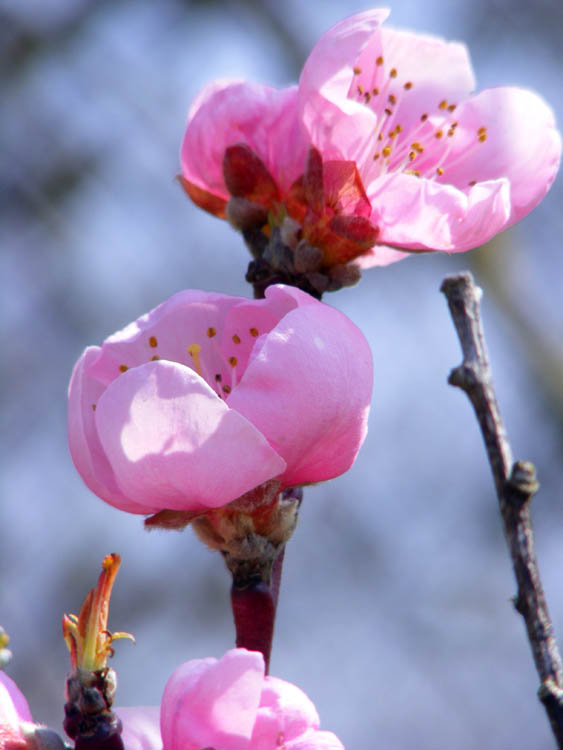
Not wild, but still pretty -- the nectarines in the orchard are covered in pink blossom.
***********************************************
Fleas and Scuties:  Yesterday our neighbour Pierre-Yves came over with an arthropod in a jar that he wanted identifed. The beast, which was dead, was a scutie (House Centipede). He'd found it in a pot plant and was worried it had been eating his plants. Typical of Pierre-Yves, who is an artist, he was also intrigued by how beautiful the creature was, remarking on its stripey legs and patterned back. I reassured him that they were carnivorous. He explained that it must have died because he has been battling against a plague of fleas in the house. Until recently he has been living over his garage in a studio apartment and the house has been tenanted. The tenants had half a dozen cats, and the cats clearly had fleas. Pierre-Yves can't believe how many eggs a single flea can lay and how many places they can get! He's sprayed anything he's seen with a flea on it or signs of fleas, including the insides of his jeans! The scutie must have come into contact with something that has been sprayed, which is a pity, as they probably eat fleas and flea eggs. He's getting a bit wary of continuing to use chemical sprays, so has just spent the last two not very warm days with the heating off in the house in the hopes they will either push off somewhere warmer or die of cold. He's not very hopeful, but I told him to wrap small objects in plastic bags and freeze them for a few days (ideally up to a week), like museum pest control programmes do, and he was quite taken with that idea. He also has a battery of herbal oils that he hopes fleas find insupportable. Then we got a bit silly, and I suggested he borrow a cat back for a day, put it in a cage and wait until all the fleas had got on board. My idea was to then whip the cage outside, with its cargo of cat and fleas. Pierre-Yves was still quite keen to try out the freezer idea though...

Tuesday, 30 April 2024

Out and About in the Claise Valley in Early April

My friend Ingrid and I took ourselves on a little nature outing to check on the state of the orchids in the Claise Valley around Chaumussay on 7 April. She wanted to practice with a new macro lens, so she took most of the photos. And we saw a lot of wildlife apart from just orchids. So here is a selection.


A Red-tailed Bumble Bee Bombus lapidarius (Fr. Bourdon des pierres) queen looking for a suitable place to set up her new colony.

Red-tailed Bumble Bee Bombus lapidarius, Indre et loire, France.
Photo courtesy of Ingrid de Winter.


Lady Orchid Orchis purpurea (Fr. Orchis pourpre) bud.

lady Orchid Orchis purpurea, Indre et loire, France.
Photo courtesy of Ingrid de Winter.


Male Green Fairy Longhorn moths Adela reaumurella (Fr. Adèle verdoyante) displaying on a Wayfaring Tree Viburnum lantana (Fr. Viorne lantane), waiting for females to appear.

Green Fairy Longhorn Moths AdeLa reaumureLLa, Indre et Loire, France.
Photo courtesy of Ingrid de Winter.


Apple Blossom Beetle Tropinota hirta (Fr. Cétoine hérissée) on, you guessed it, apple blossom. The tree is a naturalised domestic apple I assume.

Apple Blossom Beetle Tropinota hirta, Indre et loire, France.
Photo courtesy of Ingrid de Winter.


Lady Orchid.

lady Orchid Orchis purpurea, Indre et loire, France.
Photo courtesy of Ingrid de Winter.


The remarkarble shared tower entries to a sweat bee Lasioglossum marginatum colony. One of the little bees who occupy these tiny tunnels is centre bottom.

LasiogLossum marginatum, Indre et Loire, France.
Photo courtesy of Ingrid de Winter.


Green Hairstreak Callophrys rubi (Fr. Thècle de la ronce) on apple blossom. This lovely butterfly has a very short flight season, but the numbers appear to be increasing. These days I see it every year, which was not the case in the past.

Green Hairstreak CaLLophrys rubi, Indre et Loire, France.
Photo courtesy of Ingrid de Winter.


The rare parasitic fly Gonia vacua. This one is male and covered in pollen.

Gonia vacua, Indre et Loire, France.
Photo courtesy of Ingrid de Winter.


The Second World War Demarcation line memorial at Chaumussay, on the D42 between Preuilly sur Claise and le Grand Pressigny. Conveniently, one can park there, and there is a colony of Early Purple Orchids.

Demarcation line memorial, Indre et loire, France.
Photo courtesy of Ingrid de Winter.


Early Purple Orchid Orchis mascula (Fr. Orchis male) and Blue Sedge Carex flacca (Fr. Laîche glauque).

Early Purple Orchid Orchis mascula and Blue Sedge Carex flacca, Indre et loire, France.


Cowslips Primula veris (Fr. Coucou) on the roadside at Humeau.

Cowslip Primula veris, Indre et loire, France. Photo by loire Valley Time Travel.


Wednesday, 3 May 2023

Le Puy de la Colline, Chinon

The Puys du Chinonais, a group of sand covered limestone ridges, are, thanks to an exceptional microclimate, home to a Mediterranean type of flora. The Association de botanique et de mycologie de Sainte Maure de Touraine visited the Puy de la Colline (from the Latin podium, which means a low hill) on 15 April 2023. The views are terrific and the habitat full of interesting species. To help protect the environment, visitors are asked not to pick the flowers.

Vineyard, Puy de la Colline, Chinon, Indre et Loire, France. Photo by Loire Valley Time Travel.
A vineyard in the Chinon AOC on the lower slopes, taking advantage of the sandy soil, which helps control diseases such as phylloxera. In the background, just visible, is the nuclear power station at Avoine.

Green-winged Orchid Anacamptis morio, Puy de la Colline, Chinon, Indre et Loire, France. Photo by Loire Valley Time Travel.
Green-winged Orchid Anacamptis morio (Fr. Orchis buffon).

Field Dog Lichen Peltigera rufescens, Puy de la Colline, Chinon, Indre et Loire, France. Photo by Loire Valley Time Travel.
Field Dog Lichen Peltigera rufescens.

Halictidae on Grassy-leaved Buttercup Ranunculus gramineus, Puy de la Colline, Chinon, Indre et Loire, France. Photo by Loire Valley Time Travel.
A sweat bee Halictidae, probably Lasioglossum sp, in a Grassy-leaved Buttercup Ranunculus gramineus (Fr. Renoncule graminée).

Botanising, Puy de la Colline, Chinon, Indre et Loire, France. Photo by Loire Valley Time Travel.
Corinne, checking out a sand catchfly.

Prostrate Speedwell Veronica prostrata, Puy de la Colline, Chinon, Indre et Loire, France. Photo by Loire Valley Time Travel.
Prostrate Speedwell Veronica prostrata (Fr. Véronique prostrate).

Green Tiger Beetle Cicindela campestris, mating, Puy de la Colline, Chinon, Indre et Loire, France. Photo by Loire Valley Time Travel.
Green Tiger Beetle Cicindela campestris (Fr. La Cicindèle champêtre), mating. The way he has his jaws clamped around her 'waist' is alarming.

Cladonia foliacea, Puy de la Colline, Chinon, Indre et Loire, France. Photo by Loire Valley Time Travel.
Cladonia foliacea lichen.

Pasqueflower Pulsatilla vulgaris, Puy de la Colline, Chinon, Indre et Loire, France. Photo by Loire Valley Time Travel.
Pasque Flower Pulsatilla vulgaris (Fr. l'Anemone pulsatille), with a Cowslip Primula veris (Fr. coucou).

Former quarry, Puy de la Colline, Chinon, Indre et Loire, France. Photo by Loire Valley Time Travel.
A former quarry.

Common Juniper Juniperus communis, Puy de la Colline, Chinon, Indre et Loire, France. Photo by Loire Valley Time Travel.
Common Juniper Juniperus communis (Fr. Le Genévrier commun).