Part II is here.
Construction materials:
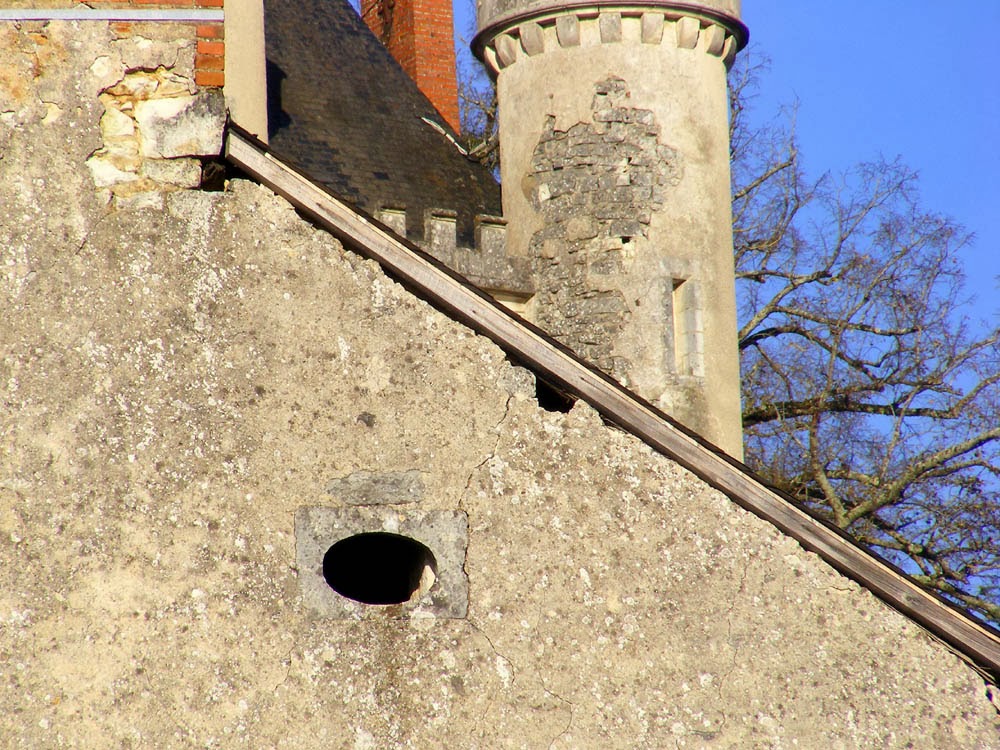
There is a strong correlation between the architecture and the geological composition of the earth from which the construction materials are extracted. The Loire Valley is in a zone of alluvial sandy clay that has been carried by the Loire and its tributaries from the Massif Central on to the limestone foundation which has been gouged out by the river. Slowly but surely the river meandered through the region, covering and mixing different soils and thereby creating the diversity of materials used in construction. The quality of the subsoil in the Loire Valley affects the underground water, the agricultural and industrial resources and as a consequence, the way of life and dwellings. By using the materials nearby and using the river for their transportation, the buildings sink harmoniously into the landscape and environment.
To ensure the consistency of all the built elements you should use the original materials, treatments and colours when renovating.
Bandeau d'encadrement.
Door surround -- an ornamental frame to the door opening.

Une porte charretière.
A courtyard door. Note the small pedestrian door (une porte piétonne) embedded in the bigger door.
The notice on this door says 'Sortie de brouette' ('Wheelbarrow exit').

Une porte d'entrée de vantail vitré.
A half-glazed front door. This one has a transom (une imposte vitrée) above the door as well.

Une porte fermière.
A farmhouse door (strictly speaking, this isn't a farmhouse door, it was a shop door, but the principle is the same.) The top and bottom halves of the door can open separately or be locked together to operate as one door. These were usually farm kitchen doors and the idea was to keep barnyard animals out of the house, whilst being able to ventilate the kitchen by opening the top half of the door. Typically the shutters only cover the top half of the door, which was often glazed, while the bottom was solid. This former shop door has extra windows to the side and a modern roller shutter.

Le Soubassement.
The foundations (2-3 courses of harder stone at ground level, below which are the cellars and which support the walls of the house above, protecting them from damp and erosion).

La travée.
The span (between bays or piers above ground, vaults below).
Typically this is between 3.8 and 4.2 metres.

*****************************************************
Loire Valley Nature: A new entry has been added for the Glass-winged Syrphus Hover Fly Syrphus vitripennis.
A section on the Tapered Drone Fly Eristalis pertinax has been added to the Drone Flies Eristalis spp entry.
Sections on the unusual blow fly Stomorhina lunata and one of the most familar of all blow flies, the Urban Bluebottle Calliphora vicina, have been added to the Blow Flies Calliphoridae entry.
A new photo has been added to the Scarce Swallowtail Iphiclides podalirius entry.
A section on the Tapered Drone Fly Eristalis pertinax has been added to the Drone Flies Eristalis spp entry.
Sections on the unusual blow fly Stomorhina lunata and one of the most familar of all blow flies, the Urban Bluebottle Calliphora vicina, have been added to the Blow Flies Calliphoridae entry.
A new photo has been added to the Scarce Swallowtail Iphiclides podalirius entry.
A section on Pales pavida has been added to the Parasitic Flies Tachinidae entry.